dessert

Ragi Manni


A Traditional Mangalorean Delicacy!

Although, I chose to make an instant version, the result is simply amazing. Why go through the laborious process of soaking the ragi? Grinding the ragi takes time. Scraping fresh coconuts and grinding them to extract the juice is also time-consuming! Now, all of this is available in ready-to-use form. This dessert can be prepared in less than half the time! Traditional techniques are always appreciated. However, I would recommend the instant method if it does not compromise on the taste. So do try this dessert and let me know how it turns out.

Here is a little bit about the millet itself. Ragi or Finger Millet Ragi is one of the various types of millet produced and consumed in India. It looks like fingers during its plantation stage, which is why it is named finger millet in English. However, once harvested from millet strips, it resembles mustard seeds. Ragi is considered a superfood because of the presence of nutrients like calcium, magnesium, phosphorus, and iron in it. Along with these, it also contains the amino acids lecithin, methionine and threonine, which have significant health benefits. In India, the state of Karnataka is the largest producer of the superfood finger millet. People of the region also include it in their diets regularly. But with awareness about finger millet benefits, many people have learned about its advantages. Therefore, they have started including it in their diet across the states of India. Source : Tataaig

Vermicelli Kheer


Vermicelli Kheer

Ingredients

  • 1 Litre milk
  • 1/2 cup vermicelli
  • 1 tin (200 gms or 395 gms.) sweetened condensed milk, to taste
  • 1/4 cup Pistachios
  • 1/4 cup Almonds
  • 1/4 cup golden raisins
  • 1 tbsp. ghee
  • Salt to taste (optional)
  • 1 tsp. vanilla essence or 1/2 tsp cardamom powder

Method

  1. Soak the pistachios and almonds in some hot water for 10 minutes. Blanch, slice and set aside.
  2. Heat Ghee and fry the raisins lightly till they swell. Remove and set aside.
  3. Add the vermicelli and fry for a minute or two.
  4. Add the milk and cook till mixture is fairly thick.
  5. Now add the condensed milk to the milk mixture and continue cooking stirring to prevent the mixture burning, till the kheer is thick. I have used 200 gms condensed milk and found it sweet enough. If you like it sweeter, you may use the 395. gms tin.
  6. Add  the raisins and nuts and vanilla essence or cardamom powder.  Stir and take off heat.
  7. Serve warm or cold.

Besan Ladoos


Try these super easy and simple Besan ladoos. Whether called Ladoo, Laddu, Laadoo … they taste just Yum, melt in your mouth. Do try!!

Besan Ladoo

Makes 12 ladoos

Ingredients
2 cups besan
1 cup powdered sugar
1/2 cup ghee

¼ tsp. turmeric

¼ cup cashewnuts, chopped fine
2 tbsps. Almonds/Pistas peeled, sliced
½  tsp. cardamom powder

¼ tsp. powdered nutmeg

Method

Begin roasting besan over a low flame, adding ghee 1 tbsp. at a time. Add the turmeric. Roasting will take approx  20 to 30 mins. The colour should turn deep, almost light brown. Add more ghee if required.  The besan should not look too dry.  If it is too dry add a tbsp of ghee.  If too wet add additional sugar later.

Add the sliced nuts, (reserve some for garnish) and roast 5 minutes on very low.  Take off flame. Leave aside to cool a little.  When mixture is still warm add sugar, cardamom and nutmeg powder.  Form into ladoos while still warm. Garnish with pista and almond slices.  I used melon seeds and saffron strands to give it an exotic twist!! 😉

Puran Poli Traditional Puran Poli Recipe


PURAN POLI is an Indian sweet flatbread that originates from South India and Maharashtra. The origins of Puran Poli can be traced back to ancient India, where it was first mentioned in ancient texts such as the Vedas and the Mahabharata. Puran Poli is believed to have originated in the region of Maharashtra, where it quickly became a favourite among the locals. This sweet dish was traditionally prepared during festivals and special occasions and was often shared with friends and family.

Puran Poli is one of the most famous and beloved sweet dishes in Maharashtra, India. This delicacy has captured the hearts of locals and tourists alike with its unique texture, flavour, and cultural significance.

Puran Poli is not just a dish, but a cultural symbol in Maharashtra. It is deeply ingrained in the state’s history and traditions and is often associated with festivals such as Ganesh Chaturthi, Holi, and Diwali. Puran Poli is also a symbol of warmth and hospitality and is often served to guests as a sign of respect and affection.

While the basic recipe for Puran Poli remains the same, there are many variations of this dish that can be found throughout Maharashtra. Some regions add coconut or sesame seeds to the filling, while others use different types of lentils or sweeteners.

Whether enjoyed on a special occasion or as a simple treat, Puran Poli is a symbol of warmth, hospitality, and tradition.

The various names for the flatbread include puran puri or vedmi in Gujarati, bobbattlu or baksham or oliga in Telegu, Andhra Pradesh,  holige or obbattu in Kannada, puran poli in Marathi,  payasabolli or simply bolli in Malayalam, Boli in Tamil, bhakshalu or pole or polae in Telugu, Telangana and ubbatti or simply poli in Konkani.

PURANPOLI – Makes 12 Puranpolis
For Puran
1 cup Chana dal/Split chickpeas, soaked for 2 hours
½ cup Jaggery
2 tbsp. sugar (optional)
1/2 tsp Nutmeg powder
1/2 tsp Cardamom powder
¼ tsp. Saffron strands
½ tsp. Salt

For Dough
1 cup Maida
½ cup Wheat flour
½ cup Rice flour
½ tsp. Salt
10 tbsp. Oil
½ cup water

To make the dough:
In a large wide bowl or plate, add the maida, wheat flour, rice flour, salt, adding half the water and oil.  Knead well and repeat adding the water and oil little at a time till all the water and oil is used up. Knead well. Dough will be sticky.  Knead again adding 2 tbsp. water and 2 tbsp. oil.  Keep kneading for 10-15 minutes.  If the dough gets too sticky, take a little oil to make the dough soft and pliable. Dust a little flour if necessary. Kneading may be done using a stand mixer with dough hook.  Rub oil on the dough, cover with a wet cloth and rest for 2 hours.

To make the Puran::

Cook the soaked chana dal and about 3 cups water and and pressure cook it for 3 whistles. Drain and cool.
In a pan, add the dal, jaggery and sugar and cook on medium heat for 10 to 15 minutes, stirring constantly while mashing the dal with a spatula.  You may use the potato masher, or stand mixer to mash the dal. Add nutmeg powder, cardamom powder, saffron stands, and a pinch of salt. Mix well and cook till fairly dry.  Leave to cool.

To make the puranpolis:

Knead the dough for a minute and divide into 12 equal portions.  Divide the puran mixture into 12 portions.  Flatten the dough ball on your palm and stuff one portion of the puran and close bringing the edges together.

Sprinkle some flour on a rolling board and gently roll out the puranpoli into as thin a circle as possible.

Transfer the puranpoli to a tawa or non-stick pan, flipping to cook evenly till brown on both side.  Smear a little ghee if desired. Serve hot and enjoy with a tablespoon or two of melted tup/ghee.  Absolutely delicious and scrumptious.

Gajjar Halwa Carrot Halwa


Gajjar ka halwa is a combination of nuts, milk, sugar, khoya and ghee with grated carrot. It is a light nutritious dessert. The orange carrots would be ideal for their color.  Gajar ka halwa, also known as gajorer halua, gajrela, gajar pak, and carrot halwa is a carrot-based sweet dessert pudding. The dessert is traditionally eaten during all of the festivals in India, mainly on the occasion of Diwali, Holi, Eid alFitr and Raksha Bandhan. It is served hot during the winter.  Check out the recipe for Khoya below.

Ingredients

  • ½ kg. Carrots
  • ½ litre (2 cups milk)
  • ½ cup sugar
  • 3 tbsp. ghee
  • 1 tsp. Green cardamom powder
  • 2 to 3 tbsp. Khoya
  • Almonds, Pistas & Raisins for garnish

Peel, wash and grate carrots.  Cut the nuts into slivers.  You may blanch the nuts if you wish.  Soak raisins in water.  Boil milk in a kadai, add the grated carrots.  Reduce to medium heat and cook till carrots are tender and milk has evaporated, stirring frequently.  Add the sugar and mix  well, stirring until dissolved and the sugar liquid has evaporated.  Add the ghee and saute for 5 minutes.  Switch off flame and add cardamom powder and mix.  Transfer to a serving bowl and garnish with Khoya, almonds, pistas and raisins and serve hot.

To Make Khoya:

Traditional method

  • 1 litre milk
  1. Put milk in a vessel, bring to a boil and reduce to low heat.
  2. Then stir after every 5 minutes until reduced by half.
  3. Thereafter, stir constantly while scraping the dried layer of milk that sticks to the sides, this will ensure the milk does not acquire a ‘burnt’ flavour, until reduced to a thick granular consistency.
  4. Remove to a bowl, cool and refrigerate.
  5. Use withing 48 hours in the refrigerator.
  6. Alternately keep in the freezer and use as when required.

Instant method

  • 250 gms milk powder
  • 250 gms cream
  1. Mix well together and microwave on high for 2 minutes.
  2. Remove, mix well and microwave for another 2 minutes.
  3. Use as required.

Gulab Jamuns


Gulab Jamun

Quick & easy Gulab Jamuns!

For those watching their sugar consumption, just squeeze out the syrup and enjoy, no guilt feeling there……;)

Ingredients

  • 2 Cups milk powder
  • ½ cup maida (all purpose flour)
  • ½ tsp. soda bicarb
  • ¼ tsp. cardamom powder (optional)
  • 3 tbsp. melted ghee or butter
  • ¼ cup water, or as required
  • Ghee/Oil for frying

Optional for stuffing the gulab Jamuns

  • Few shelled pistas
  • Lump sugar (Khadisakkar/misri)

Syrup

  • 2 cups sugar
  • 4 cups water
  • 6 whole cardamoms, press to open them a little
  • Pinch of Saffron (Kesar)

Method

  1. Dilute the sugar with the water and boil alongwith cardamoms to a watery syrup. I prefer a light syrup.
  2. Boil for 15 to 20 minutes, add the saffron if using.
  3. While the syrup is boiling, mix the milk powder and maida alongwith the soda bicarb and cardamom powder (if using).
  4. Add the melted ghee and mix well.
  5. Knead adding little water at a time into a soft dough.
  6. Roll into 25 to 30 small round balls (they swell on frying and further swell when immersed in the syrup).
  7. You can stuff the gulab jamun with pista or misri with a bit of saffron if desired.
  8. Heat ghee/oil in a kadai for deep frying.
  9. Reduce the flame and fry the balls in batches of 10 or so, on low flame to a golden brown.
  10. If the fire is high the inside of the gulab jamun may remain uncooked.
  11. Remove, add to the syrup and set aside for the syrup to be absorbed. Serve preferably warm.

Creme Brulee


A rich cream base covered with a hardened caramel crust.  An exotic dessert,  albeit very simple to make with minimum ingredients.  You need to plan ahead to make this dessert as it requires to be refrigerated.  Makes a great dessert to have on the menu if planning a major party as it can be prepared ahead.  Usually served in individual ramekins.

Crème Brulee

Ingredients – serves 8

750 ml whipping cream (or 500 ml heavy cream and 1 cup milk)

8 egg yolks

½ cup sugar

3 tsp. vanilla essence

4 to 6 tbsp. sugar for topping

Heat the cream+milk in a saucepan and stir over low heat till it some to a boil. Remove immediately. Meanwhile whip the egg yolks with the sugar till creamy and sugar has dissolved.  When the cream starts boiling, pour gradually into the egg mixture.  Add the vanilla essence and stir.  Pre-heat oven.

Place 8 ramekins on a tray and pour the custard to ¾ full.  Place the trays in the middle of the heated oven and pour hot water into the trays to come up ½ inch around the ramekins to bake the custard in a water bath.  Bake on medium (170 deg C for 30 minutes till set. The custard will still jiggle a bit but will set once cooled. Remove from the water bath (bain marie) careful when handling the try with hot water and refrigerate 1 hour or overnight.

Once cooled, (and just before serving) sprinkle with 1 tbsp. sugar and use a blow torch to caramalise the sugar layer.  Alternatively place all the ramekins under the grill (broiler) and caramelize till golden brown.  Another method is to caramelize the sugar in a saucepan and pour over the custard in a thin layer and leave to set. Place once again in the refrigerator until serving time.  The caramelization must be done just before serving as it is supposed to be hard, so as to crack it with your spoon to enjoy the crunch of the caramel and the soft luscious custard with each morsal of the crème brulee.  Simply heaven on your tongue and the feeling of goodness in your tummy!!

Sago Mango Pudding


Sago Mango Pudding

With mangoes in abundance this season, enjoy the goodness of this nutritious fruit with the cooling effects of sago pearls

Mango: High in Vitamin C, folate & beta-carotene in addition to variety of nutrients.

Sago: Gluten free, cooling and antioxidant, reduces inflammation and improves immunity.

Ingredients

  • 3 to 4 Mangoes
  • 1 cup sago
  • 2 cups coconut milk
  • 2 cups water
  • ½ cup crystal sugar
  • ½ tsp salt optional
  1. Bring 3 cups water to boil in a saucepan, add the sago and cook for ten minutes.
  2. Switch off the flame and leave covered for ten minutes. 
  3. Drain and add the sago to a bowl of cold water to rinse. Drain. 
  4. Add the sago pearls along with the coconut milk, water and crystal sugar and salt to a pan and cook on medium flame till sugar dissolves and mixture thickens a little. 
  5. Remove from flame and leave to cool. 
  6. Chill till ready to serve.
  7. Chop or slice the mangoes and reserve, before serving top with mango slices or pieces. 
  8. If you wish, puree some mango pieces and add the puree to the sago pudding and mix,
  9. Top with chopped or sliced mangoes.
  10. Garnish with candied fruit if desired.

Makhane ki Kheer


Makhane ki Kheer

Makhanas have important benefits. They are rich in nutrients and hence make a great addition to a healthy diet. They are high in antioxidants and help stabilize blood sugar levels and have anti-aging properties and may also promote heart health. They are rich in protein and gluten free.

As makhanas are low in calories they make an excellent snack in between meals to satisfy hunger pangs. For a snack, roast the makhanas, sprinkle with salt and enjoy.

The Makhana kheer is a rich dessert but low in calories. It is an important item on fasting and Navratri menus as regular grains like rice and wheat are not allowed during fasting in India.

Makhane ki Kheer

Ingredients

  • 2 cups Makhane (lotus seeds, fox nuts)
  • 3 cups milk
  • ½ cup sugar
  • 2 to 3 tbsp. ghee
  • 10 nos each almonds, pictachios, raisins, (nuts sliced)
  • 3 cardamoms
  • A pinch saffron
  • 2 to 3 dried roses for garnish and decoration (optional)

Method

  1. Clean the lotus seeds and lightly roast in ghee till light brown and crisp.
  2. Grind to a coarse powder, you can leave some large pieces.
  3. Heat the milk and when it come to a vigorous boil, add the sugar and stir till dissolved.
  4. Then add the ground makhane. Stir frequently.
  5. Let it simmer for 1/2 hour. Add the nuts, raisins, ground cardamom and saffron and simmer 5 minutes.
  6. If you like a thicker and granular consistency cook for further 20 to 30 minutes and then proceed with adding nuts, etc.
  7. Allow to cool. Refrigerate 1 hour before serving. Serve cold.
  8. May be served slightly warm if desired.
  9. Crumble the roses and sprinkle over the kheer for garnish and decoration. Use fresh rose petals if available.

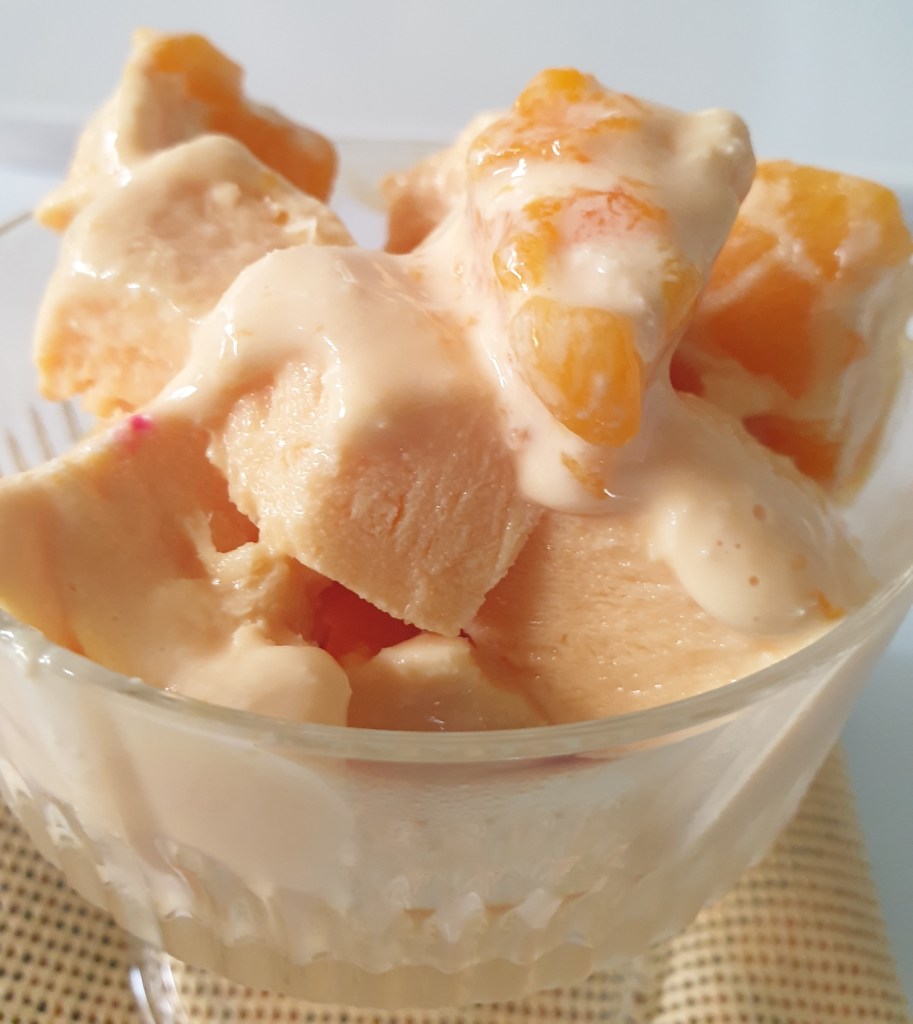
Mango Kulfi No Cook Kulfi


Mango Kulfi

Ingredients

  • 1 tin Sweetened condensed milk (397 gms)
  • 2 cups cream (160 gms. each)
  • 1 tin measure milk (Condensed milk tin measure)
  • 1 or 2 ripe mangoes, chopped into small cubes
  • 1/2 tsp. mango essence
  • 1/4 tsp. yellow food colour 1 or 2 drops red food color

Method

  1. Mix condensed milk, milk and cream.
  2. Beat well till smooth.
  3. Add the essence and food colors and whisk till smooth.
  4. Add the chopped mango pieces and mix well.
  5. Freeze in Kulfi moulds, ice cube trays or in a plastic containers.
  6. Leave to set for 24 hours.
  7. Unmould, cut into cubes and serve.
  8. Check out the Pista Kulfi recipe