Authentic tried and tested simple recipes in mainly Indian cooking, including traditional mangalorean, Goan, East Indian, North Indian recipes and much more…
A delicious roast, can be cooked with steak slices or a chunk of beef roasted and then sliced before serving. Serve as a starter or with a main meal. Leftover roast can be made into tasty sandwiches. Yummy…..
Use boneless Lamb instead of beef!
Goan Roast Beef
Ingredients
1 Kg. Beef
3 medium onions, chopped into large pieces.
15 to 18 cloves garlic
1.5”pc. ginger
15 cloves
4 piece cinnamon (1” pc. Each)
¼ tsp. pepper corns
1 tsp. cumin seeds
½ tsp. turmeric powder
4 red chillies
2 tsp. sugar (optional)
¼ cup vinegar, or to taste
2 tbsp. ghee
1 tsp. salt or to taste
Method
Grind the spices from garlic to turmeric powder with the vinegar.
You can add some water to get the spices to move while grinding.
Transfer the masala to a wide bowl, add salt, mix
Marinate the beef with the ground masala for one hour.
To cook, heat ghee and add the red chillies and onion.
Saute till the onions are translucent.
Then add the meat with the masala water and cook till meat is tender and gravy is almost dry.
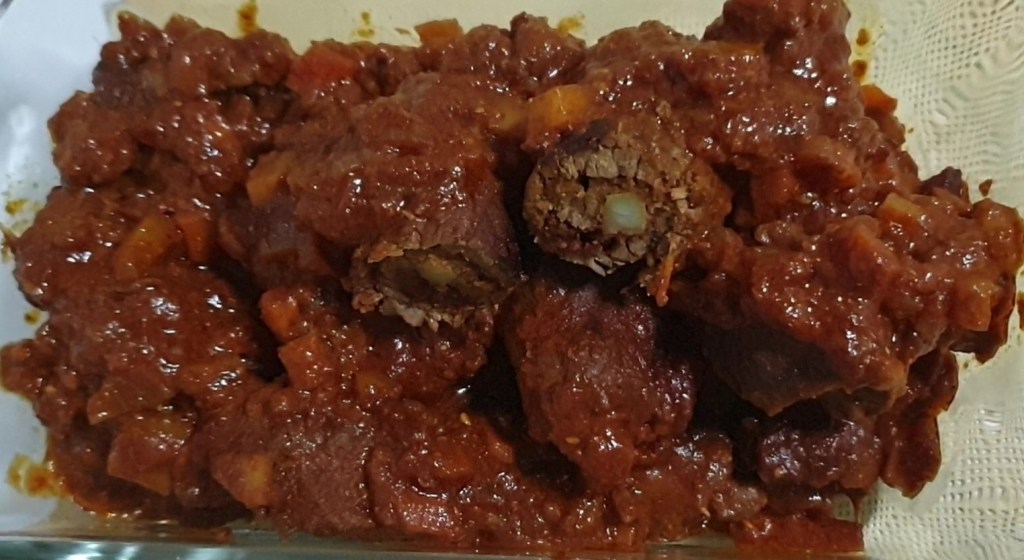
Beef steak stuffed rolls – I am calling this Goan Beef Roulade because this is the spicy version of Beef Olives with typical Goan flavors as it includes Chorizo (Goan sausages) in the stuffing. The Beef Olives I have made earlier are a milder version leaning more towards continental cuisine. Try them, both are delicious in their own right!!
Ingredients
1 kg. Beef steaks, beaten
2 medium chopped onions
2 tbsp. tomato paste
2 to 4 tbsp. oil or ghee
Stuffing : Potato, Carrots, Choris (Goan sausages), Bacon, as required
Grind to a smooth paste
10 red chillies
1 ½ “ pc. Ginger
10 cloves garlic
10 cloves
1” cinnamon
1 tsp. cumin seeds
½ tsp. peppercorns
½ tsp. turmeric
4 tbsp. vinegar
1 tsp. salt
Method:
P.S.: Ask the butcher to beat and flatten the steaks well. If not you will need to use a mallet or heavy pestle to beat the steaks to thin them so forming the rolls is easier.
Wash, drain and marinate the steaks in the ground masala paste for one hour.
Prepare the stuffing.
Peel, wash and cut one potato in 2” sticks.
Wash carrot, peel and cut into 2” sticks.
Remove the Goan sausages from the casings.
Cut the bacon into 2” strips. As bacon is not available here I have skipped it.
Spread the steaks on a board and trim off any excess meat and you need a rectangle piece.
Reserve the extra meat trimmings
Place the potato, carrot and sausages on one end of the steak and roll into a compact roll.
Secure with string or toothpicks. Thus make all the rolls.
Heat a wide pan, add the oil/ghee and fry the chopped onions, w
When they soften and are translucent, add the tomato paste and saute 2 to 3 minutes.
Place the rolls in a single layer (reserve the excess marinade) and fry 3 to 4 minutes on high till light brown.
Turn over and cook 20 minutes till the gravy almost dries up.
Stir well scraping the bottom of the pan to avoid burning the onions.
Add the excess marinade and some water to rinse the bowl and add to the roulade gravy.
Also add the leftover potatoes and carrots, if any, chopped finely.
Check and adjust seasoning.
Cook till meat is tender and gravy is thick and oil surfaces.
Any rolls that are large in size can be cut into pieces before serving.
Remove the string before serving.
Toothpicks may be left as it is as they can be easily removed. Serve hot.
Xacuti or Xacutti (Konkani: शागोती) is a curry prepared in Goa, India, with complex spicing, including white poppy seeds, sliced or grated coconut and large dried red chilies.[1] It is usually prepared with chicken, lamb, or beef.[2][3] It is also known as chacuti in Portuguese.
Xacuti or Shagoti as is commonly known in Goa has its origin in Harmal (now Arambol) in Pernem Taluka of Goa. Here fisherman in the olden days used to get a fresh catch of fish or a local chicken and prepare a gravy for this dish. The gravy typically used local spices like black pepper (meerya), chilli, turmeric, onion, nutmeg, cinnamon, clove, etc. The hero was a mildly roasted coconut kernel which is finely grated and lightly toasted. – Source Wikipedia:
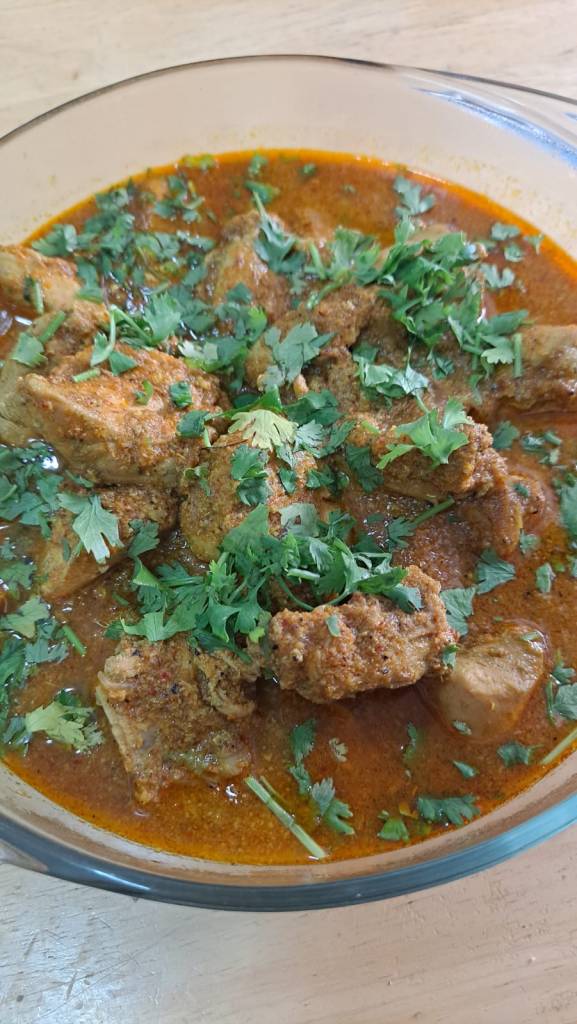
Chicken Xacuti
A traditional Goan dish, Xacuti (pronounced ‘Sha-kooti’) almost always made with chicken and the complex array of spices used in preparation of this dish makes is wonderfully flavorful and unique. Xacuti may also be prepared with beef or lamb.
Ingredients
1 ½ Kg. Chicken
¼ tsp. turmeric powder
1 tsp. salt
Marination
2” pc. ginger
10 flakes garlic
½ bunch coriander leaves
5 green chillies
Xacuti Masala I
Fry in 1 tsp. oil and grind
1 tsp. oil
3 onions, sliced
3 green chillies
1.5” pc. Ginger
7 garlic flakes
1 large coconut (2 cups grated)
½ bunch coriander leaves
Heat oil in a pan and saute sliced onions, green chillies, ginger, garlic for 3 minutes. Add grated coconut and saute for another 5 to 7 mns. Once onions are crispy, keep aside.
Xacuti Masala II
Dry Roast the following
¼ pc. nutmeg
2” cinnamon
3 cardamoms
1 star anise
1 tsp. fennel (badishep, saunf)
1 tsp. black pepper
1 tbsp. poppy seeds
1 tbsp. coriander seeds
8 to 10 kashmiri chillies
½ tsp. turmeric
Grind all the above together to make the xacuti masala paste.
Xacuti preparation
2 tsp. oil
2 onions, sliced
2 green chillies, slit
¼ cup water
Method
Clean, remove skin and cut chicken into pieces.
Wash and drain. Add salt and turmeric powder to chicken pieces.
Grind the marination masala and marinate the chicken pieces for half an hour, or overnight if desired.
Heat oil and add onions and green chillies and fry for a minute.
Add the marinated chicken and saute for 2 minutes.
Add the xacuti masala and water and cook 30 to 45 minutes or till chicken is tender.
Frango à Cafreal is a spicychicken preparation consumed widely in the Indian state of Goa. The preparation originated from the Portuguese colonies in the African continent.[1] It was introduced into the Goan cuisine by the Portuguese and the African soldiers serving under the Portuguese.
The generic preparation involves green chillies, fresh coriander leaves, onion, garlic, ginger, cinnamon, pepper, chilli, mace, clove powder and lime juice or vinegar. Chicken Cafreal is always made from whole chicken legs, flavoured with the spices and herbs mentioned and then shallow fried.[2] Chicken Cafreal is usually accompanied by potato wedges and lime wedges. It is a popular dish in the bars and taverns of the state. – Source: Wikipedia
This recipe s inspired by Late Wendell Rodricks
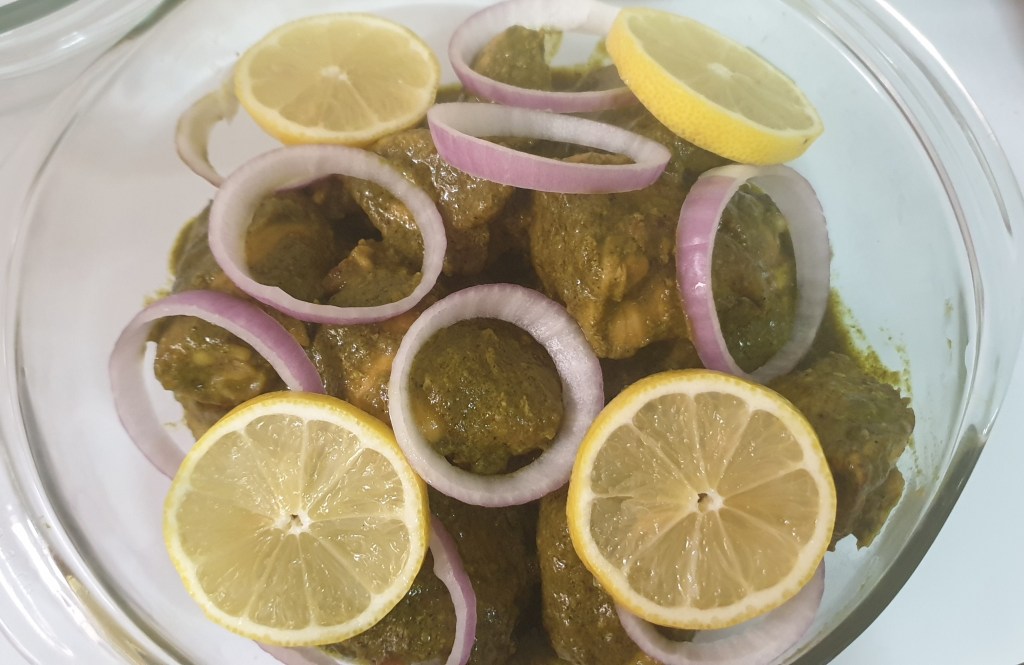
Cafreal – Chicken Cafreal
Ingredients
1.5 kg. Chicken
1 tsp. garam masala powder
1 tsp. black peppercorns
½ tsp. Turmeric powder
1 bunch coriander leaves (about 100 gms)
12 to 15 flakes garlic
2” piece ginger
6 green chillies (or to taste)
10 cashewnuts
2 Onions
4 Tomatoes (deseeded) (Optional)
2 tbsp. lemon juice
Salt to taste
1 tbsp. Coconut oil
2 tbsp. ghee or as required
Method
Clean and cut the chicken into large pieces.
Wash and set aside to drain.
Grind to a paste the ingredients from garam masala to lemon juice alongwith the salt.
Marinate the chicken with this masala.
Refrigerate overnight.
Heat 2 tbsp ghee and fry the chicken in batches to light brown to seal the juices.
Set chicken aside
Reserve the marinade.
Add the coconut oil to the ghee left over from frying the chicken.
If not add a tbsp of ghee to a vessel, heat and fry the masala paste for 5 minutes till the raw smell disappears and fat leaves the masala.
Add the chicken, salt (if required), 1 cup hot water and cook till chicken is tender and gravy is thick.
Serve hot garnished with onion rings and lemon wedges.
Repeated reheating gives a deeper color and improves the taste and texture of the gravy and the Cafreal just tastes better!
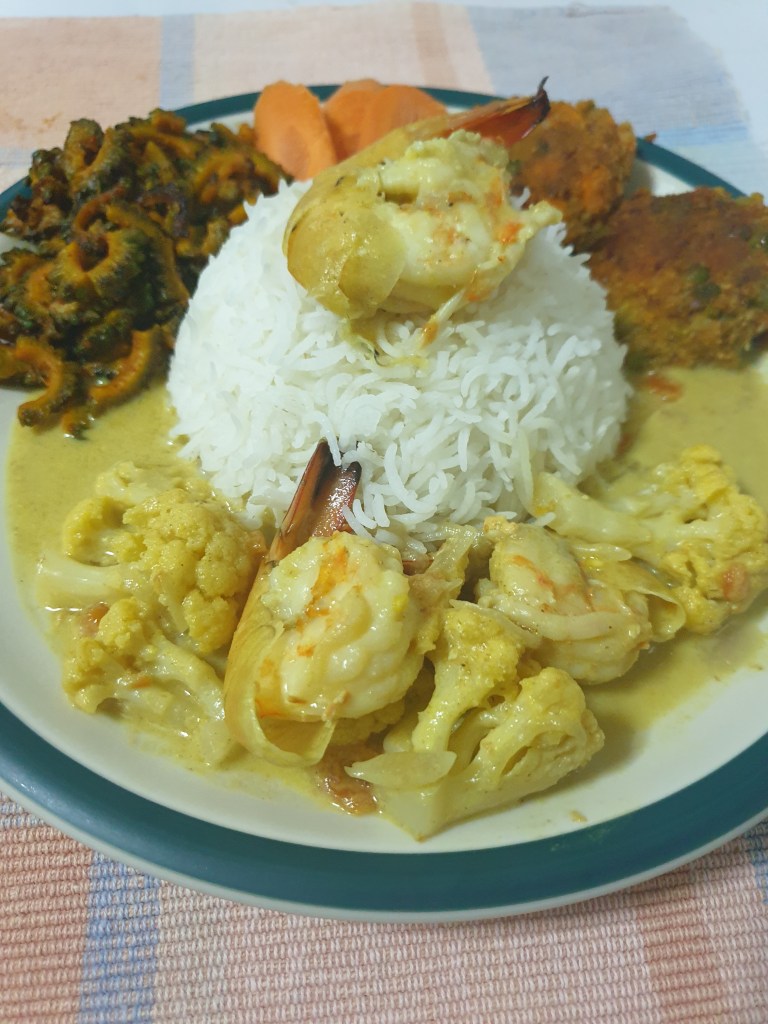
Caldine or Caldinho in Portuguese, is a typical goan curry recipe used to cook, fish, vegetables or shrimp. It’s a light coconut curry and as the consistency is quite thin can easily double up as a spicy soup. It is mildly spiced and considered a “sweet” curry. This combination of shrimp and cauliflower is quite commonly prepared in a caldine and tastes delicious over boiled rice or with some crusty bread or poee or pao used to mop up the runny curry and the juicy morsels devoured with the crunchy cauliflower and luscious shrimp. Keep the shells of the shrimp intact (provided they are fresh) and you will enjoy sucking and relish the juicy caldine that is trapped in the shells!! Make sure the cauliflower has some crunch, so avoid overcooking.
Ingredients
1 cup medium to large prawns
1 medium cauliflower
1 medium onion
3 green chillies
1 medium tomato
1 tbsp. oil
1 tsp. Salt, or to taste
Grind to a paste
1 cup fresh coconut or 4 tbsp. coconut powder
3 large cloves garlic
½ tsp. cumin seeds
½ tsp. pepper corns
1 tbsp. coriander seeds
1 small marble sized ball tamarind
Method
Shell & devein the prawns. If the prawns are very fresh, keep the shell intact, removing the head and legs.
Wash and drain.
Apply a pinch of salt and turmeric and set aside.
Separate the cauliflower florets and cut into large pieces.
Immerse in salted water for 15 minutes to loosen dirt and kill insects, if any.
Grind the masala to a paste.
Slice the onion, slit the green chilies and chop the tomato.
Heat oil in a vessel,
Add the sliced onion, green chilli and fry till light brown.
Add the tomato and saute till soft.
Add the masala paste with the masala water and additional water for the curry as required,
Add 1 tsp. salt and bring to a boil and simmer 5 minutes.
Add cauliflower and cook 5 minutes till almost tender.
Add prawns and cook 10 minutes.
Adjust seasoning and serve with steamed rice.
Goes well also with Poee, or bread to mop up the delicious gravy
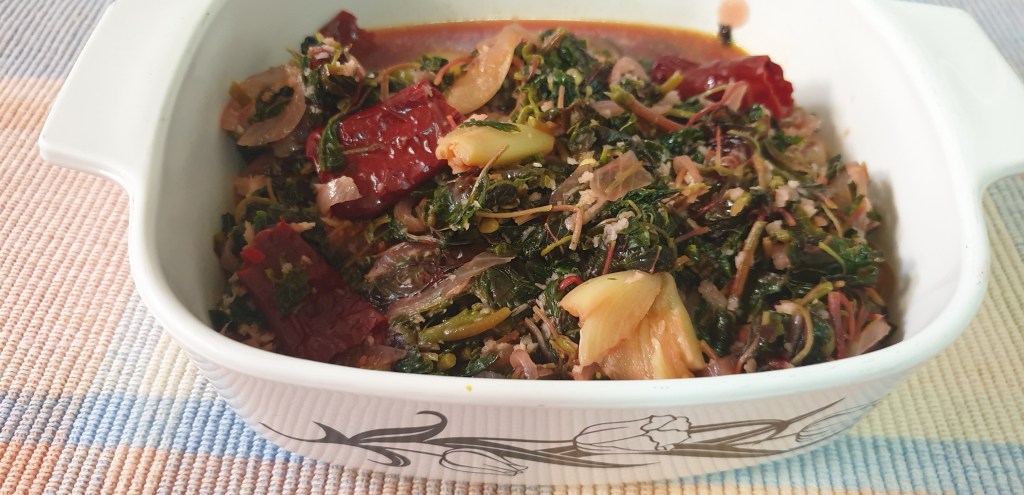
Clean the tambdi bhaji, discarding the damaged and insect eaten leaves.
Save only the clean and complete leaves and the tender stalks. To find out if the stalks are tender, they should snap easily on breaking.
Immerse in plenty of salted water and leave for 10 to 15 minutes to loosen the dirt and kill insects if any.
Slice the onion, crush the garlic, break the red chillies into 2 to 3 pieces and transfer to a cooking vessel.
Wash the soaked bhaji well, drain and chop roughly.
Add the vegetable to the vessel, add salt and oil and 1/4 cup water if desired and place on heat and cook 10 minutes till vegetable is tender. Stir in between.
Add the fresh coconut, mix and cook further 5 minutes.
Shrove Tuesday or Pancake Tuesday or Pancake Day is the day in February or March immediately preceding Ash Wednesday (the first day of Lent), which is celebrated in some countries by consuming pancakes. In others, especially those where it is called Mardi Gras or some translation thereof, this is a carnival day, and also the last day of “fat eating” or “gorging” before the fasting period of Lent.
This moveable feast is determined by Easter. The expression “Shrove Tuesday” comes from the word shrive, meaning “absolve.[1] Shrove Tuesday is observed by many Christians, including Anglicans, Lutherans, Methodistsand Roman Catholics,[2] who “make a special point of self-examination, of considering what wrongs they need to repent, and what amendments of life or areas of spiritual growth they especially need to ask God’s help in dealing with.”[3]
As this is the last day of the liturgical season historically known as Shrovetide, before the penitential season of Lent, related popular practices, such as indulging in food that one gives up for the upcoming forty days, are associated with Shrove Tuesday celebrations. The term Mardi Gras is French for “Fat Tuesday”, referring to the practice of the last night of eating richer, fatty foods before the ritual fasting of the Lenten season, which begins on Ash Wednesday.
1/2 tsp. nutmeg powder or cardmom powder or 1 tsp. vanilla essence
Grind the coconut with water to a paste. Beat the eggs and add to the coconut paste, mix. Add the maida, rava, corn flour, baking powder, salt and mix well. Cream the ghee with the sugar and add to the coconut rava mixture. Blend well and cover and set aside for 6 to 7 hours or overnight. When ready to bake add the flavoring/essence and mix.
To prepare the pastry for lattice pattern
2 cups flour (maida)
150 gms. Butter
¼ tsp. salt
¼ cup icing sugar (optional)
2 eggs
Mix the flour , salt and icing sugar and butter and rub well with fingers to resemble bread crumbs. Mix in the egg and knead the dough to bring together, not necessary to knead smooth. Keep in refrigerator for half hour. Remove and divide into two. Roll one ball into a round disc to fit the baking tin. Grease the tin and dust with flour. Place the pastry carefully into the tin and press down and smooth any holes, etc. Pour the cake batter into the tin and smooth over.
Now take the other dough ball and dust with flour and roll into a disc. Using a serrated cutter or a pizza cutter or a knife, cut the disc into strips and place in a plate dusted with flour. Refrigrate if necessary. When ready to bake the cake, make the lattice pattern on the top of the baatk. Place the strips vertically across leaving a gap in between. The fold over alternate strips and place one horizontal strip. Fold over the other alternate strips and place the second horizonal strip, thus covering the cake. Trim the edges and press lightly. Bake in a preheated over at 160 deg C for about one hour, or till the top turns light brown. To test, pierce a skewer and it should be clean.
Rissois is one snack we must have when we go to Goa. It is served at every occasion and is a mandatory snack at almost all parties and functions. Crispy on the outside and soft and creamy on the inside, it is an instant favorite. The traditional filling is shrimp but feel free to make with chicken, minced beef, fish or a vegetarian filling using the filling recipe as a base.
Clean, devein and cook shrimps in boiling water for 3 minutes. D
Drain, cool and chop into pieces.
Heat the butter in a saucepan, add onion and fry till translucent, add green chillies and saute for a minute, add the milk, pepper, nutmeg and salt and heat through.
Prepare a slurry with the water and cornstarch and as the milk begins to boil, add the slurry all at once and mix thoroughly.
Cook on low flame till thick and glossy.
Add the cooked shrimp & heat through for a minute.
Switch off the flame.
Add the grated cheese and mix well.
Leave aside to cool.
Pastry dough:
1 cup water or milk
1 ½ cups flour
4 tbsp. butter
1 tsp. salt
Method
Take water in a pan, add the butter and heat till the butter melts and almost begins boiling.
Add the flour, stirring to mix well till combined and begins to leave the sides of the pan.
Remove from heat.
Grease a work surface and tip the dough and cool slightly while kneading to smooth and pliable.
Divide into portions and roll as thin as possible.
Using a cutter (or any cup or cover), cut rounds
Place a tsp of filling in the centre, moisten the edges and fold into crescent shape pressing the edges firmly.
Dip in beaten egg, roll in bread crumbs
And deep fry to golden brown and crisp.
Remove to absorbent paper and serve hot.
P.S.: This quantity makes around 35 Rissois. You may freeze the extra Rissois, for future use.
Fry the chopped onions and green chillies till onions turn slightly brown.
Add the ginger garlic paste and fry for few minutes.
Drain the mince completely and add to the pan with a tsp of salt.
Saute till the mince turns brown and the water completely dries up. Continue to brown the mince till fat begins to separate. Do not hasten this step. The browning of the mince brings out the flavor in the meat. Should take 10 to 15 minutes.
Once nicely browned, add the jeere merem powder, mix, add two cups of hot water and bring to a boil.
Lower flame and cook on medium for 30 minutes.
Open after 10 to 15 minutes and give it a good stir.
If water dries up, add some more hot water as per the consistency you desire.
Add the peas and cook further 10 minutes.
Add the vinegar and sugar and simmer 5 minutes.
Garnish with coriander leaves.
Serve with Pao or Parathas or Pooris or steamed rice or pulao.
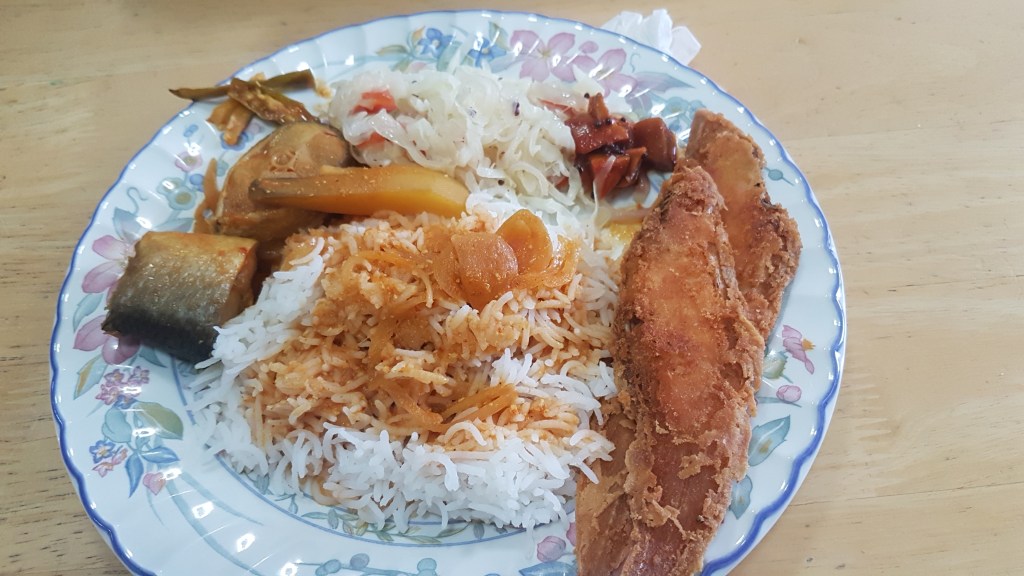
A Typical Konkan Coastal Fish Curry Rice Meal for Four persons cooked in less than 30 minutes (excluding preparation)
To keep it real have used my daily regular utensils 😉 😉
A meal for four persons
Raouns (Rawas, Indian Salmon) Fish Curry
Cabbage Vegetable
Lepo (Sole Tounge Fish) fry
Steamed rice
Mango pickle (homemade)
Rawas/Raouns (Indian Salmon) Fish curry
Ingredients
8 pieces Raouns fish
½ medium onion
2 green chillies
1” pc ginger
1 raw mango
1 tsp. Salt or to taste
To grind to a paste
4 Kashmiri chillies
1/4 tsp turmeric
1 tbsp. coriander seeds
6 peppercorns
½ tsp cumin seeds
3 tbsp. coconut powder
2 flakes garlic
½ medium onion
Method
Clean and wash & cut fish. Apply a little salt and set aside.
Grind the masala to a smooth paste.
Slice the onion, green chillies and ginger.
Wash and peel the raw mango and cut into wedges.
Heat 1 to 2 tbsp. coconut oil and add the sliced onion, green chillies and ginger. Saute till lightly brown.
Keep the flame low so the flavors of the onion, chillies and ginger release and give off a nice aroma.
Add the masala paste, the masala water, raw mango pieces and salt.
Stir and increase the flame and bring to a boil, simmer till oil appears on the edges.
Add the fish, stir and bring to a boil. Reduce flame to medium low and cook for ten minutes.
When curry is done it will leave fat and appear glossy.
Remove from flame.
P.S.: Same recipe may be used for Pomfret, Gole fish (Hammour), Mandeli (Golden Anchovies), Surmai (Kind Fish). This curry is called sweet fish curry where chillies are less and coriander seeds are more. Other curries are the amotik (Spicy hot) usually made with Tarle (Sardines), Bangde (Mackerels), Bhing (Herring) Tato (Shark) etc., Green curry with fresh green masala for Pomfret, Fresh Bombay duck, etc. and the Kane (Lady Fish) where curry to similar to above but Ajwain is added to the masala and onion and garlic are increased.
2. Cabbage vegetable
Ingredients
2 to 3 cups shredded cabbage
1 medium onion
2 green chillies
1 small tomato (Optional)
1 sprig curry leaves
4 flaked garlic
½ tsp mustard seeds
1 tbsp. coconut oil
2 tbsp. fresh grated coconut
1 tsp. salt or to taste
Method
Shred the cabbage and soak in salted water for few minutes.
Slice the onion and green chillies, chop the tomato.
Crush the garlic cloves and wash the curry leaves.
Heat the oil in a pan, add mustard seeds and allow to splutter.
Add the garlic and curry leaves, followed by the chillies and onion and saute for a minute.
Add the cabbage and salt, mix.
Cover and cook for 5 to 10 minutes till done. Do not add any water.
Garnish with fresh coconut.
3. Lepo fry (Sole Tongue fish fry)
Ingredients
8 to 10 Lepo
3 tsp. red chilli powder (or to taste)
½ to 1 tsp. salt (to taste)
2 tbsp. vinegar
Rice flour or Rava to coat the fish
Method
To clean the fish, cut the head and pull out the skin from both sides and the intestines. Wash and leave aside to drain.
Mix the red chilli powder, salt and vinegar to a paste and apply to the fish and marinate for half hour.
Heat some oil to shallow fry the fish.
Take some rice flour or rava in a plate.
Roll the fish to coat evenly and fry on medium flame for 5 minutes on each side till crisp.
4. Steamed Rice
1.5 cups basmati rice or boiled rice if you wish
1 tsp. salt
Wash the rice and soak in water for atleast 15 minutes.
Bring water to a boil in a vessel.
Add the pre-soaked rice, salt and bring to a boil.
Reduce flame and simmer till rice is tender. Strain the water.
Tip: Cook the rice on low flame so the grains remain whole and separate and do not break.











 My Cooking Diaries "CooklikeCecilia.com"
Recent Comments