Uncategorized

Marriage customs and traditions – Nuptials Program


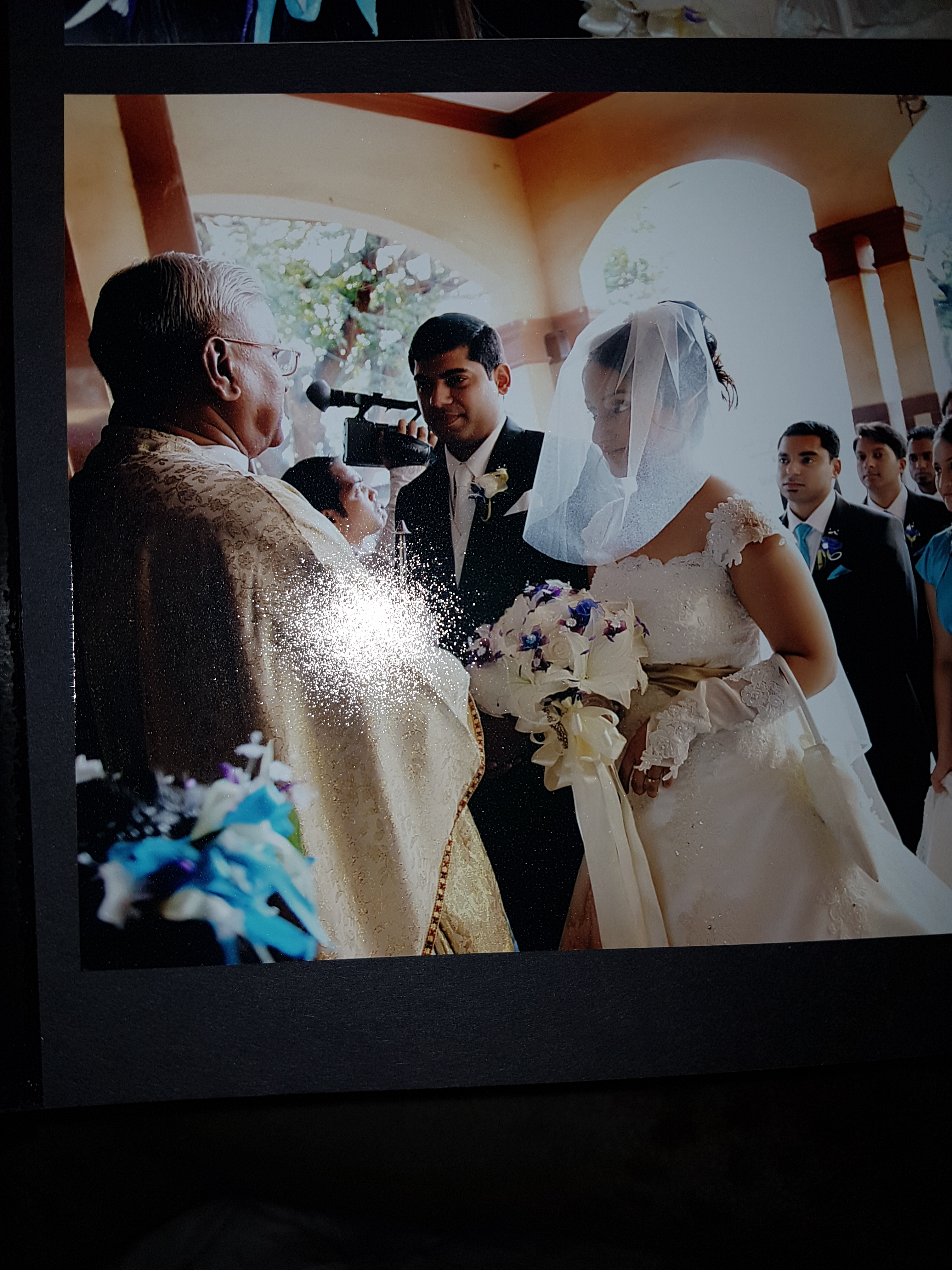
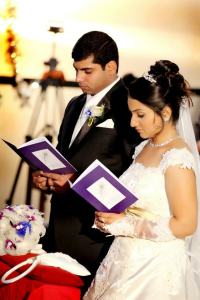
Wedding Nuptials program booklets

Raoul Charm wedding booklet


Sample Wording for a Catholic Wedding Program

Read on for a helpful Catholic wedding program template.

Religious elements or traditions can enrich a wedding ceremony, but determining what to include in the program to reflect your beliefs as a couple can be difficult. Use this sample program as a guide to get you started. Then add your own spin to make your day truly personal. Below is some helpful sample wording for a traditional Catholic wedding program.

Front Cover – Design and colors as per your choice and wedding color scheme

A Celebration of Marriage

Bride’s name
and
Groom’s name

Date

Name of Church
City, State

Inside Page 1

Celebrant
name

Concelebrant/s
name/s

Parents of the Bride
names

Parents of the Groom
names

Matron of Honor
name

Best Man
name

Ushers
names

Ring Bearer
name

Flower Girl
name

Organist
name

Soloist
name

Musicians
name(s)

Inside Page 2

Prelude

Processional
“Name of Song,” Composer
Bride’s Processional
“Name of Song,” Composer

Liturgy of the Word

Opening Prayer

First Reading—Book of the Bible Chapter: Verse, reader’s name 

Responsorial Psalm: Name of Psalm, reader’s name

Second Reading—Book of the Bible Chapter: Verse, reader’s name

Gospel Acclamation—Book of the Bible Chapter: Verse, reader’s name

Homily

Inside Page 3

Sacrament of Marriage

Exchange of Vows

Blessing and Exchange of Rings

Unity Candle
“Name of Song,” Singer’s name

Prayer of the Faithful
reader’s name

Response: Lord Hear Our Prayer

Presentation of the Gifts

Liturgy of the Eucharist
Eucharistic Prayer

Lord’s Prayer

Nuptial Blessing
Sign of Peace

Communion
“Name of song,” Singer’s name

Final Blessing

Recessional
“Name of Song,” Composer

Note for Back Cover (Optional)

Thanks so much to all of our family and friends for your love and generosity. We are so grateful all of you were able to join us and share in our special day.

Bride’s name and Groom’s name


P.S.: Number of pages may differ according to the readings, hymns, etc.

Reference The Knot


Mangalorean marriage customs and traditions – Roce


STEP 11 – ROCE

Roce stage2
Roce stage and Pan-Pod Udak

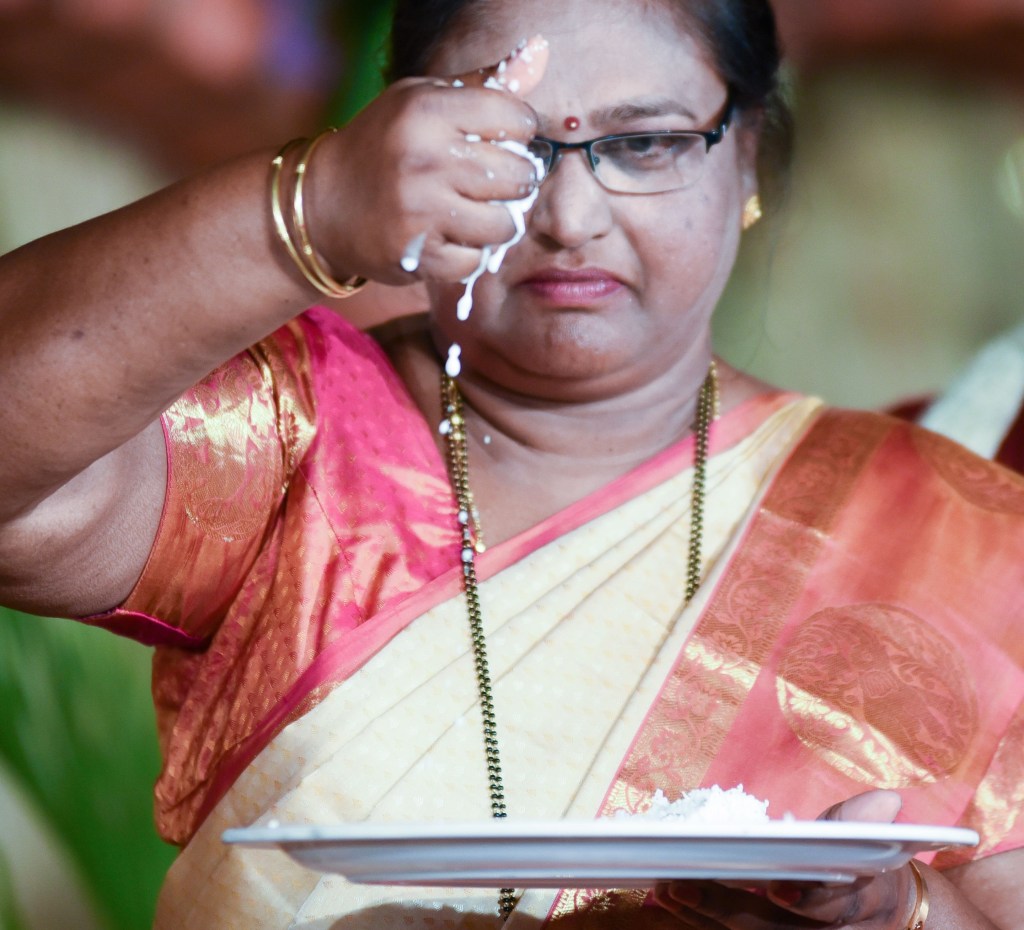
Roce is a beautiful  ceremony preceding the nuptials, symbolizing purification of the body of the young bride/groom to cleanse her/him and make them pure in the eyes of God as they are about to enter into the Sacrament of Holy Matrimony.   After the anointing she/he is led to take a ritual bath to end their bachelorhood or spinstership in preparation for the most important event of his/her life – The Wedding.

Roce is sort of an emotional ceremony and is held only once in a life time.  A person re-marrying, for whatever reasons, will not hold this ceremony.  So it is a unique ceremony and should be respected.  After this ceremony the bride/groom are not supposed to leave the house except for the nuptials.

Then:

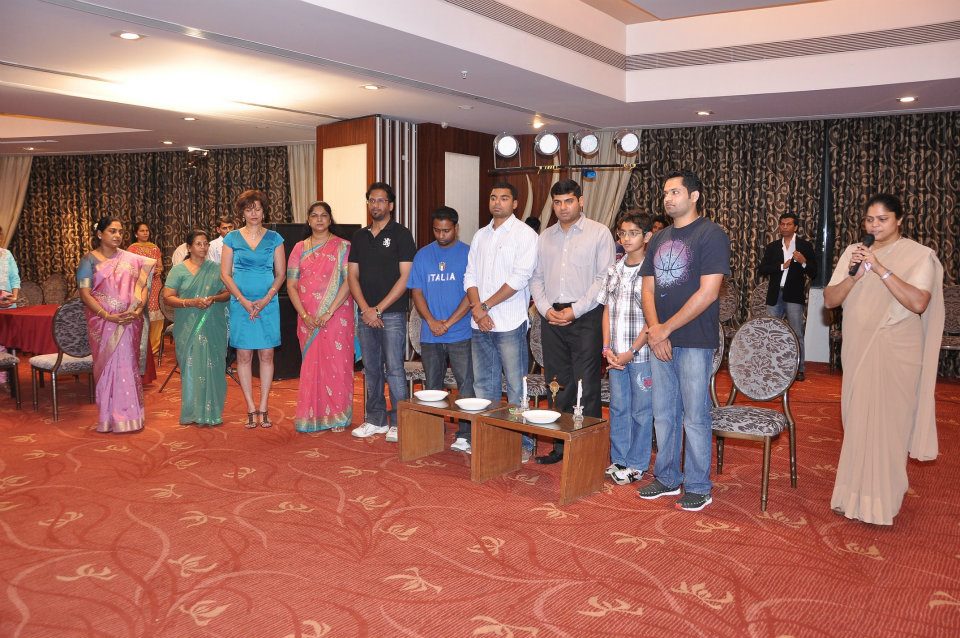
On the eve of the wedding an important ceremony is performed at the bride and groom’s house respectively, called the ‘roce’– oil bath or anointing and with this the wedding ceremonies actually begin. This ceremony signifies the mother’s love for her son/daughter.  Guests were warmly welcomed at the entrance to the matov with pan-pod and udak. Guests who are in the habit of eating pan-pod take the plate in their hands and chew some pan-pod.

Traditional dress worn by bride is a skirt and blouse (called ‘Kirgi bhaju’) and changes into skirt blouse for the roce application. The groom (voreth or novro) wore a loin cloth called ‘pudvem’ or a half pant or a ‘lungi’ and the upper body may or may not be covered with a half sleeved singlet and the dhedes wore the same.

The yejmani accounces the roce. Yejmani can be the parents or any elder family member, but not widows or widower. The male is yejmani and female is yejman.

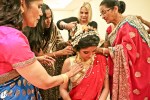
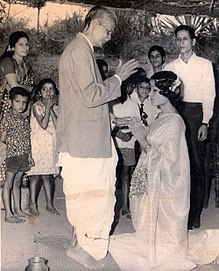
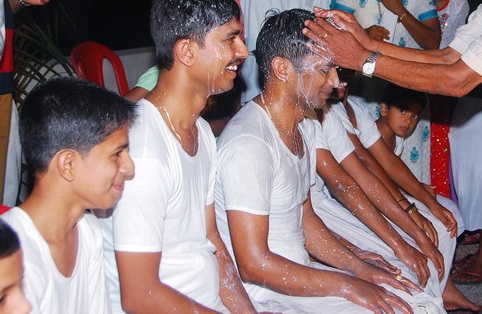
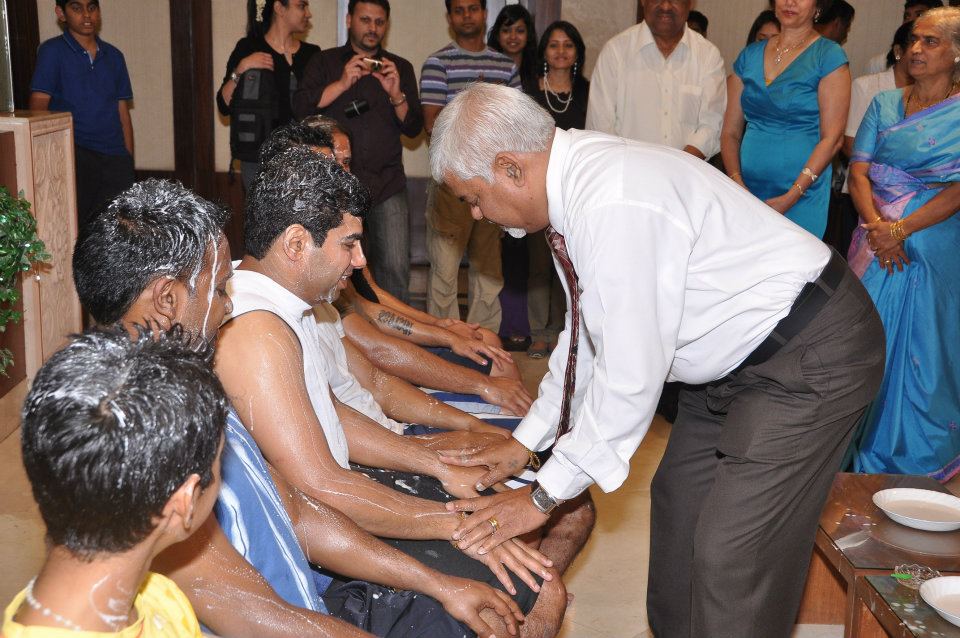
The bride/groom with their dedhiyo (bridesmaid)/dhedes (groomsmen) sit on a low stool monoi or a bench surrounded by the guests. The yejman enters with two plates vatli, one containing coconut oil and one coconut juice. She puts a sign of the cross with oil on the forehead of bridegroom, puts oil on the head rubs it in and puts oil in the ears.  Then proceeds to apply the coconut juice all over the body and softly rubs it in. The bridesmaids and groomsmen are also anointed likewise.  In earlier days only the women applied roce to the bride/groom.

This anointing is done accompanied by singing of the voviyos  by women, the procedure being one women leads the song while the rest of the women say ‘voi’ voi’ (yes, yes) at the end of each verse and then repeat the last verse.  These wedding songs voviyos express the genuine enterprising nature of the manglorean Christians, their high ideals, respect for elders, their deep faith in God invoking the blessing of God on the couple.  It was not uncommon for two senior women to sing the voviyos in competition with each other, one praising the bride and the other the groom.

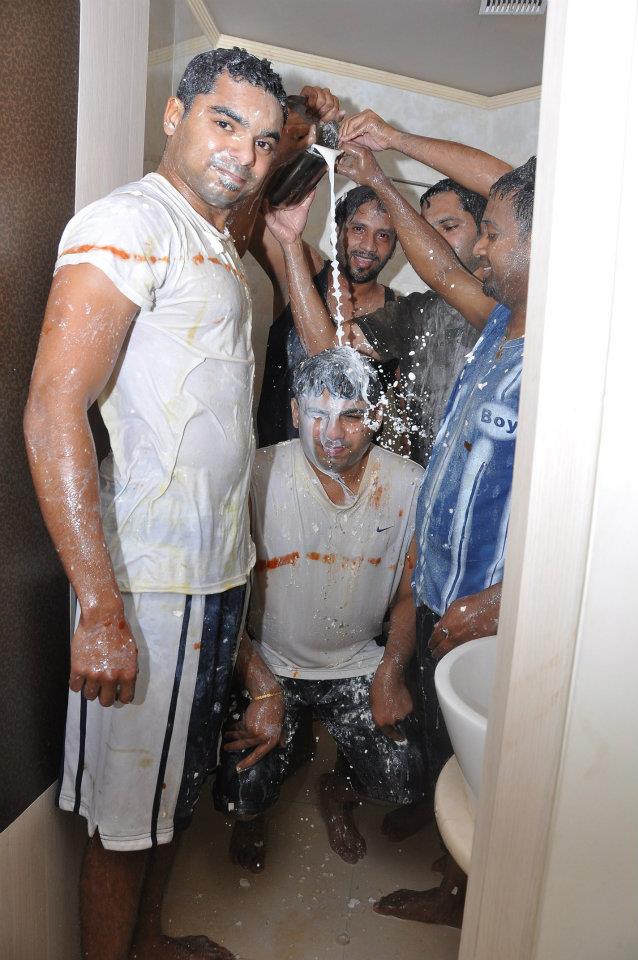
When the anointing comes to an end the bride/groom are led by the mother to the bath for their last ‘bachelor’s bath’ avnkarponachem nan-navnche.  The mother and god-mother, elder aunts would symbolically bathe the bride/groom by pouring the first few mugs of water on them.

The roce ceremony is an impressive and ritual purification rite by which the bride and groom embarks on a new state of life i.e. saunskar.  The blessings of God are invoked and their dead ancestors remembered.

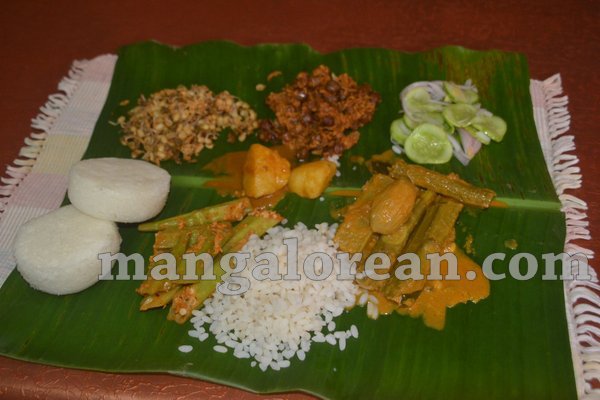
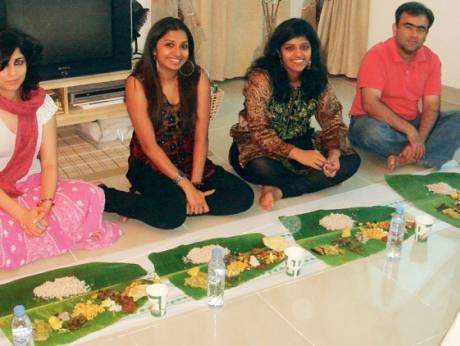
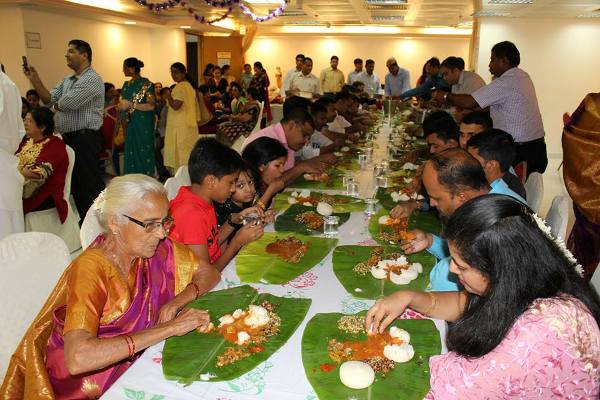
The roce banquet consists of steamed rice,  polov of ash-pumpkin (kuvalo),  chone sukke black-gram curry,  lonche pickles, kele sukke curry of raw bananas and vorn sweet dessert. Those who can afford serve muton-polov. In some communities the main dish of the roce meal consists of fish curry.

The meal began when the bride/groom finished their bath and had taken their seat of honor in the matov. The MC or Garcho Yejmani says a few words while raising a toast for a bright future to the bride/groom.  This is called boliki magchi – wishing good health to all present in the matov. At the end of the yejmani’s short speech everyone says ‘dev borem korum’ – ‘May God Bless you’ and the meal begins.  Usually children, women and people coming from long distance would eat first (poili pankti).  When people sitting at the last turn (kadechi pankti) finish their meal the laudate is sung. That night there is great merry-making, singing and joking in the matov which continues through the night.  Those in charge of cooking, keep themselves busy killing the pig, slicing onions, etc. for the wedding banquet.

Now:

The Roce ceremony is held two or three days before the wedding.   In the cities,  roce may be held at home if there is sufficient place in the compound or a building terrace where a wedding matov/pandal is erected or in a private hall.

The day would begin  by mass being offered for the departed souls of the family Gharchin almaun.  The close family members then gather for lunch at the bride/bridegrooms home to prepare for the evening roce ceremony like extracting roce.  The vojem gifts are made.

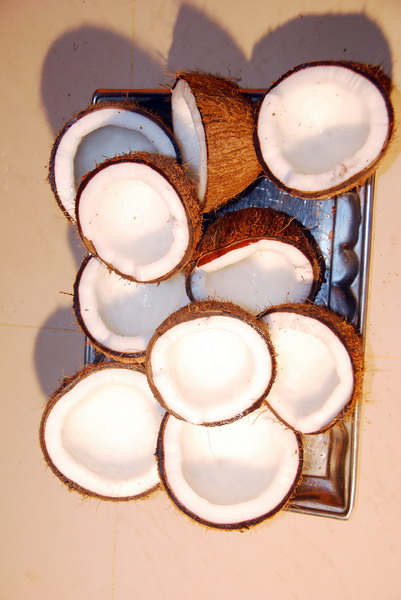
The coconuts used should be in odd number, three, five, seven, etc. depending on how much roce is required which would depend on the number of guests expected at the function.  The scraping of the coconuts are done by the elder sisters, sister-in-law, maushis, etc. and extraction of the roce although required to be squeezed by hand only,  maybe ground in the mixer and extracted by placing the coconut paste in a cloth and squeezed if a large quantity of roce is required.

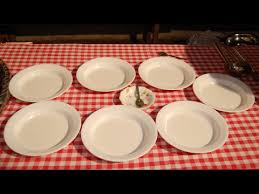
The roce plates are also in odd number 3, 5, 7 etc. depending on the number of women who will be given the honor by the yejman of carrying the roce plates.  Elder sister-in-law, God mother, aunts, etc. are given the honor but not widows and spinsters.

As the concept of matov and rashyo is seldom followed various traditional kitchen items are displayed near the stage on the roce day, as shown in the kazara matov post.

The event is conducted by a professional Master of Ceremonies who will make the required announcements to give a proper format to the event. Food is catered and music is hired so that there is great entertainment for the function.

When the anointing comes to an end the bride/groom are led by the mother to the bath for their last ‘bachelor’s bath’ avnkarponachem nan-navnche.  The mother and god-mother, elder aunts would symbolically bathe the bride/groom by pouring the first few mugs of water on them.

Roce Kuwalo cutting

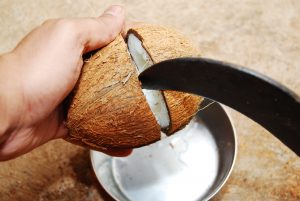
The roce ceremony today is similar to the earlier custom and by far many of the rituals are followed even if only symbolically, like the stage decorations, vojem procession, traditional costumes, singing of voviyos or recorded voviyos.  Symbolic cutting of the kuvalo by the bappu and extracting coconut juice is also symbolically performed at the begining of the formal roce function.

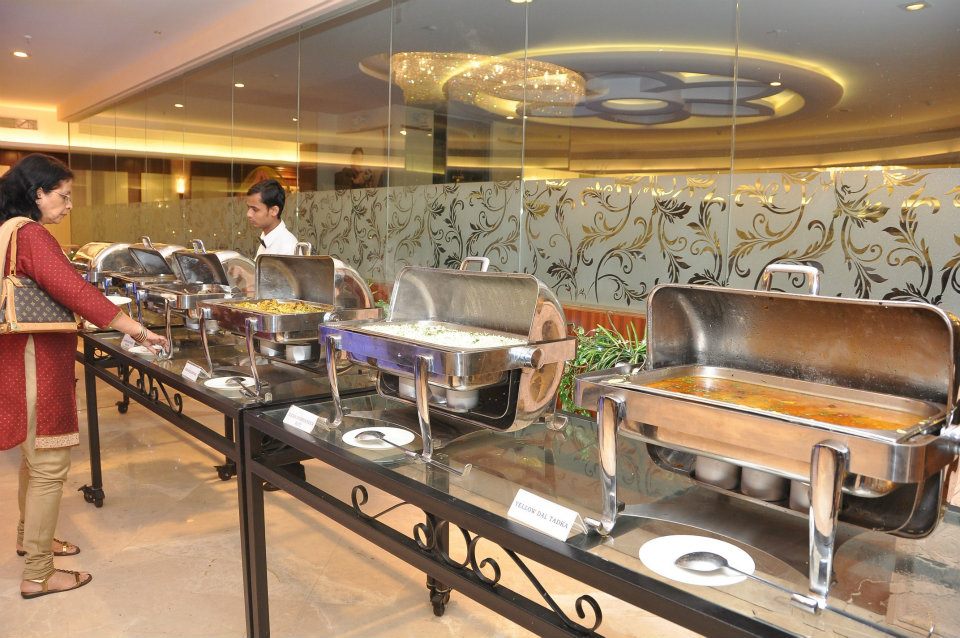
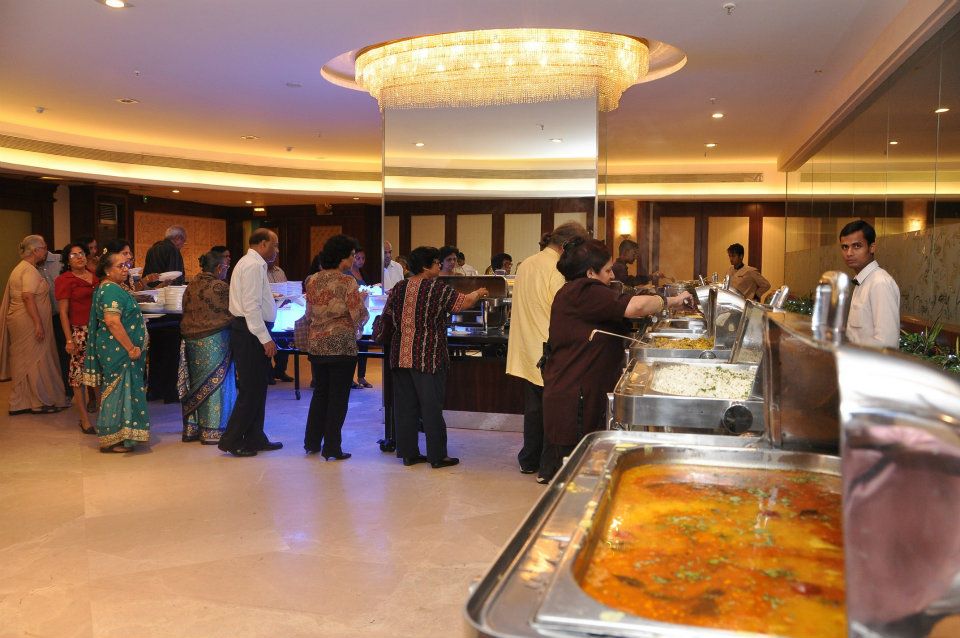
The traditional roce menu is served but in addition mutton, pork, chicken etc. are also included depending on individual choice and/or financial status of the host.  The meal is served buffet style instead of the traditional banana leaf meal.

shankarapura-mallige

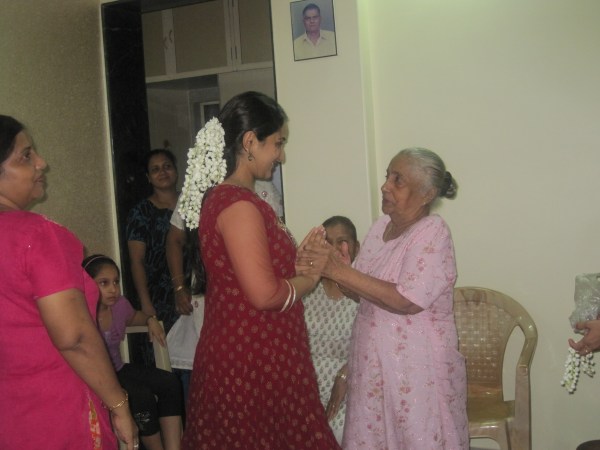
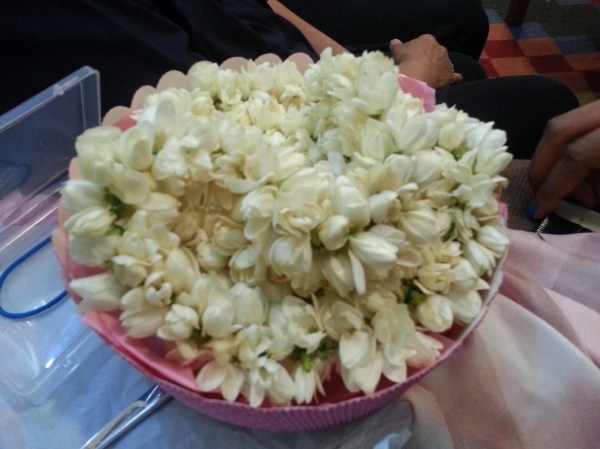
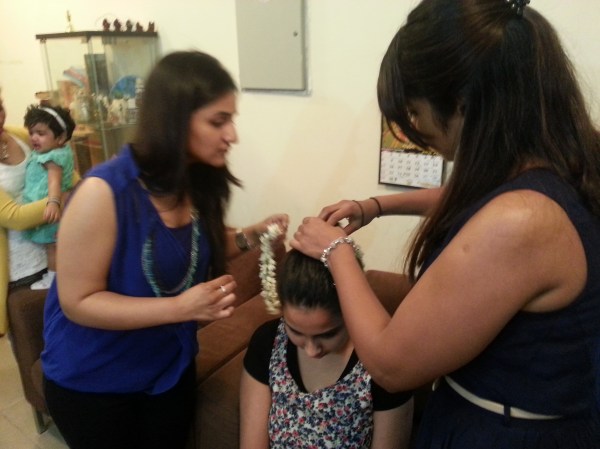
No mangalorean roce function or for that matter any wedding function is complete without the Mangalore Mallige Jasmine flowers.  As with all preparations it is ensured that an order for the flowers is made well in time. The Altar is also decorated with jasmine flowers and after reserving for the bride to adorn her hair after her ritual roce bath, the remaining flowers are distributed to women of the family, relatives and friends.

A typical roce ceremony would go along the following lines::-

  1. Keep the Roce plates at the alter
  2. Welcome
  3. Prayer at the alter
  4. Bible reading
  5. If priest or nun is present or a senior person, can give short commentary over the bible reading and the Roce program.
  6. Make bride/bride groom to stand at a prominent place and all senior people come in a line and give blessings.
  7. Make the people involved in Roce to sit at the bench provided in a Matov. (If it is bride then bride along with her sisters or cousins or dedhiyos. If it is bridegroom then along with him his brothers/cousins or dedhes)
  8. Applying the Roce
  9. Take the Novro/Vokol and give them a bath.
  10. Dedho/Dedhios too will go for bath.
  11. Dinner

and Laudate

Then music, dancing and merry-making!

Enjoy this wedding song…

N.B.: I am open to accepting research projects on Culture and Traditions. Please email me with your requests at Cecilia65@gmail.com.

Thank you.

Contribution towards research and development of Mangalorean Culture and Traditions

If you find my research and posts on The Mangalorean Culture and Traditions useful and worthy and would like to participate towards improving and enhancing my website and my research, please contribute how you see fit.

$5.00

Previous Post: Dot and Denem                                   Next Post: Nuptial Blessing Resper

References: Severine Silva and Stephen Fuchs & Victor D’sa, S.V.D.: The Marriage Customs of the Christians in South Canara, India, Konkani Roman Catholics of Dakshina Kannada

Mangalorean marriage customs and traditions – Laudate Psalm


LAUDATE

The Laudate Psalm (Psalm 116(117) – a song sung in Praising God is one of the most sung by Mangalorean Catholics at all weddings and related functions and all auspicious functions.  It is  traditionally sung in Latin.

The below psalm/hymn is recited at the end or after the first round of serving meals at the Roce and at the wedding after the Opsun Divnchem ceremony is concluded.

Laudate Dominum

Laudáte Dóminum omnes gentes
omnes populi; Quóniam confirmáta est
súper nos misericordia eius
et véritas Domini mánet in æternum (2)

[At this point all rise and mark themselves
with the Sign of the Cross
as they sing the Glory Be]

Glória Pátri et Filio et Spiritui Sáncto.
Sicut érat in pricipio et nunc et semper
et in sáecula sáeculorum Amen.

Laudáte Dóminum omnes gentes
omnes populi; Quóniam confirmáta est
súper nos misericordia eius
et véritas Domini mánet in æternum (2)


Laudate – Translation in english

O Praise the Lord, all nations, Praise Him, all people. For he has bestowed His mercy upon us. And the truth of the Lord endures forever.

Glory to the Father and to the Son and to he Holy Spirit. As it was in the begining, is now,  and forever, and for generations of generations.  AMEN


Mangalorean marriage customs and traditions – Voviyos


VOVIYOS

Roce voviyo siging

A Vovi,  is a two-liner ( traditional couplets) but very appropriate song, sung during weddings.  These ‘Voviyo’ invoke God’s blessings, remind the bride /groom of the love and sacrifices of their parents, give advice and also indulge in some good-humoured teasing.

Ideally, the women surround the bridegroom (or the bride in her house) and sing voviyos as the anointing goes on. All the essential wedding ceremonies are accompanied by songs called ‘voviyos’.  The proper method to be followed is that one of the women, leads the song while the rest of the women recite, ‘voi voi’ (yes, yes) at the end of each verse and then repeat the last verse.

Grooms’ Roce

Voviyos Groom

Voviyos (wedding songs) today are played electroically but for those who would like to participate in live singing, Voviyos are given herebelow alongwith the sequence of roce application:-

Make groom to sit on the bench/chair

Begining (Aprsos = Roce)

Applying Roce to Bridegroom and Bestmen.

 Singing of Voviyos…..

  • Aprosachi vatli, Bhangaracho bonvor, rosak bosla kunvor, amcho voret Rai
  • Reply:  Vove… rosak bosla kunvor, amcho voret Rai
  • Apros ross kadla , sarvoi sungrarun, rosak baslea kunvor amcho voret rai
  • Reply:  Vove…. rosak baslea kunvor amcho voret rai
  •  Dha Paise dileath, suvieak ani suthak, malgadea puthaak, iezmani kazar karta.
  • Reply: Vove…. malgadea puthaak, iezmani kazar karta.
  • Ruzai muje maye naka korunk poice, kadel dovorn boice hya rosalagin.
  • Reply:  Vove…kadel dovorn boice hya rosalagini.
  •  Hya Garcho yejmani kain gela Cherela sait Ruxai mayek hadunk gela
  • Reply:  Vove…Cherela sait Ruxai mayek hadunk gela..
  • Matov zadun, udoila koir, San Juzen dilam doir, amchea iezmanik
  • Reply:  Vove… San Juzen dilam doir, amchea iezmanik.
  • Apros hadn dovorla vatlenth, nouro rosak bosla, modhem matvan’th
  • Reply:  Vove…. nouro rosak bosla, modhem matvan’th

B. Make a cross on the forehead of bridegroom

  •  JezulaDimbi ami galeam, santa kuru kadeam, kurpa ami magieam amcheagim
  • Reply:  Vove…. santa kuru kadeam, kurpa ami magieam amchea Jezulagim
  • Poili santa kuru, dusrem kelam tesamw, Jezuchem besaum amchea vhoretaak
  • Reply:  Vove……. Jezuchem besaum amchea vhoretaak
  • Besaum magon, nouro bosla  bankar, dist lavn sarga, Jezu Morieacher
  • Reply:  Vove…. dist lavn sarga, Jezu Morieacher

Put oil to the ears and head

  • Kani galem thel, kopaleak kadlo khuris, sargimcho jezu kristh vhoretaak besaum dith.
  • Reply:  Vove…. sargimcho jezu kristh vhoretaak besaum dith.
  •  Kani tallve thel galn, bosaiea bankar, pailo man thuka, sargimchea Deva Bapa.
  • Reply:  Vove… poilo man thuka, sargimchea Deva Bapa
  • Kani thalve thel galn dhovorilem monniye, besaum di ranniye, sargimchea virza moriye.
  • Reply:  Vove… besaum di ranniye, sargimchea virza moriye.
  •  Akashim mod, narl kubear, telacho kuris voretachea kopalar
  • Reply:  Vove… telacho kuris voretachea kopalar
  •  Akashim mod munn, dharnik zalea shell, pintamgelea choleak, kani mateak thel
  • Reply:  Vove…Pintamgelea choleak, kani mateak thel
  • Aleachea doshi, sakrichem mel, panch thembe thel, voretachea kapalar.
  • Reply:  Vove… panch thembe thel, voretachea kapalar.
  •  Kani thallvek thel galn, Jezuk maaryam  ulo, aprubaieacho  chollo amcho vortrai.
  • Reply:  Vove…. aprubaieacho  chollo amcho voretrai

Inviting Mother Mary/Jesus and people to Apply Roce

  •  Ankvar  mai foddi narl, mori magdelen kanthi kai, jezu mori mai, teghi ros lai
  • Reply:  Vove…. jezu mori mai, teghi ros lai
  •  Madth foddi narl mun, mornel podi kai santh ezabeli saith chovgi roce lai.
  • Reply:  Vove… santh ezabeli saith chovgi roce lai.
  • Apros ross kadla, konak sanmgon,  raza magon amchea jezulagim.
  • Reply:  Vove…… raza magon amchea jezulagim
  •  Ross kaadila, bainmchea udkan, maiechea putran, rosak besaum deilam.
  • Reply:  Vove… maiechea putran, rosak besaum deilam
  • Apros roce kadn, dovorila boshiye Jezuchea khushe, iezmanin roce kadla.
  • Reply:  Vove… Jezuchea khushe, iezmanin roce kadla
  • Sakalim mal’lim fulam sanzear bavolim, alma pavolim, hea rosalagim.
  • Reply:  Vove… alma pavolim, hea rosalagim.
  • Apros roce,  ezmanichea kanknnar, dhaak zalea patna, hanga roce munon.
  • Reply:  Vove… dhaak zalea patna, hanga roce munon
  • Apros roce kadla, dheda vollyacho, ubo ravon polleita puth morieacho.
  • Reply:  Vove… ubo ravon polleita puth morieach
  • Ruxai muje maye,  naka korunk poice,  kadel dovorn boice hya rosalagin.
  • Reply:  Vove… kadel dovorn boice hya rosalagin
  • Hya Garcho yejmani kain gaa gela, Cherela sait Ruxai mayek hadunk gela
  • Reply:  Vove… Cherela sait Ruxai mayek hadunk gela
  • Ruzai mai ayli, samkyaa margan, Pintanm gelya vargan thika baska diya
  • Reply:  Vove… Pintanm gelya vargan thika baska diya
  •  Koses mai soiri, ruzai, mai gharchi, tinnem kurpa dimvchi, amchea vorehtak
  • Reply:  Vove… tinnem kurpa dimvchi, amchea vorehtak 

First roce applied by the mother.

  •  Aprosachi vatli davigi uzvi, poilo roce laitha Voretha avoi tuji.
  • Reply:  Vove…poilo ros laithai Voreta avoi tuji.
  • Nannden ghalam lonnchem zaav ghaltha doce, avoi pustha roce, nouro nitt boce
  • Reply:  Vove avoi pustha roce, nouro nitt boce

Second roce applied by the father.

  • Aprosache vatli motiancho ghos, mogacho roce vorta bapaicho.
  • Reply: Vove…. mogacho roce vorta bapaicho.
  • Rosyanche radnik katyanche pog, Vishranaka mogu tuja mai-Bapaicho.
  • Reply:  Vove… Vishranaka mogu tuja mai-Bapaicho.
  • Rupiyache vattle bhangarache kes, mogacho roce tuja mai-bapacho
  • Reply:  Vove… mogacho roce tuja mai-bapacho

Roce applied by grand parents, uncles, aunts, etc

  • Aprose roce nidla voilyan gallaith, sargim thaumn pollaith, voretha ajeio tuje
  • Reply:  Vove… sargim thaumn pollaith, voretha ajeio tuje
  • Mez almar karun, mezar dhavarla glass, sargar zala ullas, tujea ajieak.
  • Reply:  Vove… sargar zala ullas, tujea ajieak.
  • Sargimchea baink, aad gala ruk, ek galai dhuk, vorehta azieak thujea.
  • Reply:  Vove… ek galai dhuk, vorehta azieak thujea.
  • Aprosachi vatli davigi ujvi, dusro roce pustha voreta baplo tujo
  • Reply:  Vove… dusro roce pustha voreta baplo tujo
  •  Hyavi matvanth baple thuje mhale, tjua bapaicha kaal, baplo roce laitha
  • Reply:  Vove… tjua bapaicha kaal, baplo roce laitha
  • Mavllo roce laitha, monanth kitem chintha, borem ponn magtha tuja kazaraak,
  • Reply:  Vove… borem ponn magtha tuja kazaraak,
  • Bhatacha rashir boson asa kavllo, mundaas gaar mavllo, aila tuja kazaraak,
  • Reply:  Vove… mundaas gaar mavllo, aila tuja kazaraak,
  • Aprosachi vatli dhavigi ujvi, thisro roce pusthat vohret mavshyo thujo
  • Reply:  Vove… thisro roce pusthat vohret mavshyo thujo
  • Padri mees sangta, jezu Mariea voir, thanim dilam dhoir amchea vortak
  • Reply: Vove….. thanim dilam dhoir amchea vortak
  •  Gulobacha zadaa tallver phulla bongo, uzvadacho khambo, amcho voreth rai
  • Reply: Vove…… uzvadacho khambo, amcho voreth rai
  • Ude Ude dis, udethana thambso, sondremacho arso amcho voreth rai
  • Reply: Vove……. sondremacho arso amcho voret rai
  • Aprosachi vatli dhavigi ujvi, chovtho roce pustha vohret akayo thujo
  • Reply:  Vove… chovtho roce pusthath vohret akayo thujo
  •  Aprosachea boxiea, muieancho hari, aieavo naari, chovgi roce lai.
  • Reply:  Vove…. aieavo naari, chovgi roce lai.

Roce applied by other close relatives, daijis, vaddo people and all the people who are present. During this time you may say any kinds of vovios to give advices to the brides/grooms (some could be as below)

  •  Ailea saireank, patim karinaka, jevan kelea xivai bhavank dhadinaka
  • Reply:  Vove… jevan kelea xivai bhavank dhadinaka
  • Kodyal taun aylim, udpi evn pavlim, yezmanichya apovnyak, haanga evn paulim
  • Reply: Vove…… yezmanichya apovnyak, haanga evn paulim
  •  Aprosachi vatli davigi ujvi, atam roce laithath voretha daijim tujim
  • Reply:  Vove… atam roce laithath voretha daijim tujim
  •  Hem Ghar sobana munn kursak aylam pan, poilo dila maan tumkam daijiyank
  • Reply:  Vove… poilo dila maan tumkam daijiyank
  • Govamcho undo, tupan thapaila, mogan apailam iezmanin daizeamk.
  • Reply:  Vove… mogan apailam iezmanin daizeamk.
  • Fulam bithor ful, gulob zadachem, kutam vodanchem, amcha voretaachem
  • Reply: Vove…….. kutam vodanchem, amcha voretaachem
  • Vaadyanthle maanesth, aylyath hanga somesth, pollevnk distha rupesth amcho voreth rai
  • Reply: Vove… pollevnk distha rupesth amcho voreth rai
  • Mug fodun, mugachi keli dall, kutmak mogall, amcho voreth rai
  • Relpy: Vove…… kutmak mogall, amcho voreth rai
  • Voretha rai, haath tuje gore, dhede sodh bore, thuka sangathak
  • Reply: Vove….. dhede sodh bore, thuka sangathak
  • Goincho goinkar, bhuincho bhuinkar, kuwaittcho savkar amcho voret rai
  • Reply: Vove……. kuwaittcho savkar amcho voret rai

Finally, when the women stop singing, the anointing also automatically comes to an end. Then the bridegroom is pushed to the bathroom with his brothers or friends for a so called ‘bachelor’s bath’.

Going for bath:

  • Tambeachea bhanni tapoilam tambann, voret nhata nhann az ankvar ponn.
  • Reply:  Vove… voret nhata nhann az ankvar ponn.
  • Tambeachea bhanni tapoilam tambann, voret nhata nhann az dabajan
  • Reply:  Vove… voret nhata nhann az dabajan
  • Tambeachea bhanni udok tapoilam, nanvk apoilam amche voretak
  • Reply:  Vove… nanvk apoilam amche voretak
  • Dharyacha lara, chothri fulai mora, naumk apoun vora, amcha voretak
  • Reply:  Vove… naumk apoun vora, amcha voretak
  • Voviyo mullim vovllim voretak nannaunk vocha, heram jevnnak bosa, raath madhyaan zatha
  • Reply:  Vove… heram jevnnak bosa, raath madhyaan zatha

Thus we see that this impressive roce ceremony is a meaningful and important rite. The purpose of this ceremony is to indicate that the bride or the bridegroom now leaves his unmarried state of life and embarks on a new mode of life.

Lunch or Dinner

  • Donparanchea jevnnak nisteak kitem guzo, daijeank apovn ezmani kor uzo.
  • Reply:  Vove…daijeank apovn ezmani kor uzo.

Brides Roce

Voviyos Bride

Make bride to sit on the bench/chair

Begining (Aprsos = Roce)

Applying Roce to Bride and Bridesmaids

 Singing of Voviyos…..

  • Aprosache boxie, Bhangaracho bonvor, Rosak boslea Kunvorn Amchi Voret bai
  • Reply:  Vove… rosak boslea kunvorn, amchi voret Bai
  • Apros kaddla, Sorvoi surngaravn, Rosak boslea kunvorn Amchi Voret bai
  • Reply:  Vove… rosak boslea kunvorn, amchi voret Bai

Make a cross on the forehead of bride

  • Akaxi madd, Narl kubear, Telacho khuris voklechea Kopolar.
  • Reply:  Vove… telacho khuris voklechea kopolar

Put oil to the ears and head

  • Akaxi modd mhonn dhornnik zalea xell, SOZANgelea (here mention the relevant surname) choliek, kani mateak tel
  • Reply:  Vove… (here mention the relevant surname) choliek, kani mateak tel
  • Aleachea dosi, sakrichem mel, panch tembe tel voklechea kani ghal.
  • Reply:  Vove…panch tembe tel voklechea kani ghal.
  • Kani ghalem tel, kopolim kaddlo khuris, vainkutincho jezukrist voklek besanv dit.
  • Reply:  Vove..vainkutincho jezukrist voklek besanv dit.
  • Kani tallve tel ghaln bosoia banka, poilo man tuka sorginchea deva bapa
  • Reply:  Vove…poilo man tuka sorginchea deva bapa
  • Kani tallve tel ghaln sorvoi angi denvlem, apurbaiechem bavlem amchi vokol bai
  • Reply:  Vove…apurbaiechem bavlem amchi vokol bai
  • Kani tallvek tel ghaln, jezuk maruiam ulo, apurbhaecho cholo amcho voret bab.
  • Reply:  Vove…apurbhaecho cholo amcho voret bab.

Inviting Mother Mary/Jesus and people to Apply Roce

  • Ankvar moi foddi narl, mori magdalen kanti kai (Narl kantcho), jezu mori mai, tegi rose lai
  • Reply:  Vove…jezu mori mai, tegi rose lai
  • Aprosache boxie, muiancheo hari, aiavo nari, chovgi rose lai.
  • Reply:  Vove…aiavo nari, chovgi rose lai.
  • Aapros kaddla, konnak sangon, roza magon amchea jezulagim,
  • Reply:  Vove…roza magon amchea jezulagim,
  • Apros kaddn, dovorla boxie, jesuche kuxie, ezmanin rose kaddla.
  • Reply:  Vove…jesuche kuxie, ezmanin rose kaddla.
  • Apros kaddla, dedda volleacho, ubo ravon polleta put moriecho
  • Reply:  Vove…ubo ravon polleta put moriecho
  • Altari voili kals, denne lavn kaddlea, ballka soit ailea amchi ruzai mai.
  • Reply:  Vove…ballka soit ailea amchi ruzai mai.

First roce applied by the mother.

  • Aprosachi boxi davigi ujvi, poilo rose laita vokle avoi tuji.
  • Reply:  Vove…poilo rose laita vokle avoi tuji.

Second roce applied by the father.

  • Aprosache boxie, motiancho ghos, mogacho ros vokle bapaicho.
  • Reply:  Vove…mogacho ros vokle bapaicho.

Apply other close relatives, daijis, vaddo people and all the people who are present. During this time you may say any kinds of vovios to give advices to the brides/grooms (some could be as below)

  • Aillea soireank pattin korinaka, jevonn kelea xiva bhavak daddinaka.
  • Reply:  Vove…jevonn kelea xiva bhavak daddinaka.
  • Ami boroil’lem kagot pavlem bellganvant, urlo porganvant vokle baplio (Mavllo) tuzo.
  • Reply:  Vove…urlo porganvant vokle baplio (Mavllo) tuzo.
  • Amchea ghora mukhar chireacho doro, rinnacho bhoro vokle bapaik tujea.
  • Reply:  Vove…rinnacho bhoro vokle bapaik tujea.
  • Itle vers gavn, amkam kitem pag, tumchea rozar magnneant amkam borem mag.
  • Reply:  Vove…tumchea rozar magnneant amkam borem mag.

Taking bride for bath

  • Tambiachea bhanni tapoilam panni, vhokol nhata nhann az ankvar ponn.
  • Reply:  Vove…vhokol nhata nhann az ankvar ponn.
  • Tambeachea bhanni, tapoilam tambann, hokol nhata nhann az dabajan.
  • Reply:  Vove…hokol nhata nhann az dabajan.
  • Tambeachea bhanni tapoilam tambann, hokol nhanvk vheta bendda tomboran.
  • Reply:  Vove…hokol nhanvk vheta bendda tomboran.
  • Tambeachea bhanni udok tapoilam, nanvk apoilam amche hok’lek.
  • Reply:  Vove…nanvk apoilam amche hok’lek.

Lunch or Dinner

  • Donparanchea jevnnak nisteak kitem guzo, daijeank apovn ezmani kor uzo.
  • Reply:  Vove… daijeank apovn ezmani kor uzo.

LAUDATE

Wedding songs

Traditional Mangalorean wedding songs


TRADITIONAL WEDDING SONGS:

Roce song

  1. Bhailian Ailo Vor  (Roce song)

Bhailian ailo vor, run ami nenan, zanvliaun vele
Nenan zanvliaun vele, rukhar zalta,

Vaten violthek ramb ani rebhek,
konthar salanth, Rebhek,
konthar salanth, uzvad phankla,

Ghara dhogain auvnkwariancho,
uzvad phankla Ghara dhogain auvnkwariancho.

Poilo kozno koryan ami bhogun kozno koryan,
Komyo kozno koryan.
Laudate Konthar

Kame Rodhan bithore yeyan,
Laudate Konthar,
Kame Rodhan bithore yeyan.

…(additional Verses)
Ghearze Violancho, mukhar zalta,
Ghearze Violancho.
Bhailian aile vor, mhunne ami dharnik ghalo bhare,
Dharnik ghalo bhare. Poilo naman,

Kare Sorghinchia Deva Bapak,
poilo naman, Kare Sorghinchia Deva Bapak.

Poise thauvne ailiaun ami thalnin, amche ghole,
Thalnin amche ghole! Hathan zodiyan

Povle thumchia malghadianche, hathan zodiyan,
Povle thumchia malghadianche.

Rodap tumcho sadhe, amcha khandhar ghalo bhanke,
Khandhar ghalo bhanke. Thoyyar keliathe

Bhanke thumcha rodaniake, thoyyar keliathe,
Jersik yeke kami ami bhayle sarke yezmani,

Bhayle sarke Yezmani. Gathe sodhun
Bhanke thumcha rodaniake.

Jersik yeke kami ami bhayle sarke yezmani,
Bhayle sarke Yezmani. Gathe sodhun

Ailiaum rodhan gharadharin, gathe sOdhun,
Ailiaum rodhan gharadharin.

Bhalian ailo vor, roon ami Bhesaum Dheva Bapachen,
Bhesaum Dheva Puthrachen. Rajhi sanghun

Ailiaum vodhanja bhogachen, rajhi sanghun,
Alliaum vodhanja bhogachen.

Bailaan aailo wuree ani
Nennar zaalaar vaillou(2)
Mukaar dhaatyow,kaale aarthe villou laanso.(2)

Aarthe villou,devranth ani
Rebeir karthar saalaan (2)

Wuzwaad faanklaa,garaanth dogaan ankwaar ravnso(2)

bhailaan ailon bore ani
yezmaan zaalaar pushi (2)
Mukaar dhaantaw,boshi sankdank dube laanshi (2)
poilun kosonso sodyaa ani
dusro koslo koryaa(2)
ravthar karta,Karn woraa ditar karya(2)

2. Ami dogi sezara

Ami dogi sezara vetam kazarak
Bail burgi thi rosak geli, yonanth garah
kedna teri sezara zalaier kazarak
Saglie amchi patla baba vethat thya garah

Matvant baba badkar vodley sagley asthaley
Ladru pedru banda sangi dance martheley
Woolen suitar noveh booter sagley sobthaley
Ami dogi natkar saiba konshak urtheley – 2

Ami dogi……..

Badyaso suit haadun hami vanthe karn galo
Pant thannieh galun, coat baba havie shirkielo
Matvanth saiba voklo amcho hasun fugthyolo
Amchi sobie dekun tho boros hasthelo – 2

Ami dogi…….

Adlya vorso amche baba kazar zaliey
sangche kithey sagley piyoun thigh re zaalay
Amcha voklank gevun sagley dance marthaley
Visar karunk galyak amka vonani marley – 2

Ami dogi…….

The following song “Ghulobancho Jhelo” (a garland of roses) expresses the excitement of the fathers-in-law over their new acquisitions:

3. Ghulobancho Jhelo

Ghulobancho jhelo; Ugthia pattar zalo, (2)
Ghorkarnicho kelore viva, mauan ayer kelo.(2)

(repeat last 2 lines)

Utuur Bore Paatu,suufaar Bore Layi
SovyaaK Fuulair .Zaayiere Viva. AamChe wokol Bhai

(repeat last 2 lines)

Angur Sangle yaatso,Dhivor Mani yaatso
Dhayan puuli yaatso,Puvare Viva Aamso Borat Baapu

(repeat last 2 lines)
Angur Sangle yaatchi,Somoy Mani yaatchi
Daya Puleyeche,Puvare Viva Aamche Vokol Bhai
(repeat last 2 lines)

….(additional verses)
Rukad kithlian phutan, Molin dumra kayi, (2)
Bapod montha, rayi re viva, amcho voreth babe.(2)
Luktan kithlian ponthan, Voilian dumra pani, (2)
Bapod montha, rani re viva, amchi vokal bayi.(2)

4. Ude Disaan (after Sado)

Ude ude disaan (2)
ude dana aamso felizaa
ude dana aamso

Ude dana aamso felizaa
Ude dana aamso
Sangrey matzo aaso (2)
Sangrey matzo aaso felizaa
Amche wokol bhai

sangrey matzo aaso felizaa
Amche wokol bhai

Haatanth dhulo aamor (2)
Pormol ane miryo feliza
Pormol ane miryo

Pormol ane miryo feliza
Pormol ane miryo

Rupan dista suryo (2)
Rupan dista suryo feliza
Aamso borap babu

Rupan dista suryo feliza
Aamso borap babu

5. Umarar Kityak / Baglyar Kityak Ubo Voretha  (Mai’n Mudhi shivnchem song)

Umarar kityak ubo voretha
Mai apoietha Mai apoietha
Dheda poundachi mudhi bangrachi
Mai dhitha munta (2)

Thi mudhi galn voretha
Vosanaka misak, Vosanaka misak
Dhist zait tuka voretha
Nhast zait maka (2)

Umarar kityak ubo voretha
Maav apoietha Maav apoietha

Barah vorinso shelo zariso
Maav ditha munta (2)
Tho shelo galn voretha
Vosanaka misak, Vosanaka misak

Dhist zait tuka voretha
Nhast zait maka (2)

6. Mai Muntha thu Zegunachi Sunn (After Upson)

Mai minta thu segunachi sunn
mai munta bore tujhe gunn
vadantlo lok saglo kushal zala
garant aila munn segunachi sunn… (2)
Female:
Oooooo moga mujha, aaj vodtho ullas bogtha
nashibantlo zalo munn, vodd sontos bogtha maka… (2)
male:
Tujhe vinn no sobai, mujhe ghar ujvadie
Tu shegunachi shegunachi shegunachi sunn…. Chorus
Female:
Ooooo moga mujha, tho mog re amcho dogainso,
*(Burgyapontan ailo tho), fudarant saav devo…(2)
Male”
Chintna pois zalie, tujos utrani
Tu shegunachi shegunachi shegunachi sunn……. Chorus
Femaile:
Oooooo moga mujha, zechi kalza ekvotli amchi
*(Fuden jeevo askanso), haav tujhe zonv ravtheli…(2)
Male:
Utra goud tujhe, kalzak re vodli
Tu shegunachi shegunachi shegunachi sunn….. Chorus

7. Tambde Roza

Tambde Roza tuje polle, dukhani bhorleat moje dolle…2
Papachem lisens, assa zalear polle, kazar zauncheak moje kodde..2
Papachem lisens assa re maka, kazar zaumcheak rautam tuka…2
Tum tor kazar, zaina zalear moga, moji bhirmot futtoli tuka…2
Papan kazar maka kelem, sukhantlem voron dukant ghatlem…2
Sabar ankvar cholle ektaim zaum, adoraru maka kelem…2

8. Rodonaka Baye  (Opsum divnchem song)

Rodonaka Baye, ani suzainaka doley, ani suzainaka doley
Aatha disa fuday, baav apounk yetha polay,
Aichan aatha disa fuday, baav apounk yetha polay,

Ek todpa tandul, baye astun kaadgo kundo, baye astun kaadgo kundo
Tuja novryacha gustar, baye loniyan kago undho

Mathey bor kase, baye paat bor vini, baye paat bor vini
Vathai mun go baini, baye amchay sangathini

Vos vos go baye, tuja novrya bora bor, tuja novrya bora bor
Amso somesthaso mog, baye tuja kalzanth dovoru

Vos vos go baye, tuja bartharacha garah, tuja bartharacha garah
Sukan raaj karn raavu, tuja mai mavacha garah


9. Sovo sovo surngarone
(Upson ditana)

Sovo sovo surngarone
hanthull-hanthulleli sarsi!

Manik, manik, nirphol zalan;
Voretha, voretha, dhave kusin.

Vokol, vokol aani bore
Yentik,yentik bur polaani

Thanso ,thansolai lo paatte
Dholan,dholanso polani

Aami ,aami wudekshithu
Biinge,biingelai chaamulaa
Boretarn,boretarn haate dilaa
Dharmiir ,dharmirichaa fuulaa

Dhaarmiir ,Dhaarmirichaa daali
Dhaarmiir ,Dhaarmirichaa piiklaa

Eicha,eicha Fulaan jitle

…(additional verses)
Sovo, sovo surngarone,
don thin, don thin phodlin ponthan.

Ayer, ayer rathe bhoslianth
Dhoghain, dhoghain, bhaghevonthan.

Uzven, uzven phutizo Vangel,
dhaven, dhaven kusin modlo,

cra-, Sacramenthe zodlo,
Dhoghain, dhoghain auvnkwariani.

10. Yeh go Vokelai (after Opsun)

Aar tera wursaan powsunu
Aaz dilaa wopsunu

Yeh go vokelai (2)
Mukar salounu
(Repeat)

Haath tuje sodonu
sakdaank boree magunu

Yeh go vokelai (2)
Wujwe payaana
(Repeat)
Thond tuje fugainaka
Dhole tuje suzainaka
Maai ani maawu powle thali mowganna thuka (2)
(Repeat 1st and 2nd verse)

11. Ughod Dhar (When entering groom’s house)

Ugadi dhar sare bithore thuje shasulile ghaara (2)
Nandaase wakale mowgaan s tuje sadaanche ghaara (2)
Wujwe payaan sare bithore tuje baangarache ghaara (2)
Wugadi dhar sar bithore thuje shasuli ley ghaara (2)Open the door, enter! the house of your in-laws
Treat lovingly your in-laws, and you will find a lovely eternal home
Place your right foot forward into your house of gold
Open the door, enter! the house of your in-laws

12. Baara Baanda

Baara baanda rathya si boli
Baararu piyaacho (2)

Mysoreso amiz mudya si boli
Voretarn ma wallyaacho (2)

Aapeleyechi bhaine se boli
Maakalaik taa akoi(2)

Mawalleyecho mudyo voretarn
Aamka sakdank dakhoin(2)

Nagna purbaa Waailar voretarn
Mudyo Poithante mekoi (2)

13. Evde Ratriche Soire Bailyan kaun (Aapone song)

Ankur chedu waa tumka bangolechaa
Katyaak laagown illo wuzo dai kain go

Evde ratrichae soiri bailyan kaunu (2)
Koni neigh go ami sowg zaana (2)
(Repeat)

Evde ratriche soire bailyan kauu (2)
Taandyaak tonkyaan sow chedwaa maawu go tuzo
Laambe kaadche sow chedwaak bhavo ghatuzo

Chindulaan waananso chedwaa dev re gotuzzo
Meya mojan so chedwaa barthaar gothuzo

Dandya konyachaa mowgaan zaala mandriyaa
Laambe kadse chaar bhavya sobyaar niraya

Chindulaan baandaacha deraa gudaan chepiyaa
Neighya muje chaapardaraa bitar appoiya
(Repeat 1st and 2nd verse)

14. Mollbar Chondrim


15. Voviyos – Groom’s Roce

16. Voviyos – Bride’s Roce

17. Laudate  


Mangalorean marriage customs and traditions – Dot and Denem


STEP 10

DOT and DENEM

Then:

gold varaha
Gold Varahas South India – Indicative

Once the girl and boy have approved of each other at the sairik bethrothal, the dowry (dot), etc. was discussed. Dowry was given by the bride’s father around two weeks before the wedding with great solemnity in the presence of many witnesses in the house of the bridegroom. To celebrate this occasion the pan-pod was distributed i.e. a plate with pan-pod was passed from the bridegroom’s side to the bride’s party and vice-versa. This exchange was called badalchen (changing hands). A packet of pan-pod was also sent to the Parish Priest and to the other relatives as a seal to the final sairik.  With the dot, which was to be given atleast two weeks before the wedding, the bridegroom bought the jewellery especially the mangalsutra which was called ‘moni’ (silver beads in those days), gifts and clothes especially the “sado” red wedding saree for the bride.

In olden times the dowry amounted to between two and four varahas (gold coin of the bednore kingdom) and each varaha was equivalent to Rs.4.00.  The largest amount ever demanded in early times was twelve and a half varahas. In later years and with the gradual increase in wealth of the konkani catholics and higher price of gold the dowry was increased to a thousand rupees and wealthy people even paid upto twenty thousand rupees.

Dowry became a necessary element and was demanded as a right and even had a mention on the formal engagement contract.  In addition to money, the items usually given were useful items like gold, vehicles, marriage expenditure, etc. However, dowry laws forbid open demands being made but is nevertheless expected by the boy’s family and offered by the girl’s family.

Now:

Denem

Denem

The term ‘dot’ is now replaced by dan‘.  Athough both mean ‘gift’  the tendency now is for the boy’s family instead of asking how much cash would be given as dot they ask how much gold will be given as dan. When a girl is educated and employed the amount of dan expected would be less as employment translates to wealth. In some cases the boy’s family may not request for dan at all but the girl’s family will nonetheless give her gifts in gold, etc. as no family would like to send their girl empty-handed so to say lest she face any form of ridicule for want of ‘dan‘. Families gift articles as per their choice and financial status, there is no fixed rule per se.

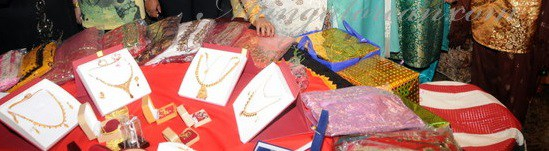
The dan so gifted becomes the “denem” and these items are then to be delivered to the grooms house and this is usually done a day or two before the wedding and ideally on the morning of the roce day.  A few elders (women) of the brides close family maushis, elder sister, sister-in-law, go to the groom’s house to handover the denem.  The brides family on reaching the grooms house are duly welcomed and the denem accepted by the yejman (groom’s mother or the female family member who is the yejman for the wedding) in the presence of the elder women of the grooms close family.  The denem is then displayed to the family and close neighbours are also invited.

Denem articles given as per financial status

denem-displayed4.jpg

Denem specimen I

Denem 1

Dene specimen II

BANGLE CEREMONY

Then:

red bangles lastbustovasco

In earlier references, the bangle ceremony is mentioned where on the eve of the wedding day the bangle seller is invited to the house and the bride is first presented with red bangles. She was made to sit in the front of the matov dressed nicely with red flowers in her hair alongwith her bridesmaids dhedio.  Generally the younger sister of the bride act as bridesmaids. The elder female relatives whose husbands are still alive also receive a pair of bangles.

The Goan community follows this custom even today, which is called Chuddo  

Goan chuddo
Chuddo

which is an important ceremony performed by and at the home of the Uncle of the bride.  The manglorean catholics may have carried over this custom when they located to Dakshina Kannada in their early period of settlement.

Now:

I am not aware of any such bangle ceremony being performed in the Mangalorean community.  But, red bangles are put on the hands of the bride during the sado ceremony at the reception.  A set of 4 to 6 red bangles are put by the brides mother-in-law during the dressing of the sado.

Previous post: Vojem                                                                               Next Post: Roce


References: Severine Silva and Stephen Fuchs & Victor D’sa, S.V.D.: The Marriage Customs of the Christians in South Canara, India, Konkani Roman Catholics of Dakshina Kannada


Mangalorean marriage customs and traditions – Vojem


STEP 9

VOJEM gifts

Then:
Vojem2

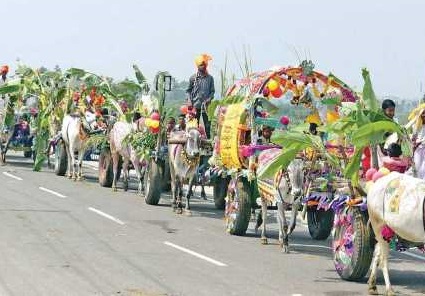
On the eve of the wedding, neighbours, people from the vaddo and close family brought gifts ‘vojem’ to the family which consisted mainly of various kinds of food required for the roce and wedding dinner like rice, vegetables like pumpkins, gourds, fruits like jackfruits and plantains and plaintain leaves, the latter were used as plates. Those who could not afford food contributed money.

*Wealthy and influential people brought their gifts accompanied by a brass band and group of dancers brandishing swords or wooden staves and this group was called talim. The bearers of the gifts came in a long line and in a solemn manner. The gifts were received with some solemnity by the master of ceremonies ‘yejmani’ and his wife ‘yejman’. No widow or widower can act as Yejmani and Yejman and this honor is then given to the closest married elder relative. The family accepting these gifts had to return them in a larger measure when a wedding was celebrated in the donor’s house.

* In the early 20th century most of the konkani roman catholics were temporary cultivating tenants ‘Chalgeni’ and the lanlords used to bestow various privileges on the cultivators. It was necessary to provide presents on important festivals and occasions of birth, marriage, etc., e.g. on a wedding the minimum present from the landlord in addition to various fruit, vegetables, coconuts was; 4 muras of paddy and another 4 muras worth of cash to pay the dowry, 16 yards of cloth, 4 1/2 kudatis (1 kudati = 12 tolas) of coconut oil, 1000 betel leaves, 100 areca nuts and some cash, etc. It was after the land reform act was passed and introduced that surplus land was re-distributed among poor cultivators and needy landless agricultural labourers that most of the ‘cultivating tenants’ became land owners.

So when a reference to *Wealthy and influential people bringing vojem is made and the symbolic vojem processions we see at present day functions, I would think these wealthy people were the landlords bringing their presents with great pomp and show accompanied by the band. Hence you see the head of the vojem procession a wealthy man (based on his attire) accompanied by his workers/labourers carrying the vojem.

This video which Mr. John Rodrigues of Johncy Digitals was kind enough to allow me to present, depicts the traditional vojem procession complete with brass band and the traditional music played on this occasion.

Now:

The vojem culture, albeit on a limited scale, still continues in our family and I am sure, in many mangalorean families. Although not in procession, but close family members gift fruit like bunch of bananas, vegetables, coconut oil, coconuts, rice (by relatives from native place), cash, alchohol, etc. but the gifts are made privately. The vojem is usually given couple of days before the wedding or on the morning of the roce day when the close family members gather to prepare for the evening roce function.

Today’s Roce functions also have the symbolic vojem dance/procession where close family members dressed in traditional attire participate, to enhance the entertainment quotient of the roce celebration. Professional vojem dance and voviyo singing and performing teams are also available, if required.

Dinner for the Deceased

Then:

A special dinner was served at noon of the last day before the wedding in remembrance of the deceased of the family. Prayers were recited for them and dinner served.

Now:

The dinner is omitted, but an individual requiem mass is offered for all deceased members of the family and for the souls in purgatory.

Special thanks to Mr. John Rodrigues for sharing the vojem procession video.

Previous Post: Kazara Matov Next Post: Denem, etc.

References: Severine Silva and Stephen Fuchs & Victor D’sa, S.V.D.: The Marriage Customs of the Christians in South Canara, India, R.G.Kakade in ‘Depressed classes of South Kanara’ a socio-ecenomic survey, Francis Buchanan Land Reforms of Karnataka

Mangalorean marriage customs and traditions – Kazara Matov


STEP 8

Wedding Pandal ‘kazara matov’

matov entrance

Then:

In the wedding week or couple of days before the wedding, preparations were made to erect the wedding pandal ‘matov’ both at the bride’s and the bridegroom’s house and it was essential that all weddings took place in the ‘matov’. A special invitation called ‘matvachi voulik’ was given to the neighbours expert in erecting matovs, inviting them to put up the matovs.  Usually two are erected, one for the main wedding function in the front courtyard and the second one at the side for cooking etc. called the rashyo.

The posts of the matovs had to be of an odd number and were made of stems of aerca-beetlenut1 tree madinut trees (madi) and the roof of leaves of coconut tree.  The front arches were of plantain trees with the bunches of plantains hanging down.  The plantain trees tied to the front posts of the matov seems to be a hindu custom carried over by the catholics as the tree is considered auspicious and a sign of fertility and prosperity.

The rashyo had the newly formed hearths for cooking the roce and wedding feasts. A few days before the wedding the women of the house and neighbourhood gathered to prepare the various spices which were first fried and then ground to a powder for the cooking.  This powder was called karpo.

The traditional kitchen equipment used in the rasshyo were the Ghatno/Vaan, the tondor,  adalo, kail, kailatho, kanthne, koitho, koithi, bornis, etc.

Traditional Kitchen Equipments

Now:

The Matov culture continues to exist even in modern cities provided the houses or apartments have sufficient place in the compound or the apartments’ terraces especially for the roce and porthapon ceremonies, if conducted at the homes of the bridal couple. Food however is rarely cooked at home and instead catered.  The modern matovs are built with bamboo and cloth/fabric.

Weddings though, take place in banquet halls, which in most cases must be reserved almost a year in advance.  Roce and Porthapon also in most cases take place in banquet halls.


Previous Post: Wedding invitation Voulik                       Next Post:  Vojem, etc.

References: Severine Silva and Stephen Fuchs & Victor D’sa, S.V.D.: The Marriage Customs of the Christians in South Canara, India


Marriage customs and traditions – Wedding Invitation


STEP 7

Wedding Invitation “Voulik”

Then:

Upon finalising the dates of the wedding ceremonies, utmost care was taken and special attention was given to inviting close relatives in person, going from house to house and this form of invitation is called ‘voulik’.  It used to be a verbal invitation. The bridegroom and a near relative of the bride alongwith two elderly men of either party would go to issue the ‘voulik’ by giving details of the ceremonies like time of ros, resper nuptials, jevan wedding banquet, etc.  ‘First’ invitation was made to the parish priest, then the gurkar (head of the Christian community). Then invitations were exchanged between the bride and the groom’s family.  First the bridegroom’s father and some relatives went to the bride’s place for inviting the family to the wedding.  Then the father of the bride with some relatives went to the bridegroom’s place for extending the invitation.

Pan pod

Certain rules had to be observed when going for the voulik. Upon reaching the relatives house, they had to stand outside the main door, greet the owner, enquire about their health and then reveal the purpose of their visit. He would say “Havn voulik sangonk ailam” – I have come to invite you for the wedding. At once the master of the house would welcome them saying ‘dev borem korum, udak ailem’ – God bless you, please, accept this water.  The invitation had to be announced in a particular manner lest it be taken as an insult.  If any invitees were not present at their home at the time of the visit ‘pan-pod’ was left at the entrance of the house to indicate the visit.  This system of invitation may be still be in practise in rural remote villages.

Now:

Three-color-50pcs-lot-Wedding-Invitation-Cards-With-Purple-Ribbon-Printing-Laser-Cut-Wedding-Invitations

Personal invitations ‘voulik’ are still made alongwith the ‘printed invitation’, but the  bride and the groom’s family go separately for the ‘voulik’, each inviting their own relatives.  Some rules though are customary to be followed.

The first invitation is a symbolic invitation to “The Holy Family” Jesus, Mary & Joseph to seek blessings on the bridal couple and the marriage ceremonies. So an invitation card is placed at the altar at home.  This may have been done in olden days also but have not found any mention of this.

The next invite goes to the bride’s family by the bridegroom’s family and vice-versa. Then the elders of the family are to be invited in person, followed by other relatives and friends according to time and convenience.  Invitations are also sent using postal, courier, electronic services and social media, followed-up by a telephone call if necessary.

e972dc2f889c7fc9650ff6b6b296cff4--wedding-paper-wedding-cardsPrinted invitation cards, Save the date, RSVPs, announcements on social media, etc. have become the norm.  A wedding invite should be kept as simple as possible but as it  provides a glimpse and sets the tone of the events leading to the wedding, the style and contents require some thoughtful planning as it is an important medium in announcing the ‘good news’ to family and friends.

Tips to be followed so that no information is omitted, is to ensure ‘who, what, when, where’ details are provided on the card i.e. who is getting married, date and venue is important to be on the invite.  Any other information should be on separate cards or can be directed to the wedding website if there is one or by word of mouth.  It is also important to add the names of who is hosting the wedding as the wording on the invite would differ if the parents are hosting, bridal couple is hosting or both parents and couple are hosting.

A typical timeline for wedding invitations would be :-

  1. Save the Date invites go out 6 to 8 months before the wedding
  2. Order the wedding invites 6 to 8 months prior to the wedding
  3. Invites are sent 6 to 8 weeks before the wedding
  4. Invites to a destination wedding, 3 to 4 months before the wedding
  5. RSVP requests 2 to 3 weeks before the wedding
  6. Wedding website details should be included on the ‘Save the Date’.
  7. Wedding registry details may be included on the website and not on the wedding invite.  Gift-giving is a ‘blessing’ to the newly married couple to begin the new part of their lives and while it is tempting to include the gift registry with the wedding invitation, etiquette dictates otherwise.

A word on RSVPs.  Guests do tend to take the RSVP request lightly. Out of courtsey to your hosts, do make it a point to reply to RSVPs in time.  As soon as you know you will be attending or not attending, let the the hosts know by email or a call.  A huge amount of effort and costs go into the planning of a wedding and it’s a shame for the hosts to have to pay for guests who don’t make an appearance!

Previous Post : Wedding garments & jewellery                      Next Post : Kazara Matov

References: Severine Silva and Stephen Fuchs & Victor D’sa, S.V.D.: The Marriage Customs of the Christians in South Canara, India


Marriage customs and traditions – Bachelor Bachelorette Party Bridal Showers


STEP 5

Then:  Pre-Marriage Lunch/Dinner invitations

Upon conclusion of the formal engagement and a wedding date fixed, the soon to be bride and groom would be invited for lunch or dinner by their respective friends, relatives and neighbours, not together but separately.

18202163-beautiful-girl-with-flowers-in-hairThe girl was dressed up nicely for the occasion and put red flowers in her hair and was sometimes invited by her hosts to stay overnight and a bath was prepared for her. These invitations expressed the loving sentiments and respect the hosts had for the girl and her family.   Close family relatives could not easily excuse themselves from these invitations, which were expected to be returned when a wedding was to take place in the family of the hosts.

Family dinnerI do recall my elder sister who got married 39 years ago, being invited for a meal hosted by our Aunt and I had accompanied her as I was her brides-maid. Some of our other relatives and neighbours too may have also invited us but can’t recall.

Now:

Not sure if the above mentioned beautiful and sentimental custom is being followed due to present day busy lifestyle.

downloadThe custom now though is the Bachelor/Bachelorette also called hen-do-clipart-17‘Hen’ parties or ‘Bridal Shower’ hosted by the bridesmaid and groomsmen or close friends which signifies a farewell to his bachelor days and her spinster days.  These parties are based on Western traditions and are to some extent ‘wild’ parties giving the guests an opportunity to let their hair down, so to say, especially the bride and groom to celebrate for the last time their spinsterhood/bachelorhood.

However, in order to throw some light on these western inspired customs, the origin of the Bachelor party was in actual fact a black-tie images (4)event hosted by the groom’s father to raise a toast in honor of the groom and his bride.

Bachelor party is also known as Stag Party, Stag Night, Stag Weekend and takes place shortly before he enters marriage.

Bride-Image-900x675Equivalent to the Bachelor is the Bacholerette party for the bride which is also called Hen’s Night (Europe), Stagette (Canada).


To keep celebrations ‘sober’ and trim costs, it is becoming increasingly common to have “Stag & Doe”, Jack & Jill, or Stag & Hen parties, i.e. a joint Bachelor/Bachelorette party.

Hen & Stag Party

images (3)


Bridal Shower (celebrated mainly in U.S. & Canada) is as the name suggests, a gift-giving party for the bride to shower her with gifts.  It is said that bridal shower originated out of earlier dowry practices in Europe (and I thought dowry system existed only in India) when a woman’s family could not provide a dowry or if the father did not approve of the marriage, the friends of the woman got together to bring gifts and provide financial assistance so she could marry.  Bridal Showers are bridal-shower-300x300held 2 to 6 weeks before the wedding and traditional gifts are for bedroom or kitchen to help the bride start her new home, but nowadays the usual gifts are personal items for the bride, like sexy lingerie or sleep wear.

Bridal Showers usually take place in the afternoon (lunch) or evening (if only snacks are served) and all invitees are expected to bring a small gift for the bride and hosting is done by a close friend or one or more bridesmaid/s or the maid of honour.  Guests would typically be the bride’s close female friends and family members. In general, those who are invited to the bridal shower would also be invited to the wedding.  Opening of the gifts is done with some pomp, either before the meal or after and not during the meal.

tzmtqkk9ljalaixlagc3

There is nothing wrong in having both a Bridal Shower (2 to 6 weeks ahead of the wedding) and a Bachelorette (couple of days before the wedding). Much planning goes into these parties today so that the bride and the guests have a great time playing games, dancing etc. and there are numerable ideas and themes available on the world wide web.

Previous Post: Reading of Banns                   Next Post: Wedding Garments & Jewellery

References: Severine Silva and Stephen Fuchs & Victor D’sa, S.V.D.: The Marriage Customs of the Christians in South Canara, India, Wikipedia


Marriage Customs and Traditions – Reading of Banns – Chiti Vaschyo


STEP 4

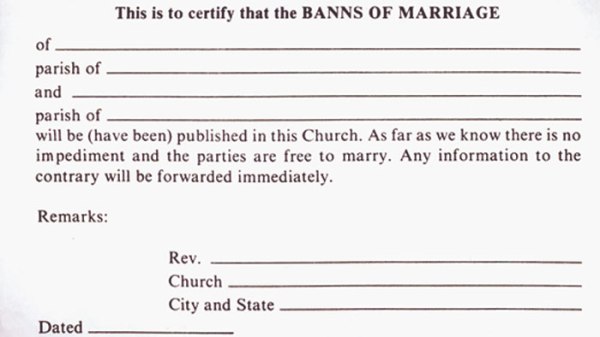
banns-of-marriage-600x296

Introduction:

The word “Banns” is simply a “proclamation” traditionally announced and published in the home parishes of both the girl and the boy on three Sundays or Holy Days of Obligation before the marriage.  This law was decreed in 1215  and is commonly associated with the Catholic Church and the Church of England. The purpose of announcing the ‘Banns’ was to enable anyone to raise a canonical or civil legal impediment to the marriage so as to prevent invalid marriages.  Impediments vary but would normally include a pre-existing marriage that has been neither dissolved nor annulled, vow of celibacy, lack of consent or the couple being related within the prohibition degree of kinship. This act was meant to prohibit clandestine marriages and elopements by the underage. Reading of marriage banns was an important rite without which a marriage was considered null and void, unless a marriage licence was obtained instead.

marriage-licenseMarriage Licences began to be issued by a Church or a State Authority in the 14th century, to permit a marriage which would otherwise be illegal. There were always people who were in a hurry to marry for various reasons and didn’t wish to wait for the usual period for the three banns to be read; in such cases and with special approval and payment of a higher fee a marriage licence was issued giving the couple the necessary permission to be married.

In early days most of the people shared personal bonds with their neighbours, their communities and members of their parish and knew anyone and everyone in their neighbourhood but in later years with people becoming increasingly mobile, changing their domicile and emigrating to newer lands for jobs or other purposes, it became increasingly difficult to “know” all the people living around you or to be acquainted with all the people belonging to the same parish. Therefore, in 1983 the requirement of reading the banns was abolished by the Church as it’s usefulness in determining whether there were impediments to a marriage became limited for reasons stated. But many parishes still continue to publish marriage banns and it is still one of the requirements for marriage.

Then:

Before the Mudi  both parents of the bridegroom and bride would have approached the priest and informed him of their mutual intention to marry and would then fix the marriage date with the priest who records the names and details of the bride and groom and instructs the young couple in the duties of married life and tests their knowledge of the Christian faith and the prayers. The fee given to the priest was a banana bunch, a cock and some money.  Reading of the banns is an important rite following the engagement. The banns are read on three consecutive Sundays before the wedding date and the two persons concerned are present when the banns are read out. It is a matter of pride for the couple and their families.  If the wedding is to take place in an emergency an exception was made and the banns were read on one Sunday only.  Of course this required special permission from the priest or bishop and also higher fees!!

The formula for reading the banns :-

Devache Kurpen kazar zata puth avnkar Gregory, Balthuzar Saldanhanaso and dhu Juliana, Juze Almeida d’ Sachi Hi zavnasa (poli, dusri, thisri) chit. Konichi adkol asa pirge-jecha vodilank tilsunk.

Meaning:

By the grace of God, the bachelor son, Gregory, of Mr. Balthuzar Saldanha, is going to marry the daughter, Juliana, of Mr. Joseph Almeida. This is the (first, second, third) reading of the banns. In case anyone has any objection to this marriage he had the obligation of informing the ecclesiastical authorities.

 Now:

2015-12-08-18-05-20

Once the couple informs the priest of their mutual INTENT to marry, they must register and attend the marriage preparation course and prepare the required documents which are sent to the respective parishes.  Gone are the days when a church wedding could be performed within a week of the girl and boy meeting and accepting each other. These quick weddings used to be quite common prior to the 80’s and mostly between a foreign returned boy and local girl in India.

Curch notice board bannsBanns now are read/published on one Sunday only.  In Kuwait the banns are just put up on the church notice board for a week or two without any formal announcement during mass.


Today, the procedure from registering of INTENT to marry until the marriage dossier is complete, is a protracted and lengthy one between both the parishes of the couple. If the marriage is to take place in a church other than the parish then that Church too is to be involved in the required procedures. A minimum of three months to a maximum of one year is required depending on the rules of the respective Churches  involved, to complete all formalities and necessary paperwork like Registration, NOC, Marriage preparation course certificate, Proclamation of banns certificate, etc.

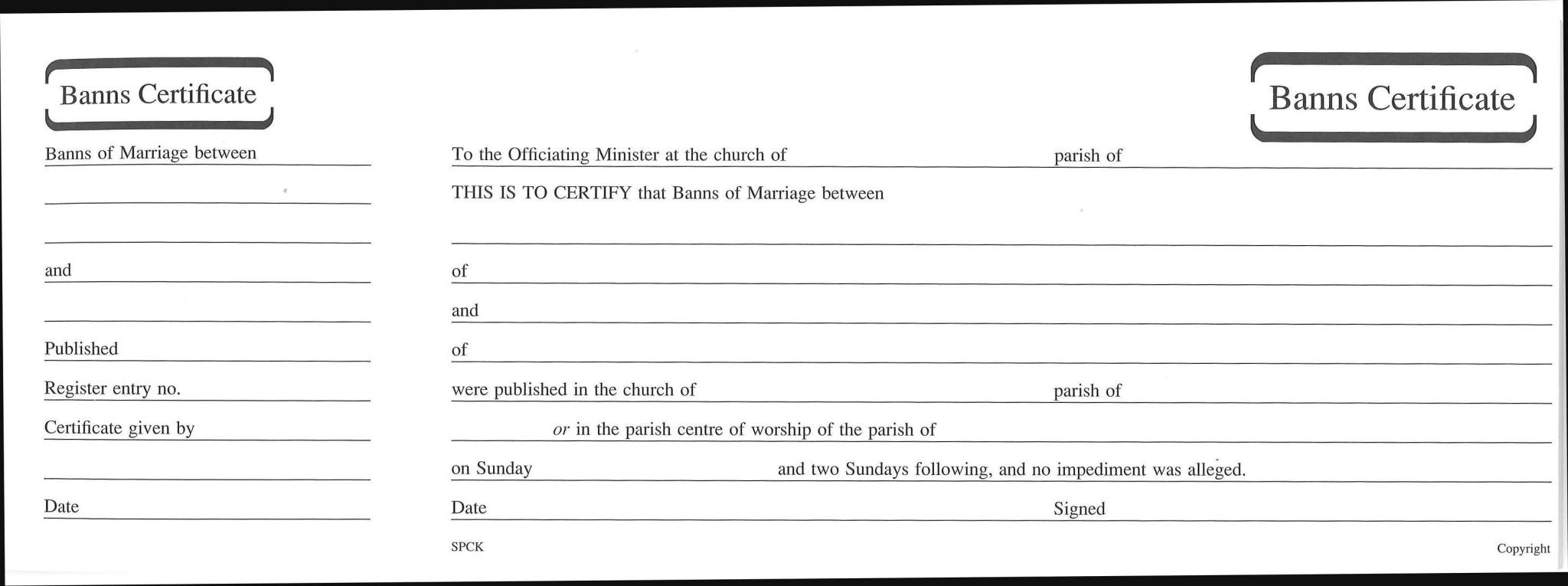
07-3004banns-6Once the banns are published and the results of the banns obtained, the Banns Certificate is issued to proceed.


In that it is worthwhile accessing the respective church website and checking out the marriage FAQs and procedures before approaching the church. The basic documents required to register are:-

  1. Baptism certificate (not older than six months)
  2. Your Passport copy or photo ID
  3. 2 Witnesses
  4. Boy must be not less than 21 years and girl not less than 18 years of age.

It is interesting to note how the wording on the Banns have evolved over time:

  1. 16th & 17th Century, only the names of the couple and the parish were mentioned.

2. 18th Century, fathers names were included (but not the mother as all women were considered fathers’ property even if they were married).

Example of the wording was as follows:-

  • By the grace of God, the bachelor son, Gregory, of Mr. Balthuzar Saldanha, is going to marry the daughter, Juliana, of Mr. Joseph Almeida. This is the (first, second, third) reading of the banns. In case anyone has any objection to this marriage he had the obligation of informing the ecclesiastical authorities.

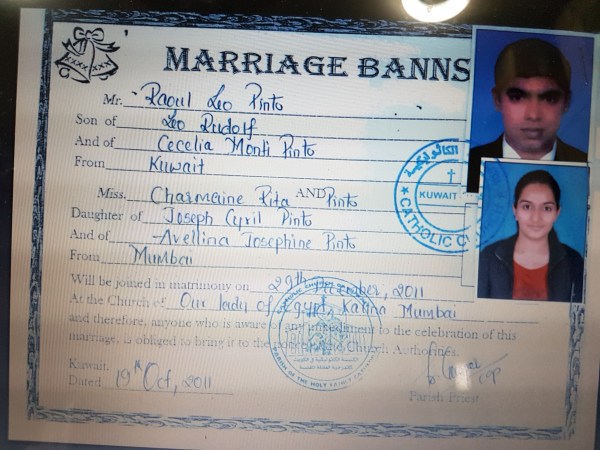
3. In today’s time, names of both parents are stated.

Banns RaoulCharm


Reading of Banns is therefore an important rite and does not apply to mangalorean catholics alone but to all communities that follow the catholic or christian faith.

Previous Post : Engagement Mudi                      Next Post: Bachelor/Bachelorette Party


References: Severine Silva and Stephen Fuchs & Victor D’sa, S.V.D.: The Marriage Customs of the Christians in South Canara, India. Introduction source, Wikipedia.


Mangalorean Marriage Customs and Traditions – Engagement Mudi


STEP 3

Engagement Mudi

While, “finalising of the “Sairik” is the formal acceptance of the promise made by the bride’s father to the groom’s father that he will give his daughter in marriage; the Engagement or the Ring ceremony i.e. “Mudi” is a mutual promise of later marriage and is a solemn and religious ritual. The Engagment may take place months, weeks or days ahead of the marriage. In some cases the engagement period may also last for a year or more.

wedding-ring-finger

Engagement “Mudi”

Then:

The bridegroom would go to the girl’s house with his parents and close relatives on the engagement day. The priest would bless the engagement ring in the church or in the bride’s house and the bridegroom would put the ring “mudi” on the bride’s left ring finger symbolizing his claim on her.

He then presents some gifts like rosary, handkerchiefs, prayer book, perfume, cosmetics, etc. to the bride.

The bride then shows the gifts to all the guests. After the engagement the groom takes the bride to his house to acquaint her with his relatives and to show her his property. When such an engagement breaks, the mudi has to be returned to the bridegroom but the presents are not returned.

Now:

Engagements are optional but more formal if it must take place. Invitations are sent mostly through social media. The ceremony takes place either at the house of the bride or at a party venue officiated by a priest who blesses the mudi (rings) followed by cake cutting, raising of the toast.

58234_836118409983_1106470_n

Gifts given to the bride are jewellery and saree which the bride changes into during the function and sometimes the boy also changes his attire.  March-past, dancing, dinner, etc. in short a mini-wedding! Guests would be only close family and friends and all expenses are borne by the brides’ family.

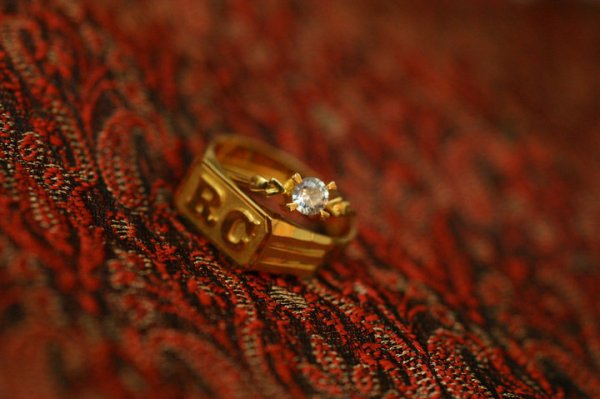
My son Raoul’s engagement was at a hotel venue hosted by my daughter-in-law Charmaine’s parents and officiated by Rev. Fr. Jerome Pinto, Charmaine’s maternal grandfather’s brother.

526065_433750943342047_883322718_n

47476_459940930114_6281328_n

The gorgeous engagement cake was made by my sister Zenia “Julianz.in”.

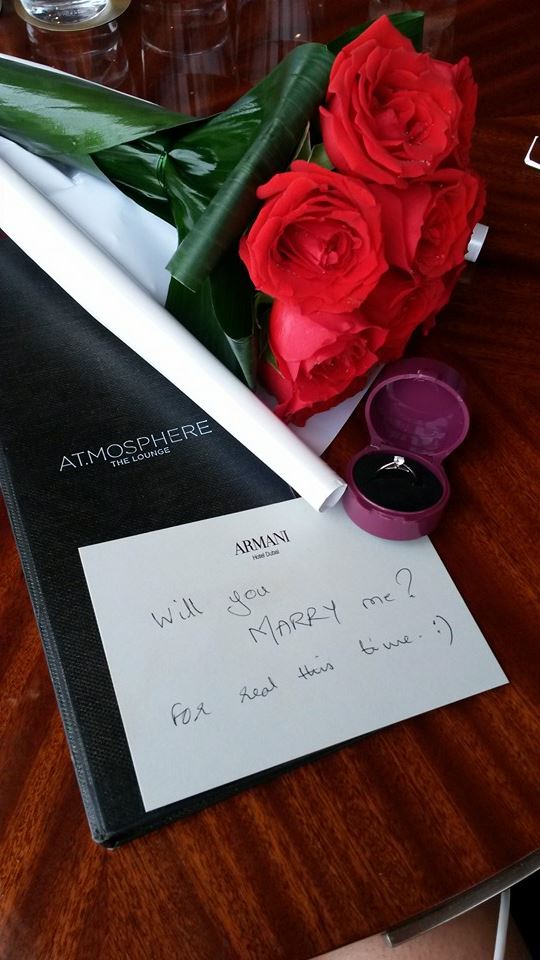
Nowadays engagement function is optional and replaced with a formal “proposal” especially in love-marriages where the boy throws a surprise for the girl (with just the two of them) and “proposes” with a ring (usually diamond!) at an exotic location, etc.

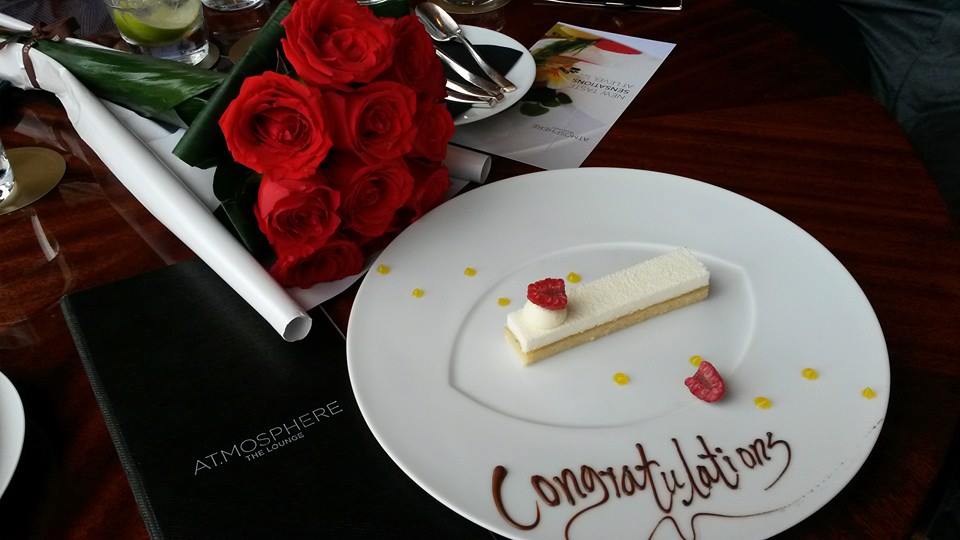
My son Rohan opted for the western style of proposing and took my daughter-in-law Valencia to Dubai to the Burj Al Arab’s “Atmosphere” restaurant on the 123rd floor to pop the question!

10382849_10154131207035251_54346878714995795_n10407012_10154131223650251_1643925479311536320_n


CIVIL Marriage or registered marriage is now compulsory effective 12 April 2012. This registered marriage is an important proof of marriage and also gives it a legal status. Civil marriage can be registered at a Marriage Court any time before or after the formal wedding.

Previous post: Finalising the Sairik                                 Next post: Reading of Banns

References: Severine Silva and Stephen Fuchs & Victor D’sa, S.V.D.: The Marriage Customs of the Christians in South Canara, India


Mangalorean Marriage Customs and Traditions – Finalising the Alliance Sairik


STEP 2

Then:

After the match was agreed, photos exchanged and approved, a day was fixed to visit the girls house to see the girl. The father, the boy, a maternal uncle and one or two close friends or relatives and the malo or gurkar*1 proceeded to the girl’s house to see the girl.

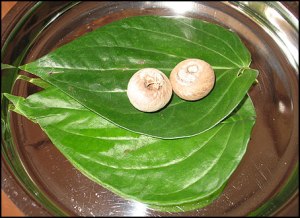
Pan podWhen they arrived they were welcomed with Pan-pod (betel leaf, betel/areca nut arranged on a plate) and udak (water).  This custom of offering pan-pod’ and udak is still symbolically practiced for all important ceremonies by many and is considered a mark of respect to the visitors and guests to whom it is offered.  This is clearly a survival of the Hindu wedding-ceremonies adapted by the Christians.** 2.

The girl was then called under some pretext.  She was asked to fetch water from the well or to place some object in the courtyard or to serve coffee to the guests.  The bridegroom and his father thus had an opportunity to observe her. The girl of course knew the reason she was called and would feel very shy.

If the grooms’ party approved of the girl the amount of dowry (dot), property and position and the family background was discussed in the girls house.  Amount of dowry differed according to the status of the family and it was considered a status symbol to pay an enormous amount of dowry.  Dowry was given by the bride’s father around two weeks before the wedding with great solemnity in the presence of many witnesses in the house of the bridegroom. To celebrate this occasion pan-pod was distributed i.e. a plate with pan-pod was passed from the bridegroom’s side to the bride’s party and vice-versa. This exchange was called badalchen (changing hands). A packet of pan-pod was also sent to the Parish Priest and to the other relatives as a seal to the final sairik.  With the dot, the bridegroom bought the jewellery especially the mangalsutra which was called ‘moni’ (silver beads in those days), gifts and clothes especially the “sado” red wedding saree for the bride.  When fixing the wedding date, certain days of the week and leap year were considered inauspicious.

Now:

sweets

Gifts of sweets

Fruit baskets

Gifts of fruit

In modern times an alliance became an even more intricate matter. Enquiries were made on sickness, physical and mental defects, etc. in the family and even remote relationships were minutely discussed.  These enquires were often so detailed that it gave rise to the proverb “Bara kathi jartalyo”  (to fix an alliance the soles of the feet are worn off twelve times).

In arranged marriages, it is appropriate to finalise the alliance. A day is fixed for the parents and few elders of the grooms family to go to the bride’s house to formally accept the bride into their family and to finalise the alliance “sairik’.

My elder son had an arranged marriage and the groom, the eldest aunts and uncles of the groom (from both sides of our family i.e my side and my husband”s side), me and my husband (eight of us) went to the bride’s house. It is customary to take some gifts of sweets, fruit and flowers to the girl’s house.  Additional gifts are given by the boy and his parents as a formal welcome to the girl, could be a watch, jewellery, saree, etc. These gifts depend on personal choice.

Mogra flower stringsIMG_4211IMG_4220

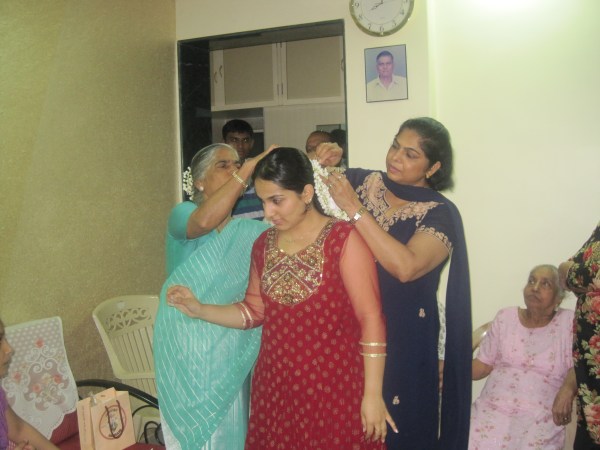
Flowers are put in the girl’s hair by the boy’s family once everything is finalized and sweets (instead of pan-pod) are distributed to seal the proposal.

In modern times dowry has lost it’s former importance, though it is still demanded in villages. However, the boys father or an elder relative would usually specify that they don’t want any dowry but that anything the girl’s parents wish to gift their daughter would be welcome and this is called denem (instead of dot). In this case, the girl and her family would buy her jewellery and sarees and the boy pays for the mangalsutra  (moni) and the sado and is also free to give more sarees or jewellery if he so wishes. This denem is then to be delivered to the groom’s house prior to the wedding day. (More on that will be covered later in the section “Wedding garments and Jewellery”). Other wedding plans are discussed and more often the wedding expenses are shared by the boy and the girl and their families. A wedding date would also be discussed, etc. and in todays time, any day of the week or even leap year is not considered inauspicious.

This custom of finalizing the sairik is for those who wish to follow some traditions otherwise like in love-marriages mutual consent becomes more important rather than parents decisions and the parents are just kept informed of the preparations and would generally just go along with the arrangements.  Yet, it would certainly be a beautiful gesture for the boy to seek the blessings of the girls parents.  His family may also formally ask for the girls hand in marriage.

20140613_19232320140613_19243020140613_192417


My second son had a love-marriage and we did go to the gir’s house to finalise the alliance as stated above as we felt it is important to give the bride and her parents due respect and importance.


*1.Gurkar system: As only a few priests had accompaned the Christian emigrants to Canara, it was impossible for these priests to look after them properly and they therefore made use of the gurkar system and appointed men of good moral character as headmen in the Christian settlements.  The gurkars also known as Social leaders was appointed for each village and in the Christian villages they had also to replace the absent priest and therefore acquired more influence and importance.

** 2.Hindu wedding ceremonies adapted by the Christians : Christianity was established in Canara in the 16th Century when the Portuguese made themselves masters of Mangalore and other coastal ports when Canara was placed under the ecclesiastic jurisdiction of the bishop of Goa in 1534. Immigration of newly converted Christians from Goa also started on a vast scale and coincided with the introduction of the Inquisition in Goa in 1560. The rules of the Inquisition forbade the observance of any traditional Hindu customs after conversion and those who refused to comply were forced to leave Goa and settle outside the Portuguese dominion.  Some went to the Deccan, others to Canara.  The second emigration from Goa was in 1683 when Goa was invaded by Mahratta chief Sambhaji and many Brahmins fled from the Bardes District in Goa and settled in Canara. These Chistians who fled continued to practise their christian faith after they left Goa which proves that they only wanted to observe their ancient social customs which had nothing to do with religion.

Previous Post:  Match making – Sairik                               Next Post: Engagement – “Mudi”

References: Severine Silva and Stephen Fuchs & Victor D’sa, S.V.D.: The Marriage Customs of the Christians in South Canara, India


Mangalorean Marriage Customs and Traditions – Match making


STEP 1

Image result for cupid free picture

1.MATCH-MAKING – SAIRIK

Then:

Marriages were predominantly arranged by the parents with the assistance of a match-maker (sairikecho malo) man or (sairikechi mali) woman, who were the important link between the parents and the prospective bride and groom and these match-makers were also considered professional and very influential persons. Once the marriage was finalized the match-maker was handsomely rewarded with money, sarees and expensive gifts.

Now:

Although arranged marriages are still prevalent, parents and potential brides and grooms resort to advertisements, marriage bureaus, matrimonial websites, if they have not already found a match for themselves as in “love-marriage” where mutual consent is of primary importance and parent’s consent becomes secondary. I personally know of many a successful marriage through websites like Shaadi.com. Several matrimonial websites exist like bharatmatrimony.com etc. For a more focused search on Mangalorean partners, Daijiworld.com offers paid advertisements. You can also advertise on Mangalorean.com. Catholics in general can also place advertisements at a nominal cost of Rs.100/- in the print edition of the ‘Examiner’ (a catholic newsweekly) by the Archdiocese of Mumbai.

Parents also discuss their aspirations with close relatives and friends to find suitable match for their children. Even in today’s fast-paced lifestyle where young boys and girls have far more opportunities to socialize, yet it does become a challenge to find the right match when marriage is being considered and although many would shun arranged marriages they do exist in modern society. Today’s match-maker can even be from one’s own peer group and not necessarily an elderly professional match-maker. Match-makers are rewarded even today but more often a saree would suffice. For those using matrimonial websites, would be worthwhile considering a premium subscription which would give better results in finding suitable matches.

Restrictions in Match-Making

Then:

Age of the girl had to be between 15-18 and the boy some years older. Boy had to be taller than the girl. Inter-caste marriages were not allowed and generally the marriage partners had no say in the matter. When I say Inter-caste here I am not referring to  Christians and non-christians but between the caste “Kuli” system retained by the Christians at the time which was the same as they had in Goa prior to their migration to Mangalore (Canara). The four castes were, in order of hierarchy – Brahmins (Bamons), Charodis, Shudras and Gaudis. So a Bamon boy was obliged to marry a Bamon girl and a Charodi boy had to marry a Charodi girl and so on.  However, later on it was acceptable for a boy of a higher caste marrying a lower caste girl but a lower caste boy was not accepted by a higher caste girl. Marriage between cousins was prohibited and so was marriage between members of the same parish which implies that marriage between members of the same village was also not allowed as these members who were attached to one parish felt like close relatives. Also a boy could not marry before his sisters and a younger sibling could not marry before the elder.

Several proverbs illustrate facts on choosing the bride and groom:

  1. Chedun adijai pioshilem, Ani jot adijai lagshilem

Meaning …

“A girl should be brought from a distant place; But a pair of bullocks should be bought in

the neighbourhood”.

  1. Avoik polovn dhuvek vhor, Dud polovn moshik vhor

Meaning…

“Take the girl after looking at her mother; And take the she-buffalo after looking at the milk”

  1. Dubleanchem chedum adizai, Grestak chedum dizai

Meaning….

A girl should be chosen from a poor family and should marry into a rich family

Now:

In the literal sense these proverbs would be outdated but figuratively do seem true even today. Most of the above arranged marriage practices have now been given up. Girls and Boys now choose to marry in their late 20’s and early 30’s. Education, professional career development and compatibility of the partners is given more importance and parents generally are more liberal today allowing children the freedom to decide their personal choices. ‘Live-in’ partnerships before stepping into a more permanent relationship of marriage are gradually growing and being accepted by society, the reasoning being that the couple should “KNOW” each other before marriage.

Personally, though I wouldn’t grudge a live-in relationship, I do not agree to the reasoning, as no amount of “knowing” your partner would guarantee a successful marriage. Each marriage or partnership requires a tremendous amount of effort, compromise, adjustment, understanding, commitment, acceptance, faith, trust and respect from both partners. Even if you have known your partner for a day, a year or ten years, eventually compatibility issues would creep in and the bottom line would be how much one is willing to compromise and sacrifice in the interest of their family. In today’s day we feel sorry to see so many marriages breaking-down over trivial issues which can easily be resolved with a little bit of patience and understanding. From my experience I have seen that eventually the difficult phase is overcome, patience and humility being the key.

Previous Post  : Marriage customs and traditions

Next Post: Finalising the Alliance

References: Severine Silva and Stephen Fuchs & Victor D’sa, S.V.D.: The Marriage Customs of the Christians in South Canara, India


Mangalorean Marriage Customs and Traditions


Image result for mangalorean catholic wedding
Traditional Wedding
376278_10100864179294703_832128952_n
Modern Wedding

Introduction:
My interest in Mangalorean customs and traditions now takes me to “Marriage” customs and traditions and although not an expert in this genre, I have always aspired to know and learn more. Having done some research on this subject coupled with some of my life experiences, I have chosen to write on the “Mangalorean marriage customs and traditions” for the benefit of those who have limited knowledge and are seeking some guidance on this issue.

Marriage is a sacred institution, a blessing from God and this is a universal truth. Marriage customs and traditions however, differ from country to country, community to community and in India from culture to culture.

Indian weddings are extravagant and full of grandeur. The rituals in the olden days were far more elaborate than today where most of the customs are ignored or overlooked and weddings are shortened from the customary ten days to maybe two or three days maximum. The contemporary wedding receptions on the other hand are held on such a grand scale which more than makes up for the entire ten day celebrations of yester year.

Many today aspire to follow the traditional customs even with limited resources and in limited circumstances if only to define the rich mangalorean culture that we should all be proud of. Many of the customs are also similar to Goan marriage customs due in fact to our ancestral links.

In an effort to remind us of the old customs and to apprise of the modern day customs, I will briefly describe the Mangalorean marriage customs and traditions “Then” and “Now” and in the sequence they were performed.

1.Match-Making “Sairik”

2.Finalising the Alliance “Sairik

3.Engagement “Mudi”

4.Reading Of Banns “Chiti Vaschyo”

5.Bachelor/Bachelorette Party

6.Wedding Garments/Jewellery “Sado” ETC.

7.Wedding Invitation “Voulik”

8.Wedding Pandal/Gifts of Food Etc. ” Kazara Matov”

9. “Vojem” etc.

10.Dot and Denem

11.Roce Ceremony

Laudate Psalm

Voviyos

Wedding Songs

12.Nuptial Blessing “Resper”

13.Wedding Reception “Kazara Jevon”

14. Mother-In-Law’s Gift of Ring to Son-In-Law “Maain Mudi Shivnchem”

15. Solemn transferment of Bride to Bridegrooms’s family “Opsun Divnchem”

16. Return Dinner “Porthapon”

17. Conclusion & Post wedding ceremonies

N.B.: I am open to accepting research projects on Culture and Traditions. Please email me with your requests at Cecilia65@gmail.com.

Thank you.

Continued………………. 1. Match-Making “Sairik”

References: Severine Silva and Stephen Fuchs & Victor D’sa, S.V.D.: The Marriage Customs of the Christians in South Canara, India