Author Archives for My Cooking Diaries

Unknown's avatar

About My Cooking Diaries

This is Cecilia Pinto, based in Mumbai, India. Started this blog to share my cooking experiences with the world.

Mangalorean marriage customs and traditions – Conclusion


Marriage traditions – Conclusion
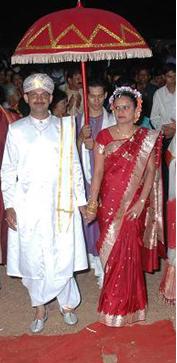
Mangalorean_Catholic_wedding_costumes

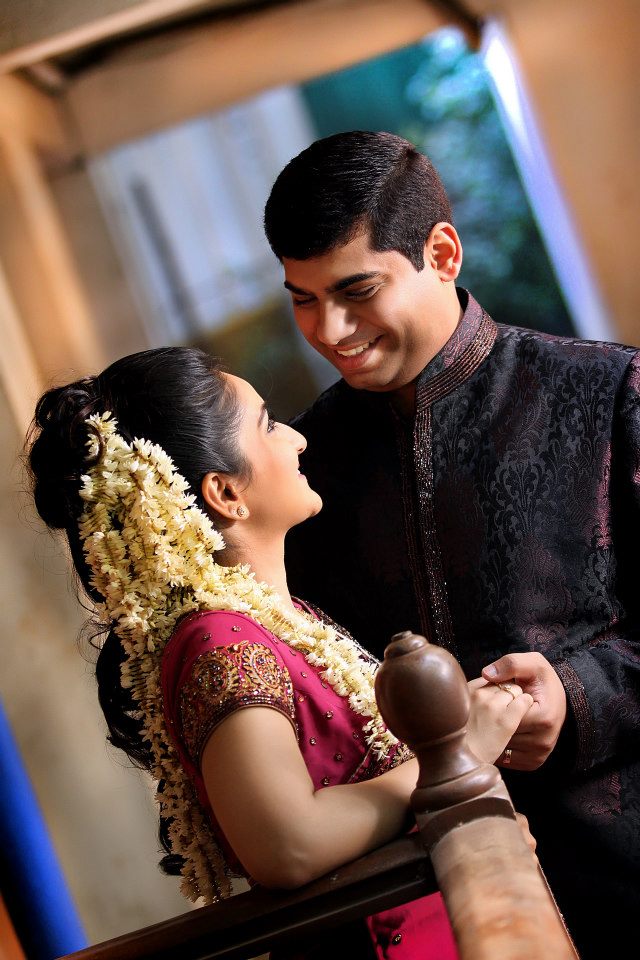
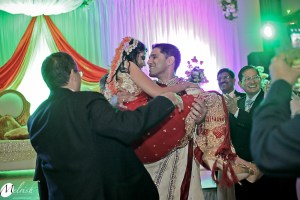
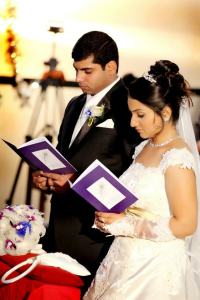
Mangalorean bride and groom

Marriage preparation from match-making to Porthapon consists of sixteen steps.  From finalizing the alliance/proposal to the marriage itself would require a minimum of six months for all church formalities, etc to be completed.  Even a civil marriage would require a minimum of one month from registration.

After the Porthapon etc. have taken place, personal invitations for lunch/dinner by close family and friends follow so that the bride can visit the home of the grooms family and friends and vice versa.  Thus the marriage celebrations are enjoyed for several days.  However, these personal invitations are now few and far between and gradually diminishing due to the fast paced lives that all lead.  In villages however, these customs would still be followed.

To state some of the rituals followed in earlier days, it is important to remember that (according to old records) most of the Mangalorean Catholic immigrants in 1683, were from the Bardes district of Goa.  The Konkani speaking Christians used the word kazar for marriage which is a portuguese word.  In South Canara (Mangalore) the Konkani Hindus as well as the Christians use the word vordik, which is probably derived from the sanskrit vri which means ‘to select’ and from the root vri are derived several words connected with marriage; bridegroom voreth, bride vokol, wedding invitation voulik, wedding party voran, female wedding guest vouli, male wedding guest voulo, wedding song vovi (plural: voviyo) and wedding procession is called vor.

The terms from the root vri were most likely imported by the Shenvi Brahmins of Bardes District in Goa who after their conversion were forced to emigrate into South Canara. Thus the marriage rites have many similarities with the marriage rites of the Shenvi Brahmins in Goa.

The ancient Shenvi marriages lasted nine days.  First day – Simant puja, worship at the boundary of village to drive away evil spirits.  Second day – The essential hindu rite of taking seven steps around the sacred fire. The Dravidian rite consisted in pouring water on the joined hands.  Third day – The bridal couple stayed at the bride’s house being feasted.  Fourth dayChouthandan, at night the bride was given to the bridegroom and they left for the bridegroom’s house.  Fifth day – At noon the bridal couple returns to the bride’s house. This was called panch parthana and the bridal couple stayed at the bride’s house.  Sixth day – The couple remained at the bride’s house.  Seventh day – Dinner (gaun jevan) was given at bride’s house.  Eigth day – At noon the couple returned to bridegroom’s house and a big dinner (gaun jevan) is held at bridegroom’s house.  Ninth day – The couple remained at bridegroom’s house.  Tenth day – The wedding ceremonies come to an end and the leave-taking (vasana) ceremony took place.

The Christians, after conversion, continued many of the ancient Hindu customs with some modifications like instead of a Brahmin priest blessing and sacrifices to various Gods, the blessing of the nuptials were performed in the church.  For the Porthapon and after a day’s stay at the bride’s house, the couple visit the bride’s house again a week later and again on the 30th day.  Also the newly wedded are invited by the bride’s family for all feast-days for a period of one year, the chief feasts being the parish feast, feast of St.John the Baptist, Infant Jesus (Minin Jesus) feast and Nativity of our Lady (Monthi Fest).  Apart from the official invitations, the bridegroom was as a rule not expected to visit his in-laws uninvited and if he visits in case of necessity he had to be accompanied by his father or another male relative and his mother does not accompany him, but a year after the wedding the bridegrooms’ mother is formally invited for dinner.  Similarly, the bride’s mother is also invited by the bridegroom’s mother and this dinner is called Yenicho samman’.

However as recent as 50 to 60 years ago, my Uncle Mark Oliveira (whose advice we invariably take for any marriage function) confirms that according to mangalorean customs and traditions wedding celebrations lasted 8 days and started one or two days before roce ceremony when all the required things (vojem) were brought by daijis (Uncle and Aunts, etc.) and cooked by wadegar (sector incharge) and their troop. Lawad (gurkar) will be the head of all the functions. Every function would take place in the afternoon due to transport problem and people had to walk for 10-12 miles to reach bride/grooms house.

Accordingly:-

  1. First Day – A day or two before the wedding the vojem ceremonies
  2. Second dayRoce ceremony
  3. Third dayNuptials/Church ceremony followed by  wedding reception (Lunch) at brides house.
  4. Fourth dayPorthapon Bride’s house
  5. Fifth day – Lunch at grooms house
  6. Sixth day – Lunch (Samman Jevan) at bride’s house
  7. Seventh day – Yeni samman for bride’s mother at groom’s house.
  8. Eighth day – Yeni samman for groom’s mother at bride’s house

Thus the community was used to elaborate marriage festivities especially in the rural areas and towns.

However, towards the close of the 19th century (as stated in the book “Catholics in the 19th Century”) efforts were made to trim down the festivities and bring reforms according to changing times as education was spreading.  The elaborate festivities were considered to be one of the reasons for poverty among the lower sections and one of the speakers in the Eucharistic Congress held in 1938 in Mangalore, gave a call to end ostentation in catholic weddings and festivities.

Present day wedding festivities go on for three or maximum four days.  Nonetheless, celebrations are still very elaborate and thoroughly enjoyable and full of emotions and sentiments if performed in the traditional manner in keeping with the culture and customs of the Mangalorean catholic community.  These marriage customs clearly manifest a mixture of the rich and impressive original rituals of our Hindu forefathers with the new Christian concepts expressed in a modern and Western style.

Previous Post : Porthapon                                                           Marriage customs & traditions

References: Severine Silva and Stephen Fuchs & Victor D’sa, S.V.D.: The Marriage Customs of the Christians in South Canara, India. Catholics in the 19th Century.


Mangalorean Marriage Customs and Traditions – Porthapon


STEP 16

Porthapon – Return Dinner

ghumat-or-ghumott-the-traditional-percussion-musical-instrument-of-goa-india-made-using-leather-membrane-and-earthern-pot-P8NT9M

Ghumat

Then:

The following day of the wedding the newly wedded couple return in the afternoon to the bride’s house which is called porthapon, from porthen apone, “calling again”.  The bridegroom is accompanied by twelve of his friends and the father by four close relatives.  A grand dinner is served at the bride’s house with great entertainment by singing and playing music with the ghumat**. The bridal pair is served heaps of food which they would never be able to eat but they have to put morsels of food into each other’s mouth.  When everyone has finished their meal the guests sitting last for the meal sing the laudate at the end of the meal.

The next day the bridal couple returns to the bridegrooms house for a dinner for the bride’s family and this way there is continuous visiting and re-visiting between the two homes. The following day the two again proceed to the bride’s house  and this time stay for four days which gave rise to the term choundisacho novro the ‘four-day bridegroom’. During these four days the couple is feasted by relatives and the bridegroom is given oil bath daily assisted by his own companions and the bride’s sisters.  Extra special care is taken to ensure the bridegroom does not leave before the end of the four days.

Now:

Today since the wedding functions are curtailed due to time constraints, only the next day dinner is celebrated amongst close relatives and friends of the bridal party.  The bride’s parents would enquire from the groom’s parents the number of guests who would attend or specify the number of guests they can bring. The grooms family may or may not have the return dinner, but nowadays it is common for the Porthapon to be held jointly by both families and the function is held at a party hall.  On my wedding the porthapon was at my parents’ house.

As tradition dictates two male relatives (like brides brother and an uncle) would go to the bridegrooms’ house to personally bring the bridal couple for the dinner. In the past the bridesmaids would accompany the bride to the bridegrooms house after the reception and stay there and then come along with them to the porthapon.

porthapon Fancy costume

Fancy dress costumes – Indicative


They would all then proceed in procession and the brides relatives would come forward at a convenient location to meet the party and welcome them in song and dance to the playing of the Ghumat.  The brides’ guests would dress in fancy costumes to add to the fun and entertainment quotient of the function and the men would usually dress as women.

The bride wears her Dharma Sado, saree given by her parents.   At her mother’s house she changes into the Maipano, saree gifted by her mother and flowers are put in hair.

The grooms mother would take along some gifts of fruit and/or sweets which she gifts to the mother of the bride/Yejman. The brides mother in turn would do the same.

Raoul charm porthapon


My younger son got married in Goa and so we did not have the sado ceremony at the reception.  Instead my daughter-in-law wore the sado for the porthapon which was at her parents house.  Upon reaching there she changed into the red dress (Goan sado) give by her mother.

Rohan Wedd portapon

Dancing and singing to DJ music and Ghumat continue through the night.  At the Porthapon it is customary for the senior members and close members of both families to be introduced to each other and the occasion enables the two new families to get acquainted with each other.


Formal functions may be conduted by a professional MC and DJ. After prayers when dinner is announced, the bridal couple is served first and their plates are piled with food, although they are not expected to finish it, but are expected to put a morsel of food in each others mouth.

The bride and groom usually stay at  bride’s house for the night, but this custom may or may not be followed nowadays. At the end of the function,  the bride’s suitcase with her personal belongings is carried to her new home by the Mal Dhedo.


** A brief of the Instrument Ghumat:
The ghumat is a membranophone percussion instrument from Goa and Karnataka. It is an earthen vessel, in the shape of a pot, having both sides open. On the bigger opening a drum membrane is tied taut around it. In the old days, it was mounted by a membrane made of the skin of the monitor lizard. Now, with the banning of the use of the skin of the lizard, more innovative methods are used. One of the membranes now used are synthetic membranes made from artificial materials. The sounds of the ghumat are manipulated by the opening and closing of the smaller hole with the palm of the one hand while the membrane around the larger opening is delicately struck with the other hand to produce the sound. (Ref: The live music project)

Previous Post: Mai’n Mudi Shivnchi & Opsun

Next Post: Conclusion

References: Severine Silva and Stephen Fuchs & Victor D’sa, S.V.D.: The Marriage Customs of the Christians in South Canara, India

N.B. I am open to receiving research projects on culture and traditions.  Please write to me at cecilia65@gmail.com


Contribution towards research on culture and traditions

If you find my research and posts on The Mangalorean Culture and Traditions useful and worthy and would like to participate towards improving and enhancing my website and my research, please contribute how you see fit.

$5.00

Turmeric Patoleo Leaves


Turmeric

Turmeric Rhizomes and leaves

Turmeric plants are grown from the turmeric root (rhizomes) and are harvested for their leaves and the turmeric rhizomes.  Rhizomes are used for plantation.  Turmeric rhizomeIt grows best indoors in cold temperatures. In temperate climates it can be planted in the garden but preferably in shaded areas like under a large tree which would provide the required shade to the turmeric plants as they don’t flourish well in direct sunlight.
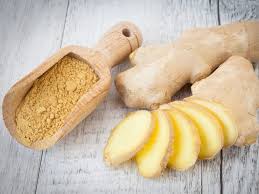
Turmeric is different from Ginger.  Although they look alike and have common characteristics, they are different in their properties, effects, colors, flavors and benefits.

ginger

Fresh Ginger & Ginger Powder

Fresh Turmeric, Dried Turmeric and Turmeric powder or haldi powder


Turmeric rhizomes can be purchased from any Asian grocery stores and the plants take 7 to 10 months from planting to harvest and are usually planted in July and harvested in April.  The best season to plant turmeric in sub-tropic and cold zones is in spring or summer when temperatures are above 54 degF or 12 degC. In tropical regions it can be grown throughout the year.

turmeric leaves

Charlotte Regional Farmers Market – Peanutbutterrunner.com

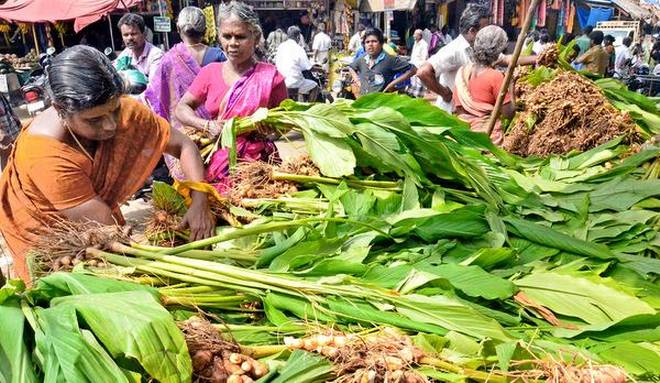
trmeric leaves sale12janTVLpongaGU937RHGU3jpgjpgSale of turmeric plants in the market for Pongal – The Hindu
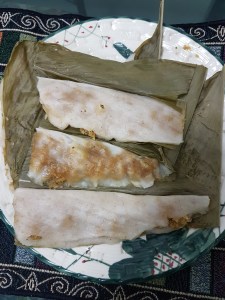
In countries where turmeric leaves are not available in the market it is a good idea to plant your own and enjoy the benefits of this wonderful plant.  The World Wide Web is awash with tips and step by step procedure on growing your own turmeric plant so I shall leave it at that.  Secondly, as I have personally not yet grown my own plants I shall refrain from preaching on this subject. But, yes I have purchased turmeric leaves from Goa Mapusa market and kept the leaves neatly wrapped in newspaper in the freezer and used them for a couple of years.  Trust me, when thawed the leaves were as fresh and as fragrant as if fresh from the market.  So for those resident outside India, I would urge you to pick up your stock on your visit to India (when they are in season) and bring it back and freeze until required. I thank my friend Mrs. Margaret D’Cruz for this valuable tip.

Turmeric leaves are a cooling herb and a sattvic food which promotes clear thinking and calm thoughts. The leaves also known as haldi and manjal leaves, contain curcumin which is a powerful antioxidant.

It can be used in various preparations to add flavor but commonly used as a wrapper for steamed dishes.  The famous and much revered haldikolyanche Patoleo  as it is called in konkani

Patoleos (22)

Patholis

(also called patholis or pathoyos) and kadubu in Kannada, especially in the western coast of India during religious months and festivals, are made by steaming a paste of rice with a coconut jaggery filling wrapped in the turmeric leaf.  When heated the leaf imparts a delicious aroma to the dish and it’s fragrance is immensely satisfying.

August 15 (Independence Day in India) happens to coincide with the Assumption of the Virgin Mary (a Holy day of obligation) and Patoleos are a significant item prepared by Mangalorean and Goan catholics on this day.  East Indians call it Pan Mori or East Indian leaf cakes. It is also prepared on St, John’s feast (Sao Joao fest) and Konsachem fest (harvest festival).  Ediyos, steamed in jackfruit leaves were also prepared on August 15, by my mother.

Konkani hindus prepare patoleos on the second Sunday of Sharavan or Nag Panchami and on Hartalika, the eve of Ganesh Chaturthi.  Salt-free patoleos, are offered to Godess Parvati, who the legends say had a strong craving for these sweets during pregnancy.

It is important to procure genuine turmeric/haldi leaves for the patholis.  Duplicate or fake leaves are available in plenty in the market and it is difficult to tell the difference. Patholis made with duplicate leaves have an overpowering aroma and give a bitter taste to the patholis.  Although difficult to distinguish from appearance, genuine leaves must have a fragrant aroma and to determine this just pinch a piece from the tip of the leaf, it should smell aromatic and fragrant.

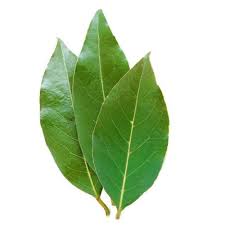
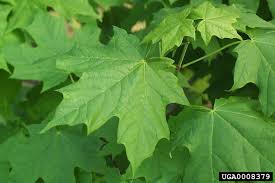
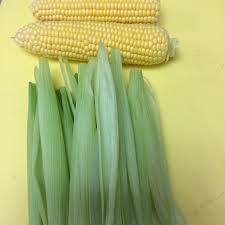
Several types of leaves are available for steaming, grilling food. Some of these are Banana leaves, Jackfruit leaves, Teak leaves, Bay leaves, Fig leaves, Maple leaves, Corn husks, Okra (Lady finger) leaves, etc.  Champa flower leaves are also used for steaming food.

Be creative and make do with what is available and enjoy rather than omitting  your traditional foods altogether!

Ref: Wikipedia, Turmeric for health.com,

Picture credits: smallgreenthings.com.au, peanutbutterrunner.com, livestrong.com

Jackfruit leaves

Manglorean marriage customs and traditions – Maain Mudi Shivnchen & Opsun Divnchen


STEP 14 and STEP 15

MAAIN MUDI SHIVNCHEN and OPSUN DIVNCHEN

These customs though important, are short ceremonies perfomed at the wedding reception either before dinner or at the end of the wedding, as this is mainly performed between the very close members of the family.

STEP 14 – MAAIN MUDI SHIVNCHEN – Mother-in-law presenting a ring to her son-in-law, the groom

Then:

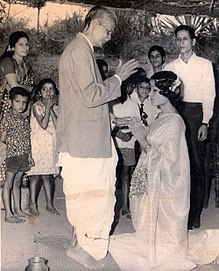
After the wedding dinner was concluded, the mudi shivnchen ceremony was performed.  The bridegroom was made to stand in the matov and the bride’s mother presented him with a ring as a sign that she is his mother-in-law and henceforth he had to address her as “mai’ mother.  The elder women of the bride’s family her aunts’ i.e. sisters, sisters-in-law and cousins of her mother were addressed by the groom as fagor mai and any distantly related woman could become his fagor mai if she presented him with a ring. More importantly the woman were expected to give their blessings to the groom as his fagor mai.

Now:

As I have seen for my son’s wedding, the bridegroom is made to stand in a prominent place in the reception hall and his mal dedho stands next to him with a handkerchief held open in both hands.  The mother-in-law will bless the groom and present him with the ring.  The other fagor mais  i.e. the brides aunts, etc. will come forward to bless the groom and put some cash into the handkerchief held by the mal dedho (bestman).  This money goes to the bestmen who celebrate later with the money collected.

The following song is appropriately sung or played for the Mudi Shivnchen ceremony.

  • Bhaglyar Kityak Ubo Voretha….


The following video of Maxim and Melita’s wedding (Youtube) depicts the customs in detail and in a very clear format, thanks to the MC who has done a great job in explaining each step clearly and the videographer who has captured the important and solemn moments.


STEP 15 – OPSUN DIVNCHEN – The solemn transferment of the bride to the bridegrooms family

Then:

Once the presentation of rings was completed (at the bride’s house) the bridegroom takes the bride to his house in procession  with the band playing.   Relatives of the bride also accompany the bride. When the procession reaches the matov the Laudate is sung.  Then the solemn opsun divnchen ceremony is performed and here the bridegroom is not present.

The father of the bride or an older Uncle alongwith his closest relatives steps forward and takes the hand of his daughter and presents her formally to the bridegroom’s father and his family with the typical proclamation as follows (which is in english the konkani translation of which is in the above video :-

“Up to this time we have loved  this girl.  Today we hand her over to you in the hope that you will love her in the same measure”.

The bridegrooms father or an elder Uncle, takes the hand of the bride while giving an appropriate reply which is something like :

“We are happy to receive your daughter and will love her and take care of her even more than you have given her and will look after her just as our own daughter”.

The bride usually breaks into tears upon the realisation that she must now part from her near and dear ones in earnest. The women break into the parting song which brings everyone present to tears.

  • Sovo Sovo Surngarone (Opsun ditana song) ….


The bridegrooms mother then takes the bride by the hand and leads her into the house, accompanied by other women. While the bride steps over the threshold she must do so with her right foot.

Now:

Various Opsun Divnche scenes above.

In the wedding hall, after the Mudi Shivnchi ceremony the bride and groom are blessed by their parents and all elders of the family.  Then the bride is brought forward and the Opsun Divnchen ceremony takes place as detailed above with the bride and her family breaking into tears.

  • Rodonaka Baye ….


The laudate is sung at the end of the ceremony.

After the ceremony the bride is led away from her family and seated and welcomed by her monther-in-law with a glass of milk to drink (and in some customs also an elchi banana to eat).  This marks the end of the wedding ceremony.

  • Tambde Roza


When the bride reaches the bridegrooms house she is carried over the threshold by her husband.

melrish-0768 opsun to husband

YENI SAMMAN

In earlier times when weddings lasted for 8 to 10 days, the yeni samman i.e. the  brides mothers’ dinner and the grooms mothers dinner took place after the porthapon and both the mothers gifted each other a saree. But since the duration of the weddings are now curtailed to 3 to 4 days, skipping the yeni dinners, the yeni saree is exchanged at the porthapon or at the wedding reception.

Yeni kapad MaiNMai

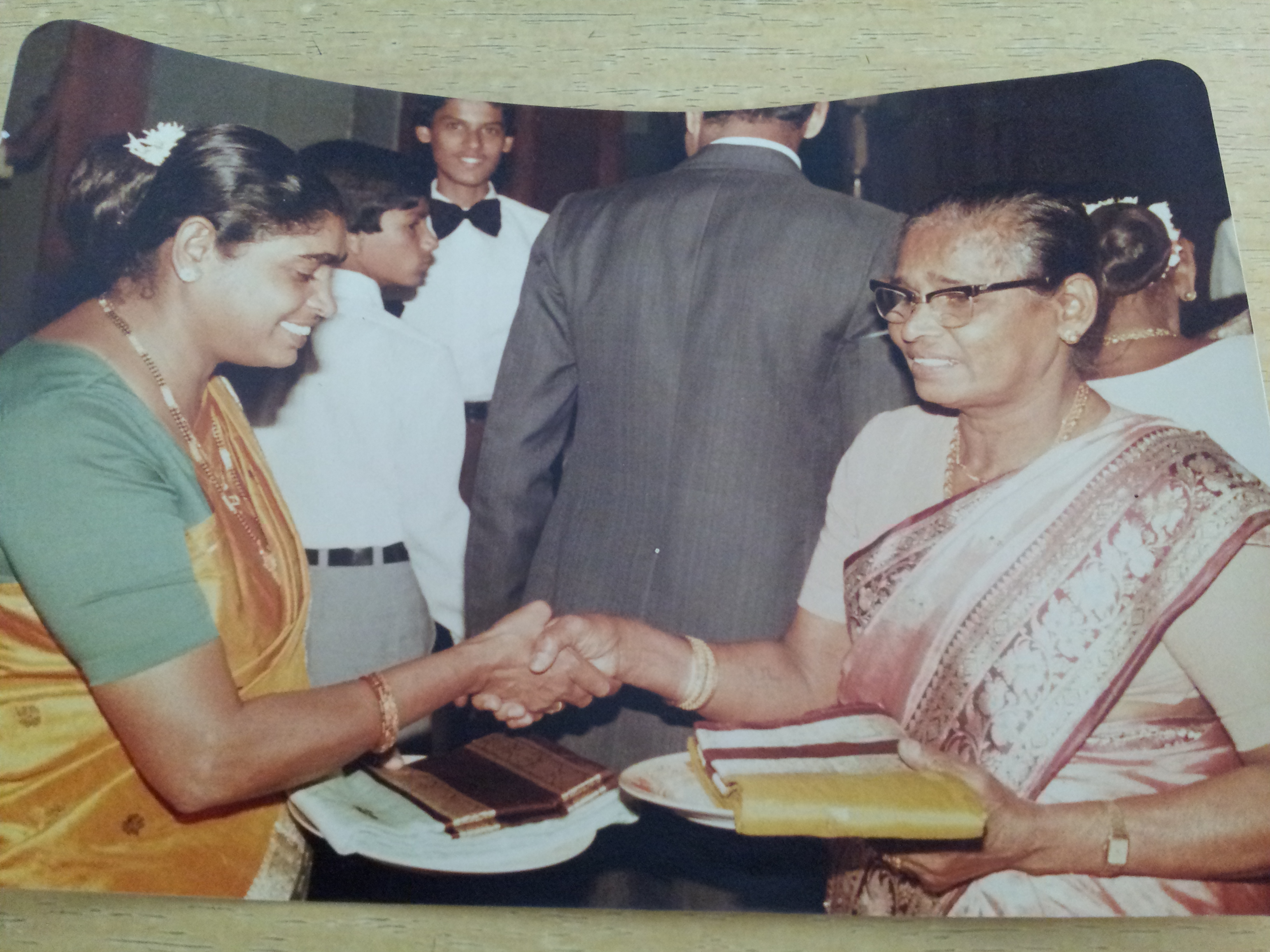
Yeni Kappad – My mother (L) and my mother-in-law (R)

The yeni saree gift exchange which was at the reception for my wedding 37 years ago.

Previous Post: Weddng reception – Kazara Jevon                  Next Post:  Porthapon

References: Severine Silva and Stephen Fuchs & Victor D’sa, S.V.D.: The Marriage Customs of the Christians in South Canara, India

N.B.: I am open to accepting research projects on culture and traditions.  Please email me with details to cecilia65@gmail.com

Contribution towards research on culture and traditions

If you find my research and posts on The Mangalorean Culture and Traditions useful and worthy and would like to participate towards improving and enhancing my website and my research, please contribute how you see fit.

$5.00

Marriage customs and traditions – Wedding Reception


STEP 13 

WEDDING PARTY/RECEPTION – (Kazara Jevon)

Then:

After the nuptial blessing, both parties proceed to the brides house for the wedding lunch and/or dinner.  When the wedding party (Voran) arrives, the bride’s yejmani offers the traditional customary udak-pan-pod welcome to the bridegroom’s party  by saying ‘dev boren korum gorcha yejmanak’ (God bless the master of the house). The yejmani replies by saying ‘dev borem korum’ (God bless).  The yejmani then offers the general and symbolic udak-pan-pod to the rest of the wedding party by declaring ‘sankdank pan-pod, udak ailem’ (everybody receive water and panpod). The bridegroom’s party replies ‘pavlem dev borem korum’ (We received, God bless you).  The bridegroom’s party is received with great honour and invited to sit down in the matov.

Sado

The bridal clothes (sado),  jewellery and flowers abolim and jasmine all tied into a bundle in red silk cloth and carried by a younger unmarried sister or relative of the bridegroom, are brought to the bride’s house in procession lead by the groom’s mother.  The grooms’ mother who did not accompany the party to church  now joins the procession accompanied by a few distinguished women relatives to the playing of the  band and the sado, jewellery, etc. would be exhibited to the guests in the matov.

Crackers are fired as the procession enters the matov, while the band plays and at the entrance the people sing the psalm Laudate Dominum.

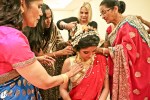
All along voviyos are sung by the bride’s party with witty replies in voviyos by the grooms party. The bride is led to a private room and surrounded by women singing voviyos and dressed into the wedding attire i.e. the sado and for the first time the end of the sari is thrown over her shoulder known as worl.  The mother-in-law has the first right to dress the bride. However, if she is a widow this right falls on the yejman (bridegrooms paternal aunt) who also tie the pirduk (mangalsutra or kariamani) around the bride’s neck.

The bride is adorned in the abolim and mallige flowers which is done in a specific manner and the strings of the flowers are wound around her head to completely cover the hair and the ends of the strings are left to hang down to the waist.  Lastly the string of abolims is wound around the jasmine flowers.

The bride is then led to the matov in her bridal finery and invited to take a seat to the left of the bridegroom which is called sovyar bosovnchem (seating at the assembly) and the women once again gather around the bridal pair singing voviyos.  The yejmani then announces the ayar (presenting gifts to the bridal couple). When the elders present the ayar (gifts and money) they also bless the couple.  The bride is presented with a sari dharma sado by her parents, which ranks second to the sado and is also very expensive.  The parents of the bride also present saris and clothes to elder married sisters and elders of the family and this is done in a solemn manner.

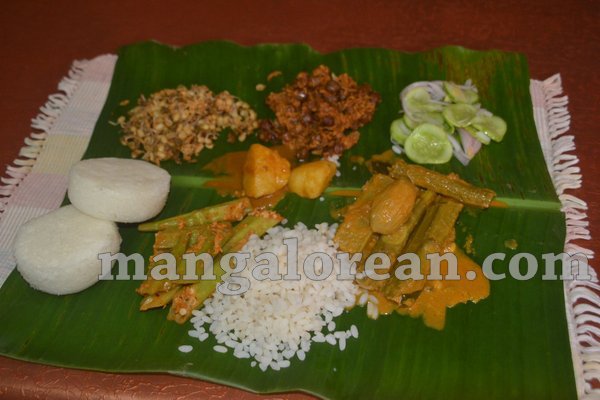
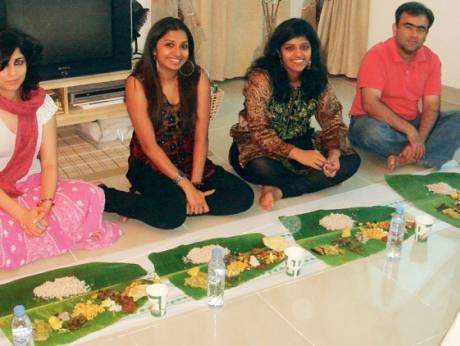
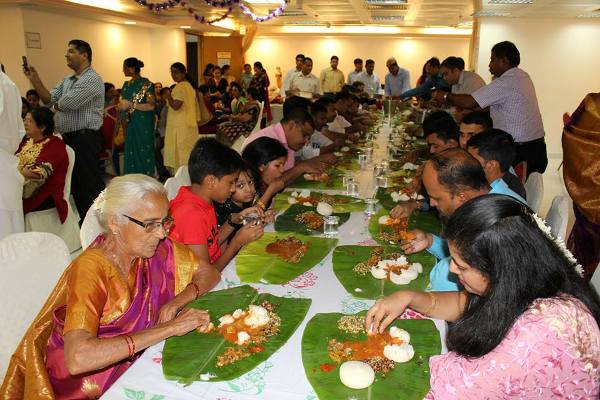
After the gifts presentation, dinner is served and the bridegroom’s party is given first preference.  Dinner is served on banana leaves (used to also be served on betel leaves) and guests are seated on long rows of mats.   A particular pattern was followed, first a little water is sprinkled on the leaf to clean it, then a little salt was served, then Roce food on banana leafpickle followed by different vegetarian dishes and then non-vegetarian dishes, wealthy people served sanna-mas and finally  with vorn.  The meal was concluded with a sweet called soji made of wheat flour and jaggery. Dinner was started with the prayer ‘Hail Holy Queen’ and also said at the conclusion of dinner.


Now:

Once the nuptial blessing is done, the bridal entourage proceeds for a photo shoot, etc.  Other guests proceed to the reception venue.


When the bridal troupe arrives, they enter in  procession to the playing of music and bursting of crackers led by a Master of Ceremonies. The wedding cake is cut, champagne is popped and toasts are raised.

Guests are seated and snacks are served, then the wedding march which all guests look forward to participating. The bride and groom then have their first dance as husband and wife. Dancing continues through the night or upto  time-limit restrictions.

After the first dance, the bride is led by the grooms’ younger sister and family for melrish-7851 sado dressingchanging into the sado and the custom as stated above stands even today but the mangalsutra ‘pirduk’ is put around the neck of the bride by the groom.  Today, the groom also changes his attire into a typical Indian wear.  The following song is appropriate when the sado dressed bride and the groom make their re-entry:

  • Mai’n muntha thu shegunachi sunn….


Buffet Dinner is served at an appropriate time, preceded by a short prayer and the Grace before Meals, by a member of clergy if present or any chosen person.  The ayar ceremony follows with the guests lining up to wish and bless the bridal couple and the finale, chairing of the couple!

Raoul wedd chairing the couple


N.B.: According to Monoj Saldanha in his book “Amche Alconz”, konkani speaking people migrated to South Goa from the Saraswat Valley in North India during 1000 BC, due to the drying up of the Saraswati river.  The people were predominantly Gouda Saraswat Bahmins, Aryans by descent and Brahmins in identity.  Even when these people converted to christianity due to the Goa Inquisition of 1560 and the subsequent conversions in 1570 and 1683, hindu traditions and culture still continued e.g. for the nuptials the white gown or saree is used by the bride in the church and the wedding ring/band is exchanged, but in the reception the bride changes into the sado (red silk saree) and karimani (black bead chain).  

Francis Buchanan in his book “Journey through the Southern parts of Canara”, writes in 1807 that the konkanies are in flourishing circumstances and he saw some of the marriage processions passing by on the 21st of January, 1807, which were attended by exceedingly well dressed people and very handsome girls.

The ayar procedure in fomer days: The groom’s elder sister’s husband sat with a clean brass plate to receive the gifts (ayar).  In those days it was common to gift a rupee or half a rupee on the plate. When the coin fell on the plate it made a sound. Another man sat nearby to write down the name of the person giving the gift and the amount. When the clinking of the coin falling on the plate was heard, he would ask in Tulu ‘av yerl’ which means ‘who is he’?  The yejmani would tell him loudly the persons’ name and the brother-in-law announced the amount to the writer.

In later times the ‘av yerl’ was modified and is now known as ‘a-yar’.  The relatives and friends gift atleast one rupee in an enveope with their names on.  The mal-dhedo (first best man) keeps an account of the amount.  

Previous Post: Resper, Nuptials                          Next Post: Mai’n Mudi Shivnchi & Opsun

References: Severine Silva and Stephen Fuchs & Victor D’sa, S.V.D.: The Marriage Customs of the Christians in South Canara, India. Manoj Saldanha: Amche Alconz, Our surnames. Francis Buchanan: Journey through the Southern parts of  Canara

N.B.:  I am open to research projects on culture and traditions. Please email me with your requests.

Contirbution towards research on mangaloren culture and traditions

If you find my research and posts on The Mangalorean Culture and Traditions useful and worthy and would like to participate towards improving and enhancing my website and my research, please contribute how you see fit.

$5.00

Marriage customs and traditions – Nuptials


STEP 12

THE NUPTIAL BLESSING (Resper)

Raoul charm putting rings

Then:

The most important aspect of a wedding is the Sacrament of Marriage received at the Nuptial Blessing Resper.

On the morning after the roce ceremony the marriage was blessed in the church and this took place either in the bridegrooms or the brides parish.

The Sacristan of St.Lawrence Church Moodubelle gives blessings to his grandaughter Salvador_Barboza Circa 1975

Upon getting ready in the traditional wedding attire the bride/bridegroom kneel in front of the altar for blessing from parents and elders.

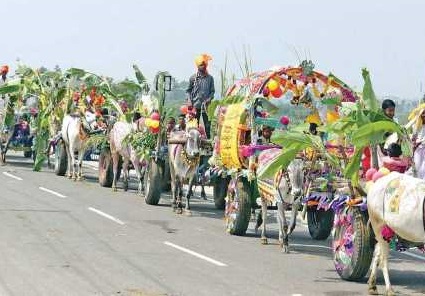
The wedding procession then proceeds to the church in an open car, bullock-cart or on foot, in separate processions accompanied by playing of bands and bursting of crackers.

Wedding procession indicative

Bullock cart procession indicative

While proceeding on foot in procession wide red umbrellas were used over the head of the bride and groom held by the bestman (dhedo) or bridesmaid (dhedi). The first best man is called mal dehedo and first bridesmaid mal dhedi. Usually the mother of the bride and the mother of the groom did not accompany the procession.

The Bride wore the kirgi baju (dress of the unmarried) and the groom wore a dhoti (short loin cloth) and a shawl over his shoulders and a red handkerchief on his head which was later improved to the todop (white loincloth with a red and gold hem), a kutav (shirt with gold buttons and a coat), shawl, red kerchief in hand and urmal (long white piece of cloth with golden hem tied around the head like a turban) and the umbrella. The bride was dressed in the proper bridal attire only after the resper. The feet of the bride and groom were sprinkled with water before leaving home.

The bridegroom waits for the bride in case his party reached early and both, holding hands, proceed to the centre of the church. The parish priest blessed the nuptials during a High mass assisted by deacon miron or mirniam* and sub-deacon. There are instances when the marriage party has reached the church but the parish priest was absent as priests were very few then and also had to attend urgent sick calls far from the church. The wedding party then used to wait many hours and then return home without a church wedding and continue with the wedding celebrations and the nuptial blessing and sacrament of marriage was bestowed on the bridal couple one or two days later.

Now:

Raoul wedding bands

The nuptials are usually in the afternoon/early evening two or three days after the roce ceremony. The bride and groom dress in their modern wedding attire i.e. white gown/saree worn by the bride and black tuxedo or suit by the bridegroom. Bestmen and bridesmaids are several in number now and generally relatives and friends of the couple.

Photo and video sessions are elaborate today and once the dressing is done, prayers and blessing is given by parents and elders and good wishes also by the younger relatives and friends. A glass full of milk is also sometimes given to the bride/groom by the mother/yejman, to drink before stepping out of the house. After sprinkling the melrish-8602 pouring water on the feetbrides/grooms feet with water (usually done by brother of bride/sister of groom) and drinking milk as stated above, the groups then proceed for the resper which is usually at the brides church but can be at the bridegrooms church as per convenience. The bridegroom first proceeds to the church and then sends the car for the bride. The relatives follow by private cars/transport or if close by, on foot to the church.
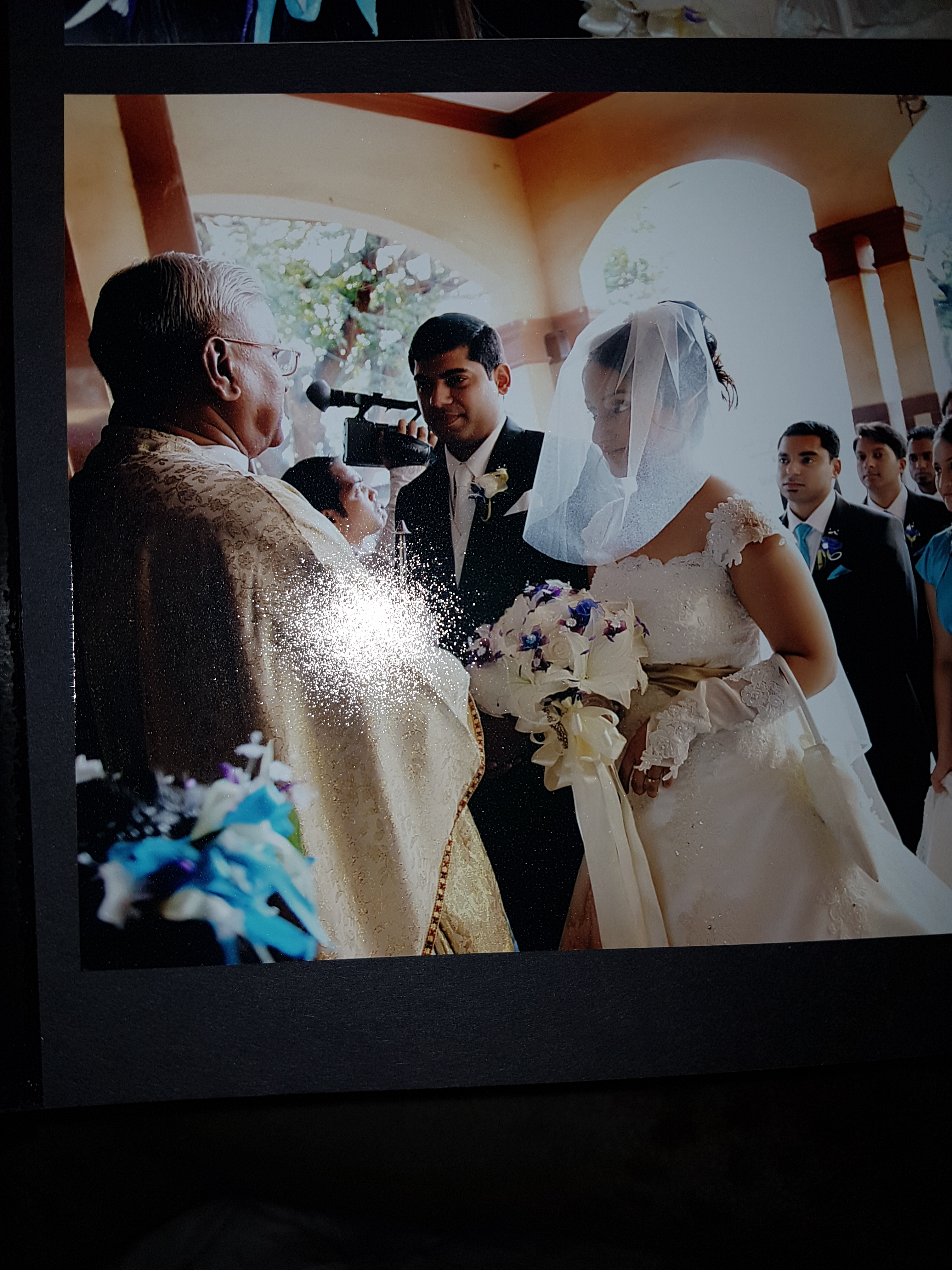
Raoul charm bestman welcome

The bride is greeted outside the church by the mal dhedo with a kiss and presented the bridal bouquet.

rlp wedd bless2

The couple is received at the church entrance by the Priest and then led into the church, the bride accompanied by her father and the groom by his mother. The bridesmaid, bestmen, page-boys and flower-girls precede the priest. The nuptials usually take place at an high mass reserved exclusively for the marriage. The Union is blessed by the Bishop or Parish Priest or if a priest is a relative of the family then he would be given the honor of blessing the nuptials where the rings, the wedding bands (resperachi mudi) are exchanged and the Sacrament of Marriage is received by the bride and groom, in the presence of two witnesses one from the brides side and one from the grooms side.

The program for the nuptial mass, which is printed on color coordinated booklets is prepared with great care and family members take pride in partaking in the nuptial program where certain tasks or duties like readings, choir singing, offertory, etc. are assigned to the family. The selection of readings, hymns, etc. must be discussed and agreed with the parish priest, so also the program. For instance the lighting of the unity candles may be allowed by some churches and may not be acceptable to others. The church pews are decorated and it must be borne in mind that the altar too must be decorated with fresh flowers for the occasion which many a times is overlooked.

The sado, karimani, jewellery, red glass bangles alongwith the aboli (Crossandra infundibuliformis or firecracker flowers) and mangalore mallige flowers (jasmine flowers) which the bride will be adorned with at the reception are carried to the church by the bridegrooms family so that they can be blessed at the nuptials. All the articles are placed in two trays, one for the saree and ornaments and other for the flowers and wrapped in a red satin or velvet cloth. The honor of dressing the bride at the reception is given to the yejman. If the yejman is the mother of the groom she may give this honor to an elder aunt, bappu’s (elder brother of father of groom) wife i.e. the daijis who are also considered as yejmani and yejman and she is handed over charge of the sado and ornaments from the house to church to the reception venue.

At the end of the mass, the bride and groom and the witnesses are invited by the Parish Priest to sign the marriage register thereby concluding the Sacrament** of marriage and sealing the contract, which in catholicism understands marriage as a contract by which a man and a woman establish between themselves a partnership for their whole life.


*The miron or mirniam discharges many of the duties at the church which traditionally were performed by Gurkar, Luvad or Chamador. In early times Junta was the assembly of all catholic households in a village. The elected officials were (i) Gurkars (tulu pre-christian term) (headman). Gurkars were also called Budvont which is of pure Goan origin (Silva II-101). (ii) Luvad (portuguese term) (assistant headman) and (iii) Chamador (crier) in portuguese means to call. The Gurkar had to help the Parish Priest in various ways and communicate to the people orders, admonitions and advice of the parish priest and keep the parish priest informed of happenings in the village. The Luvad helped the Gurkar and in his absence performed Gurkar duties. The Chamador’s duty was to call the people Junta for the meetings to inform about deaths and duties also included digging of graves for burials. The three were important officers and were supreme in the social life of the community in the village and considered as ‘first’ parishioners of the parish. They had honor at religious functions and these offices were usually hereditary as eldest son would be selected when father died or resigned.
**Catholic marriages come under the purview of Canon Law and the Civil Law of the country in which a catholic lives. In India, Catholic marriages are regulated by the Indian Christian Marriage Act of 1872 that accords the Parish Priest the status of marriage registrar. Catholicism considers marriage as a Sacrament only when both the partners are catholics. When one of the partners is not a catholic it is a mixed-marriage and recognised as a contract but not as a sacrament. Besides, a catholic marriage must be contracted in public in the presence of a Bishop or Parish Priest and with 2 witnesses. A catholic marriage has two essential properties, Unity – which rules out polygamy and thereby fidelity in a marriage; and Indissolubility – which rules out divorce. Hence a catholic marriage comes to an end only when a partner dies. Marriages are ‘annulled’ i.e. declared invalid and this must be established and a decision given by a court according to canon law. However a decree of divorce does not mean nullity. Divorce implies the existence of a marriage while nullity does not. A partner re-marrying after a divorce is considered as adultery (for both partners i.e. the divorcee and the one marrying a divorcee), if the spouse of the divorcee is living and the marriage has not been annulled.

Previous Post: Roce                                                                 Next Post: Wedding Reception

References: Severine Silva and Stephen Fuchs & Victor D’sa, S.V.D.: The Marriage Customs of the Christians in South Canara, India, Konkani Roman Catholics of Dakshina Kannada Chapter III.


Marriage customs and traditions – Nuptials Program


Wedding Nuptials program booklets

Raoul Charm wedding booklet


Sample Wording for a Catholic Wedding Program

Read on for a helpful Catholic wedding program template.

Religious elements or traditions can enrich a wedding ceremony, but determining what to include in the program to reflect your beliefs as a couple can be difficult. Use this sample program as a guide to get you started. Then add your own spin to make your day truly personal. Below is some helpful sample wording for a traditional Catholic wedding program.

Front Cover – Design and colors as per your choice and wedding color scheme

A Celebration of Marriage

Bride’s name
and
Groom’s name

Date

Name of Church
City, State

Inside Page 1

Celebrant
name

Concelebrant/s
name/s

Parents of the Bride
names

Parents of the Groom
names

Matron of Honor
name

Best Man
name

Ushers
names

Ring Bearer
name

Flower Girl
name

Organist
name

Soloist
name

Musicians
name(s)

Inside Page 2

Prelude

Processional
“Name of Song,” Composer
Bride’s Processional
“Name of Song,” Composer

Liturgy of the Word

Opening Prayer

First Reading—Book of the Bible Chapter: Verse, reader’s name 

Responsorial Psalm: Name of Psalm, reader’s name

Second Reading—Book of the Bible Chapter: Verse, reader’s name

Gospel Acclamation—Book of the Bible Chapter: Verse, reader’s name

Homily

Inside Page 3

Sacrament of Marriage

Exchange of Vows

Blessing and Exchange of Rings

Unity Candle
“Name of Song,” Singer’s name

Prayer of the Faithful
reader’s name

Response: Lord Hear Our Prayer

Presentation of the Gifts

Liturgy of the Eucharist
Eucharistic Prayer

Lord’s Prayer

Nuptial Blessing
Sign of Peace

Communion
“Name of song,” Singer’s name

Final Blessing

Recessional
“Name of Song,” Composer

Note for Back Cover (Optional)

Thanks so much to all of our family and friends for your love and generosity. We are so grateful all of you were able to join us and share in our special day.

Bride’s name and Groom’s name


P.S.: Number of pages may differ according to the readings, hymns, etc.

Reference The Knot


Mangalorean marriage customs and traditions – Roce


STEP 11 – ROCE

Roce stage2
Roce stage and Pan-Pod Udak

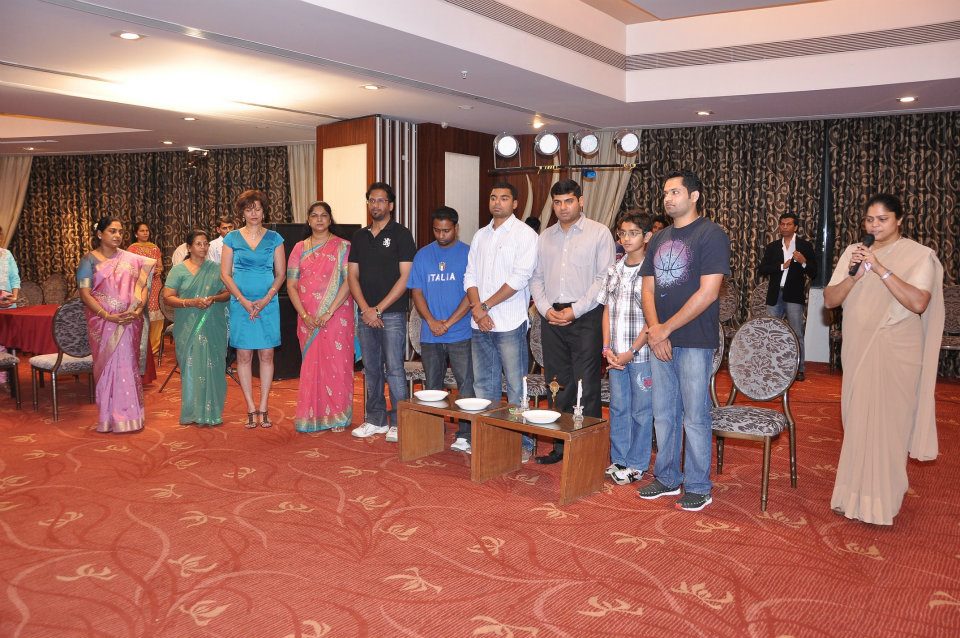
Roce is a beautiful  ceremony preceding the nuptials, symbolizing purification of the body of the young bride/groom to cleanse her/him and make them pure in the eyes of God as they are about to enter into the Sacrament of Holy Matrimony.   After the anointing she/he is led to take a ritual bath to end their bachelorhood or spinstership in preparation for the most important event of his/her life – The Wedding.

Roce is sort of an emotional ceremony and is held only once in a life time.  A person re-marrying, for whatever reasons, will not hold this ceremony.  So it is a unique ceremony and should be respected.  After this ceremony the bride/groom are not supposed to leave the house except for the nuptials.

Then:

On the eve of the wedding an important ceremony is performed at the bride and groom’s house respectively, called the ‘roce’– oil bath or anointing and with this the wedding ceremonies actually begin. This ceremony signifies the mother’s love for her son/daughter.  Guests were warmly welcomed at the entrance to the matov with pan-pod and udak. Guests who are in the habit of eating pan-pod take the plate in their hands and chew some pan-pod.

Traditional dress worn by bride is a skirt and blouse (called ‘Kirgi bhaju’) and changes into skirt blouse for the roce application. The groom (voreth or novro) wore a loin cloth called ‘pudvem’ or a half pant or a ‘lungi’ and the upper body may or may not be covered with a half sleeved singlet and the dhedes wore the same.

The yejmani accounces the roce. Yejmani can be the parents or any elder family member, but not widows or widower. The male is yejmani and female is yejman.

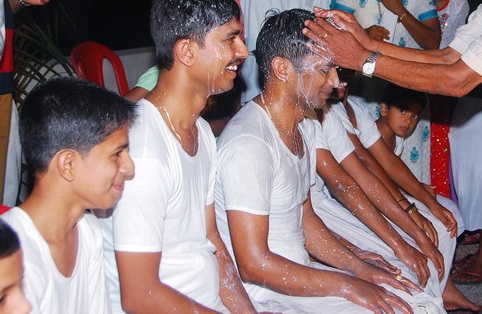
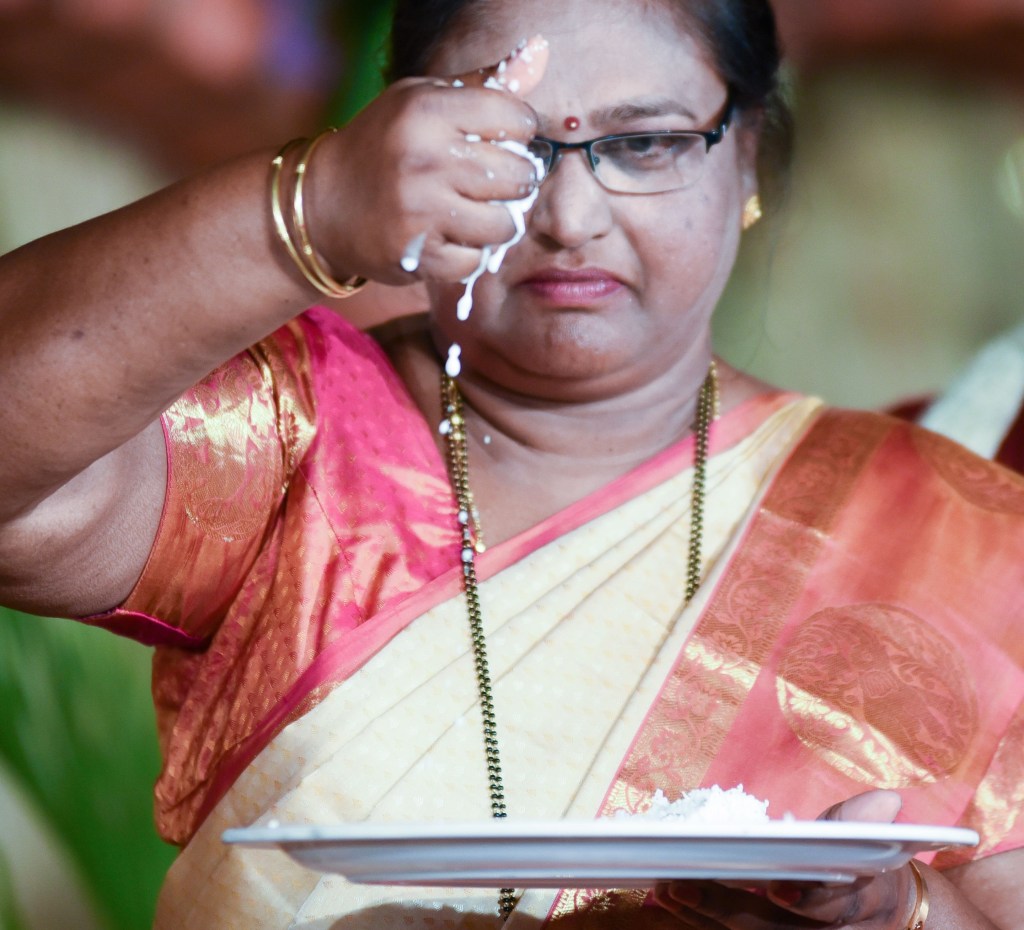
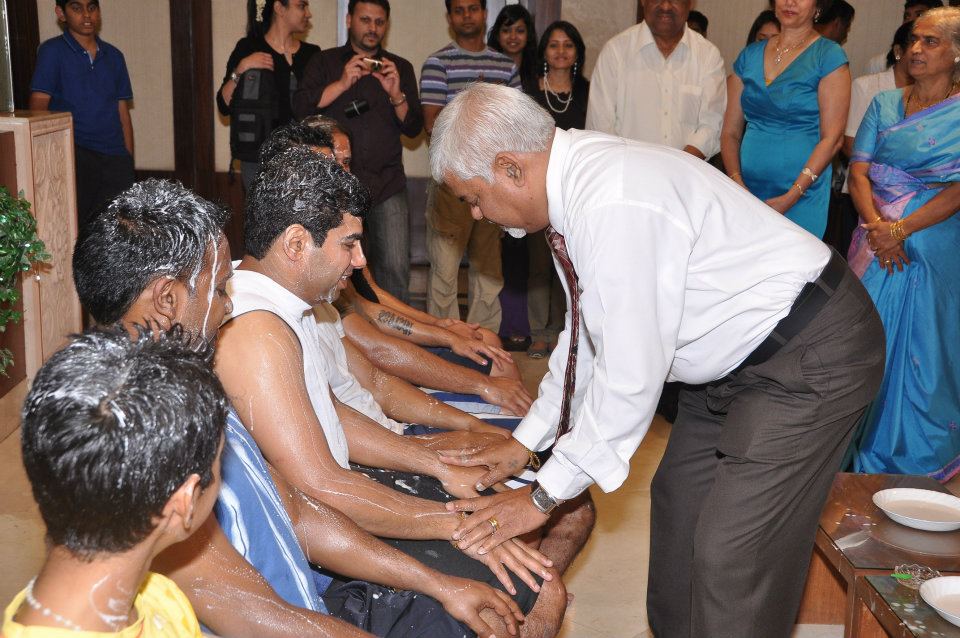
The bride/groom with their dedhiyo (bridesmaid)/dhedes (groomsmen) sit on a low stool monoi or a bench surrounded by the guests. The yejman enters with two plates vatli, one containing coconut oil and one coconut juice. She puts a sign of the cross with oil on the forehead of bridegroom, puts oil on the head rubs it in and puts oil in the ears.  Then proceeds to apply the coconut juice all over the body and softly rubs it in. The bridesmaids and groomsmen are also anointed likewise.  In earlier days only the women applied roce to the bride/groom.

This anointing is done accompanied by singing of the voviyos  by women, the procedure being one women leads the song while the rest of the women say ‘voi’ voi’ (yes, yes) at the end of each verse and then repeat the last verse.  These wedding songs voviyos express the genuine enterprising nature of the manglorean Christians, their high ideals, respect for elders, their deep faith in God invoking the blessing of God on the couple.  It was not uncommon for two senior women to sing the voviyos in competition with each other, one praising the bride and the other the groom.

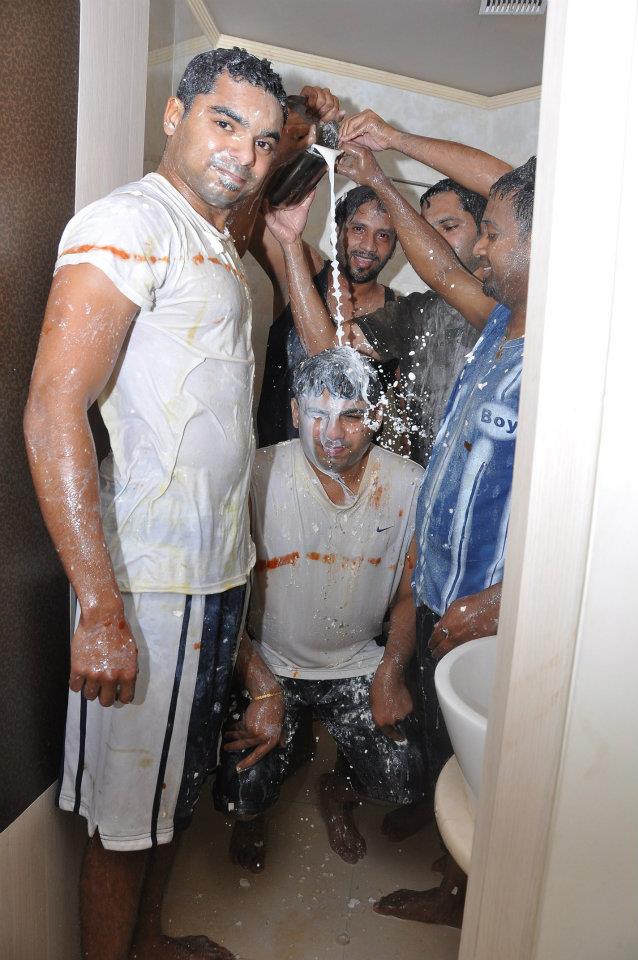
When the anointing comes to an end the bride/groom are led by the mother to the bath for their last ‘bachelor’s bath’ avnkarponachem nan-navnche.  The mother and god-mother, elder aunts would symbolically bathe the bride/groom by pouring the first few mugs of water on them.

The roce ceremony is an impressive and ritual purification rite by which the bride and groom embarks on a new state of life i.e. saunskar.  The blessings of God are invoked and their dead ancestors remembered.

The roce banquet consists of steamed rice,  polov of ash-pumpkin (kuvalo),  chone sukke black-gram curry,  lonche pickles, kele sukke curry of raw bananas and vorn sweet dessert. Those who can afford serve muton-polov. In some communities the main dish of the roce meal consists of fish curry.

The meal began when the bride/groom finished their bath and had taken their seat of honor in the matov. The MC or Garcho Yejmani says a few words while raising a toast for a bright future to the bride/groom.  This is called boliki magchi – wishing good health to all present in the matov. At the end of the yejmani’s short speech everyone says ‘dev borem korum’ – ‘May God Bless you’ and the meal begins.  Usually children, women and people coming from long distance would eat first (poili pankti).  When people sitting at the last turn (kadechi pankti) finish their meal the laudate is sung. That night there is great merry-making, singing and joking in the matov which continues through the night.  Those in charge of cooking, keep themselves busy killing the pig, slicing onions, etc. for the wedding banquet.

Now:

The Roce ceremony is held two or three days before the wedding.   In the cities,  roce may be held at home if there is sufficient place in the compound or a building terrace where a wedding matov/pandal is erected or in a private hall.

The day would begin  by mass being offered for the departed souls of the family Gharchin almaun.  The close family members then gather for lunch at the bride/bridegrooms home to prepare for the evening roce ceremony like extracting roce.  The vojem gifts are made.

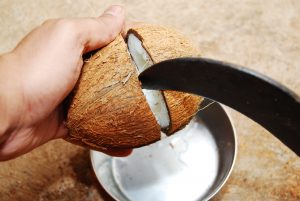
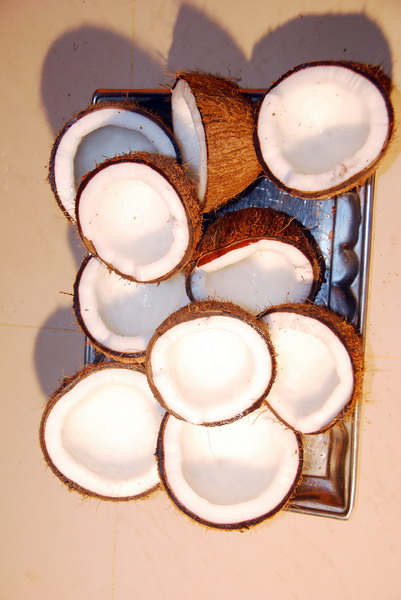
The coconuts used should be in odd number, three, five, seven, etc. depending on how much roce is required which would depend on the number of guests expected at the function.  The scraping of the coconuts are done by the elder sisters, sister-in-law, maushis, etc. and extraction of the roce although required to be squeezed by hand only,  maybe ground in the mixer and extracted by placing the coconut paste in a cloth and squeezed if a large quantity of roce is required.

The roce plates are also in odd number 3, 5, 7 etc. depending on the number of women who will be given the honor by the yejman of carrying the roce plates.  Elder sister-in-law, God mother, aunts, etc. are given the honor but not widows and spinsters.

As the concept of matov and rashyo is seldom followed various traditional kitchen items are displayed near the stage on the roce day, as shown in the kazara matov post.

The event is conducted by a professional Master of Ceremonies who will make the required announcements to give a proper format to the event. Food is catered and music is hired so that there is great entertainment for the function.

When the anointing comes to an end the bride/groom are led by the mother to the bath for their last ‘bachelor’s bath’ avnkarponachem nan-navnche.  The mother and god-mother, elder aunts would symbolically bathe the bride/groom by pouring the first few mugs of water on them.

Roce Kuwalo cutting

The roce ceremony today is similar to the earlier custom and by far many of the rituals are followed even if only symbolically, like the stage decorations, vojem procession, traditional costumes, singing of voviyos or recorded voviyos.  Symbolic cutting of the kuvalo by the bappu and extracting coconut juice is also symbolically performed at the begining of the formal roce function.

The traditional roce menu is served but in addition mutton, pork, chicken etc. are also included depending on individual choice and/or financial status of the host.  The meal is served buffet style instead of the traditional banana leaf meal.

shankarapura-mallige

No mangalorean roce function or for that matter any wedding function is complete without the Mangalore Mallige Jasmine flowers.  As with all preparations it is ensured that an order for the flowers is made well in time. The Altar is also decorated with jasmine flowers and after reserving for the bride to adorn her hair after her ritual roce bath, the remaining flowers are distributed to women of the family, relatives and friends.

A typical roce ceremony would go along the following lines::-

  1. Keep the Roce plates at the alter
  2. Welcome
  3. Prayer at the alter
  4. Bible reading
  5. If priest or nun is present or a senior person, can give short commentary over the bible reading and the Roce program.
  6. Make bride/bride groom to stand at a prominent place and all senior people come in a line and give blessings.
  7. Make the people involved in Roce to sit at the bench provided in a Matov. (If it is bride then bride along with her sisters or cousins or dedhiyos. If it is bridegroom then along with him his brothers/cousins or dedhes)
  8. Applying the Roce
  9. Take the Novro/Vokol and give them a bath.
  10. Dedho/Dedhios too will go for bath.
  11. Dinner

and Laudate

Then music, dancing and merry-making!

Enjoy this wedding song…

N.B.: I am open to accepting research projects on Culture and Traditions. Please email me with your requests at Cecilia65@gmail.com.

Thank you.

Contribution towards research and development of Mangalorean Culture and Traditions

If you find my research and posts on The Mangalorean Culture and Traditions useful and worthy and would like to participate towards improving and enhancing my website and my research, please contribute how you see fit.

$5.00

Previous Post: Dot and Denem                                   Next Post: Nuptial Blessing Resper

References: Severine Silva and Stephen Fuchs & Victor D’sa, S.V.D.: The Marriage Customs of the Christians in South Canara, India, Konkani Roman Catholics of Dakshina Kannada

Mangalorean marriage customs and traditions – Laudate Psalm


LAUDATE

The Laudate Psalm (Psalm 116(117) – a song sung in Praising God is one of the most sung by Mangalorean Catholics at all weddings and related functions and all auspicious functions.  It is  traditionally sung in Latin.

The below psalm/hymn is recited at the end or after the first round of serving meals at the Roce and at the wedding after the Opsun Divnchem ceremony is concluded.

Laudate Dominum

Laudáte Dóminum omnes gentes
omnes populi; Quóniam confirmáta est
súper nos misericordia eius
et véritas Domini mánet in æternum (2)

[At this point all rise and mark themselves
with the Sign of the Cross
as they sing the Glory Be]

Glória Pátri et Filio et Spiritui Sáncto.
Sicut érat in pricipio et nunc et semper
et in sáecula sáeculorum Amen.

Laudáte Dóminum omnes gentes
omnes populi; Quóniam confirmáta est
súper nos misericordia eius
et véritas Domini mánet in æternum (2)


Laudate – Translation in english

O Praise the Lord, all nations, Praise Him, all people. For he has bestowed His mercy upon us. And the truth of the Lord endures forever.

Glory to the Father and to the Son and to he Holy Spirit. As it was in the begining, is now,  and forever, and for generations of generations.  AMEN


Mangalorean marriage customs and traditions – Voviyos


VOVIYOS

Roce voviyo siging

A Vovi,  is a two-liner ( traditional couplets) but very appropriate song, sung during weddings.  These ‘Voviyo’ invoke God’s blessings, remind the bride /groom of the love and sacrifices of their parents, give advice and also indulge in some good-humoured teasing.

Ideally, the women surround the bridegroom (or the bride in her house) and sing voviyos as the anointing goes on. All the essential wedding ceremonies are accompanied by songs called ‘voviyos’.  The proper method to be followed is that one of the women, leads the song while the rest of the women recite, ‘voi voi’ (yes, yes) at the end of each verse and then repeat the last verse.

Grooms’ Roce

Voviyos Groom

Voviyos (wedding songs) today are played electroically but for those who would like to participate in live singing, Voviyos are given herebelow alongwith the sequence of roce application:-

Make groom to sit on the bench/chair

Begining (Aprsos = Roce)

Applying Roce to Bridegroom and Bestmen.

 Singing of Voviyos…..

  • Aprosachi vatli, Bhangaracho bonvor, rosak bosla kunvor, amcho voret Rai
  • Reply:  Vove… rosak bosla kunvor, amcho voret Rai
  • Apros ross kadla , sarvoi sungrarun, rosak baslea kunvor amcho voret rai
  • Reply:  Vove…. rosak baslea kunvor amcho voret rai
  •  Dha Paise dileath, suvieak ani suthak, malgadea puthaak, iezmani kazar karta.
  • Reply: Vove…. malgadea puthaak, iezmani kazar karta.
  • Ruzai muje maye naka korunk poice, kadel dovorn boice hya rosalagin.
  • Reply:  Vove…kadel dovorn boice hya rosalagini.
  •  Hya Garcho yejmani kain gela Cherela sait Ruxai mayek hadunk gela
  • Reply:  Vove…Cherela sait Ruxai mayek hadunk gela..
  • Matov zadun, udoila koir, San Juzen dilam doir, amchea iezmanik
  • Reply:  Vove… San Juzen dilam doir, amchea iezmanik.
  • Apros hadn dovorla vatlenth, nouro rosak bosla, modhem matvan’th
  • Reply:  Vove…. nouro rosak bosla, modhem matvan’th

B. Make a cross on the forehead of bridegroom

  •  JezulaDimbi ami galeam, santa kuru kadeam, kurpa ami magieam amcheagim
  • Reply:  Vove…. santa kuru kadeam, kurpa ami magieam amchea Jezulagim
  • Poili santa kuru, dusrem kelam tesamw, Jezuchem besaum amchea vhoretaak
  • Reply:  Vove……. Jezuchem besaum amchea vhoretaak
  • Besaum magon, nouro bosla  bankar, dist lavn sarga, Jezu Morieacher
  • Reply:  Vove…. dist lavn sarga, Jezu Morieacher

Put oil to the ears and head

  • Kani galem thel, kopaleak kadlo khuris, sargimcho jezu kristh vhoretaak besaum dith.
  • Reply:  Vove…. sargimcho jezu kristh vhoretaak besaum dith.
  •  Kani tallve thel galn, bosaiea bankar, pailo man thuka, sargimchea Deva Bapa.
  • Reply:  Vove… poilo man thuka, sargimchea Deva Bapa
  • Kani thalve thel galn dhovorilem monniye, besaum di ranniye, sargimchea virza moriye.
  • Reply:  Vove… besaum di ranniye, sargimchea virza moriye.
  •  Akashim mod, narl kubear, telacho kuris voretachea kopalar
  • Reply:  Vove… telacho kuris voretachea kopalar
  •  Akashim mod munn, dharnik zalea shell, pintamgelea choleak, kani mateak thel
  • Reply:  Vove…Pintamgelea choleak, kani mateak thel
  • Aleachea doshi, sakrichem mel, panch thembe thel, voretachea kapalar.
  • Reply:  Vove… panch thembe thel, voretachea kapalar.
  •  Kani thallvek thel galn, Jezuk maaryam  ulo, aprubaieacho  chollo amcho vortrai.
  • Reply:  Vove…. aprubaieacho  chollo amcho voretrai

Inviting Mother Mary/Jesus and people to Apply Roce

  •  Ankvar  mai foddi narl, mori magdelen kanthi kai, jezu mori mai, teghi ros lai
  • Reply:  Vove…. jezu mori mai, teghi ros lai
  •  Madth foddi narl mun, mornel podi kai santh ezabeli saith chovgi roce lai.
  • Reply:  Vove… santh ezabeli saith chovgi roce lai.
  • Apros ross kadla, konak sanmgon,  raza magon amchea jezulagim.
  • Reply:  Vove…… raza magon amchea jezulagim
  •  Ross kaadila, bainmchea udkan, maiechea putran, rosak besaum deilam.
  • Reply:  Vove… maiechea putran, rosak besaum deilam
  • Apros roce kadn, dovorila boshiye Jezuchea khushe, iezmanin roce kadla.
  • Reply:  Vove… Jezuchea khushe, iezmanin roce kadla
  • Sakalim mal’lim fulam sanzear bavolim, alma pavolim, hea rosalagim.
  • Reply:  Vove… alma pavolim, hea rosalagim.
  • Apros roce,  ezmanichea kanknnar, dhaak zalea patna, hanga roce munon.
  • Reply:  Vove… dhaak zalea patna, hanga roce munon
  • Apros roce kadla, dheda vollyacho, ubo ravon polleita puth morieacho.
  • Reply:  Vove… ubo ravon polleita puth morieach
  • Ruxai muje maye,  naka korunk poice,  kadel dovorn boice hya rosalagin.
  • Reply:  Vove… kadel dovorn boice hya rosalagin
  • Hya Garcho yejmani kain gaa gela, Cherela sait Ruxai mayek hadunk gela
  • Reply:  Vove… Cherela sait Ruxai mayek hadunk gela
  • Ruzai mai ayli, samkyaa margan, Pintanm gelya vargan thika baska diya
  • Reply:  Vove… Pintanm gelya vargan thika baska diya
  •  Koses mai soiri, ruzai, mai gharchi, tinnem kurpa dimvchi, amchea vorehtak
  • Reply:  Vove… tinnem kurpa dimvchi, amchea vorehtak 

First roce applied by the mother.

  •  Aprosachi vatli davigi uzvi, poilo roce laitha Voretha avoi tuji.
  • Reply:  Vove…poilo ros laithai Voreta avoi tuji.
  • Nannden ghalam lonnchem zaav ghaltha doce, avoi pustha roce, nouro nitt boce
  • Reply:  Vove avoi pustha roce, nouro nitt boce

Second roce applied by the father.

  • Aprosache vatli motiancho ghos, mogacho roce vorta bapaicho.
  • Reply: Vove…. mogacho roce vorta bapaicho.
  • Rosyanche radnik katyanche pog, Vishranaka mogu tuja mai-Bapaicho.
  • Reply:  Vove… Vishranaka mogu tuja mai-Bapaicho.
  • Rupiyache vattle bhangarache kes, mogacho roce tuja mai-bapacho
  • Reply:  Vove… mogacho roce tuja mai-bapacho

Roce applied by grand parents, uncles, aunts, etc

  • Aprose roce nidla voilyan gallaith, sargim thaumn pollaith, voretha ajeio tuje
  • Reply:  Vove… sargim thaumn pollaith, voretha ajeio tuje
  • Mez almar karun, mezar dhavarla glass, sargar zala ullas, tujea ajieak.
  • Reply:  Vove… sargar zala ullas, tujea ajieak.
  • Sargimchea baink, aad gala ruk, ek galai dhuk, vorehta azieak thujea.
  • Reply:  Vove… ek galai dhuk, vorehta azieak thujea.
  • Aprosachi vatli davigi ujvi, dusro roce pustha voreta baplo tujo
  • Reply:  Vove… dusro roce pustha voreta baplo tujo
  •  Hyavi matvanth baple thuje mhale, tjua bapaicha kaal, baplo roce laitha
  • Reply:  Vove… tjua bapaicha kaal, baplo roce laitha
  • Mavllo roce laitha, monanth kitem chintha, borem ponn magtha tuja kazaraak,
  • Reply:  Vove… borem ponn magtha tuja kazaraak,
  • Bhatacha rashir boson asa kavllo, mundaas gaar mavllo, aila tuja kazaraak,
  • Reply:  Vove… mundaas gaar mavllo, aila tuja kazaraak,
  • Aprosachi vatli dhavigi ujvi, thisro roce pusthat vohret mavshyo thujo
  • Reply:  Vove… thisro roce pusthat vohret mavshyo thujo
  • Padri mees sangta, jezu Mariea voir, thanim dilam dhoir amchea vortak
  • Reply: Vove….. thanim dilam dhoir amchea vortak
  •  Gulobacha zadaa tallver phulla bongo, uzvadacho khambo, amcho voreth rai
  • Reply: Vove…… uzvadacho khambo, amcho voreth rai
  • Ude Ude dis, udethana thambso, sondremacho arso amcho voreth rai
  • Reply: Vove……. sondremacho arso amcho voret rai
  • Aprosachi vatli dhavigi ujvi, chovtho roce pustha vohret akayo thujo
  • Reply:  Vove… chovtho roce pusthath vohret akayo thujo
  •  Aprosachea boxiea, muieancho hari, aieavo naari, chovgi roce lai.
  • Reply:  Vove…. aieavo naari, chovgi roce lai.

Roce applied by other close relatives, daijis, vaddo people and all the people who are present. During this time you may say any kinds of vovios to give advices to the brides/grooms (some could be as below)

  •  Ailea saireank, patim karinaka, jevan kelea xivai bhavank dhadinaka
  • Reply:  Vove… jevan kelea xivai bhavank dhadinaka
  • Kodyal taun aylim, udpi evn pavlim, yezmanichya apovnyak, haanga evn paulim
  • Reply: Vove…… yezmanichya apovnyak, haanga evn paulim
  •  Aprosachi vatli davigi ujvi, atam roce laithath voretha daijim tujim
  • Reply:  Vove… atam roce laithath voretha daijim tujim
  •  Hem Ghar sobana munn kursak aylam pan, poilo dila maan tumkam daijiyank
  • Reply:  Vove… poilo dila maan tumkam daijiyank
  • Govamcho undo, tupan thapaila, mogan apailam iezmanin daizeamk.
  • Reply:  Vove… mogan apailam iezmanin daizeamk.
  • Fulam bithor ful, gulob zadachem, kutam vodanchem, amcha voretaachem
  • Reply: Vove…….. kutam vodanchem, amcha voretaachem
  • Vaadyanthle maanesth, aylyath hanga somesth, pollevnk distha rupesth amcho voreth rai
  • Reply: Vove… pollevnk distha rupesth amcho voreth rai
  • Mug fodun, mugachi keli dall, kutmak mogall, amcho voreth rai
  • Relpy: Vove…… kutmak mogall, amcho voreth rai
  • Voretha rai, haath tuje gore, dhede sodh bore, thuka sangathak
  • Reply: Vove….. dhede sodh bore, thuka sangathak
  • Goincho goinkar, bhuincho bhuinkar, kuwaittcho savkar amcho voret rai
  • Reply: Vove……. kuwaittcho savkar amcho voret rai

Finally, when the women stop singing, the anointing also automatically comes to an end. Then the bridegroom is pushed to the bathroom with his brothers or friends for a so called ‘bachelor’s bath’.

Going for bath:

  • Tambeachea bhanni tapoilam tambann, voret nhata nhann az ankvar ponn.
  • Reply:  Vove… voret nhata nhann az ankvar ponn.
  • Tambeachea bhanni tapoilam tambann, voret nhata nhann az dabajan
  • Reply:  Vove… voret nhata nhann az dabajan
  • Tambeachea bhanni udok tapoilam, nanvk apoilam amche voretak
  • Reply:  Vove… nanvk apoilam amche voretak
  • Dharyacha lara, chothri fulai mora, naumk apoun vora, amcha voretak
  • Reply:  Vove… naumk apoun vora, amcha voretak
  • Voviyo mullim vovllim voretak nannaunk vocha, heram jevnnak bosa, raath madhyaan zatha
  • Reply:  Vove… heram jevnnak bosa, raath madhyaan zatha

Thus we see that this impressive roce ceremony is a meaningful and important rite. The purpose of this ceremony is to indicate that the bride or the bridegroom now leaves his unmarried state of life and embarks on a new mode of life.

Lunch or Dinner

  • Donparanchea jevnnak nisteak kitem guzo, daijeank apovn ezmani kor uzo.
  • Reply:  Vove…daijeank apovn ezmani kor uzo.

Brides Roce

Voviyos Bride

Make bride to sit on the bench/chair

Begining (Aprsos = Roce)

Applying Roce to Bride and Bridesmaids

 Singing of Voviyos…..

  • Aprosache boxie, Bhangaracho bonvor, Rosak boslea Kunvorn Amchi Voret bai
  • Reply:  Vove… rosak boslea kunvorn, amchi voret Bai
  • Apros kaddla, Sorvoi surngaravn, Rosak boslea kunvorn Amchi Voret bai
  • Reply:  Vove… rosak boslea kunvorn, amchi voret Bai

Make a cross on the forehead of bride

  • Akaxi madd, Narl kubear, Telacho khuris voklechea Kopolar.
  • Reply:  Vove… telacho khuris voklechea kopolar

Put oil to the ears and head

  • Akaxi modd mhonn dhornnik zalea xell, SOZANgelea (here mention the relevant surname) choliek, kani mateak tel
  • Reply:  Vove… (here mention the relevant surname) choliek, kani mateak tel
  • Aleachea dosi, sakrichem mel, panch tembe tel voklechea kani ghal.
  • Reply:  Vove…panch tembe tel voklechea kani ghal.
  • Kani ghalem tel, kopolim kaddlo khuris, vainkutincho jezukrist voklek besanv dit.
  • Reply:  Vove..vainkutincho jezukrist voklek besanv dit.
  • Kani tallve tel ghaln bosoia banka, poilo man tuka sorginchea deva bapa
  • Reply:  Vove…poilo man tuka sorginchea deva bapa
  • Kani tallve tel ghaln sorvoi angi denvlem, apurbaiechem bavlem amchi vokol bai
  • Reply:  Vove…apurbaiechem bavlem amchi vokol bai
  • Kani tallvek tel ghaln, jezuk maruiam ulo, apurbhaecho cholo amcho voret bab.
  • Reply:  Vove…apurbhaecho cholo amcho voret bab.

Inviting Mother Mary/Jesus and people to Apply Roce

  • Ankvar moi foddi narl, mori magdalen kanti kai (Narl kantcho), jezu mori mai, tegi rose lai
  • Reply:  Vove…jezu mori mai, tegi rose lai
  • Aprosache boxie, muiancheo hari, aiavo nari, chovgi rose lai.
  • Reply:  Vove…aiavo nari, chovgi rose lai.
  • Aapros kaddla, konnak sangon, roza magon amchea jezulagim,
  • Reply:  Vove…roza magon amchea jezulagim,
  • Apros kaddn, dovorla boxie, jesuche kuxie, ezmanin rose kaddla.
  • Reply:  Vove…jesuche kuxie, ezmanin rose kaddla.
  • Apros kaddla, dedda volleacho, ubo ravon polleta put moriecho
  • Reply:  Vove…ubo ravon polleta put moriecho
  • Altari voili kals, denne lavn kaddlea, ballka soit ailea amchi ruzai mai.
  • Reply:  Vove…ballka soit ailea amchi ruzai mai.

First roce applied by the mother.

  • Aprosachi boxi davigi ujvi, poilo rose laita vokle avoi tuji.
  • Reply:  Vove…poilo rose laita vokle avoi tuji.

Second roce applied by the father.

  • Aprosache boxie, motiancho ghos, mogacho ros vokle bapaicho.
  • Reply:  Vove…mogacho ros vokle bapaicho.

Apply other close relatives, daijis, vaddo people and all the people who are present. During this time you may say any kinds of vovios to give advices to the brides/grooms (some could be as below)

  • Aillea soireank pattin korinaka, jevonn kelea xiva bhavak daddinaka.
  • Reply:  Vove…jevonn kelea xiva bhavak daddinaka.
  • Ami boroil’lem kagot pavlem bellganvant, urlo porganvant vokle baplio (Mavllo) tuzo.
  • Reply:  Vove…urlo porganvant vokle baplio (Mavllo) tuzo.
  • Amchea ghora mukhar chireacho doro, rinnacho bhoro vokle bapaik tujea.
  • Reply:  Vove…rinnacho bhoro vokle bapaik tujea.
  • Itle vers gavn, amkam kitem pag, tumchea rozar magnneant amkam borem mag.
  • Reply:  Vove…tumchea rozar magnneant amkam borem mag.

Taking bride for bath

  • Tambiachea bhanni tapoilam panni, vhokol nhata nhann az ankvar ponn.
  • Reply:  Vove…vhokol nhata nhann az ankvar ponn.
  • Tambeachea bhanni, tapoilam tambann, hokol nhata nhann az dabajan.
  • Reply:  Vove…hokol nhata nhann az dabajan.
  • Tambeachea bhanni tapoilam tambann, hokol nhanvk vheta bendda tomboran.
  • Reply:  Vove…hokol nhanvk vheta bendda tomboran.
  • Tambeachea bhanni udok tapoilam, nanvk apoilam amche hok’lek.
  • Reply:  Vove…nanvk apoilam amche hok’lek.

Lunch or Dinner

  • Donparanchea jevnnak nisteak kitem guzo, daijeank apovn ezmani kor uzo.
  • Reply:  Vove… daijeank apovn ezmani kor uzo.

LAUDATE

Wedding songs

Traditional Mangalorean wedding songs


TRADITIONAL WEDDING SONGS:

Roce song

  1. Bhailian Ailo Vor  (Roce song)

Bhailian ailo vor, run ami nenan, zanvliaun vele
Nenan zanvliaun vele, rukhar zalta,

Vaten violthek ramb ani rebhek,
konthar salanth, Rebhek,
konthar salanth, uzvad phankla,

Ghara dhogain auvnkwariancho,
uzvad phankla Ghara dhogain auvnkwariancho.

Poilo kozno koryan ami bhogun kozno koryan,
Komyo kozno koryan.
Laudate Konthar

Kame Rodhan bithore yeyan,
Laudate Konthar,
Kame Rodhan bithore yeyan.

…(additional Verses)
Ghearze Violancho, mukhar zalta,
Ghearze Violancho.
Bhailian aile vor, mhunne ami dharnik ghalo bhare,
Dharnik ghalo bhare. Poilo naman,

Kare Sorghinchia Deva Bapak,
poilo naman, Kare Sorghinchia Deva Bapak.

Poise thauvne ailiaun ami thalnin, amche ghole,
Thalnin amche ghole! Hathan zodiyan

Povle thumchia malghadianche, hathan zodiyan,
Povle thumchia malghadianche.

Rodap tumcho sadhe, amcha khandhar ghalo bhanke,
Khandhar ghalo bhanke. Thoyyar keliathe

Bhanke thumcha rodaniake, thoyyar keliathe,
Jersik yeke kami ami bhayle sarke yezmani,

Bhayle sarke Yezmani. Gathe sodhun
Bhanke thumcha rodaniake.

Jersik yeke kami ami bhayle sarke yezmani,
Bhayle sarke Yezmani. Gathe sodhun

Ailiaum rodhan gharadharin, gathe sOdhun,
Ailiaum rodhan gharadharin.

Bhalian ailo vor, roon ami Bhesaum Dheva Bapachen,
Bhesaum Dheva Puthrachen. Rajhi sanghun

Ailiaum vodhanja bhogachen, rajhi sanghun,
Alliaum vodhanja bhogachen.

Bailaan aailo wuree ani
Nennar zaalaar vaillou(2)
Mukaar dhaatyow,kaale aarthe villou laanso.(2)

Aarthe villou,devranth ani
Rebeir karthar saalaan (2)

Wuzwaad faanklaa,garaanth dogaan ankwaar ravnso(2)

bhailaan ailon bore ani
yezmaan zaalaar pushi (2)
Mukaar dhaantaw,boshi sankdank dube laanshi (2)
poilun kosonso sodyaa ani
dusro koslo koryaa(2)
ravthar karta,Karn woraa ditar karya(2)

2. Ami dogi sezara

Ami dogi sezara vetam kazarak
Bail burgi thi rosak geli, yonanth garah
kedna teri sezara zalaier kazarak
Saglie amchi patla baba vethat thya garah

Matvant baba badkar vodley sagley asthaley
Ladru pedru banda sangi dance martheley
Woolen suitar noveh booter sagley sobthaley
Ami dogi natkar saiba konshak urtheley – 2

Ami dogi……..

Badyaso suit haadun hami vanthe karn galo
Pant thannieh galun, coat baba havie shirkielo
Matvanth saiba voklo amcho hasun fugthyolo
Amchi sobie dekun tho boros hasthelo – 2

Ami dogi…….

Adlya vorso amche baba kazar zaliey
sangche kithey sagley piyoun thigh re zaalay
Amcha voklank gevun sagley dance marthaley
Visar karunk galyak amka vonani marley – 2

Ami dogi…….

The following song “Ghulobancho Jhelo” (a garland of roses) expresses the excitement of the fathers-in-law over their new acquisitions:

3. Ghulobancho Jhelo

Ghulobancho jhelo; Ugthia pattar zalo, (2)
Ghorkarnicho kelore viva, mauan ayer kelo.(2)

(repeat last 2 lines)

Utuur Bore Paatu,suufaar Bore Layi
SovyaaK Fuulair .Zaayiere Viva. AamChe wokol Bhai

(repeat last 2 lines)

Angur Sangle yaatso,Dhivor Mani yaatso
Dhayan puuli yaatso,Puvare Viva Aamso Borat Baapu

(repeat last 2 lines)
Angur Sangle yaatchi,Somoy Mani yaatchi
Daya Puleyeche,Puvare Viva Aamche Vokol Bhai
(repeat last 2 lines)

….(additional verses)
Rukad kithlian phutan, Molin dumra kayi, (2)
Bapod montha, rayi re viva, amcho voreth babe.(2)
Luktan kithlian ponthan, Voilian dumra pani, (2)
Bapod montha, rani re viva, amchi vokal bayi.(2)

4. Ude Disaan (after Sado)

Ude ude disaan (2)
ude dana aamso felizaa
ude dana aamso

Ude dana aamso felizaa
Ude dana aamso
Sangrey matzo aaso (2)
Sangrey matzo aaso felizaa
Amche wokol bhai

sangrey matzo aaso felizaa
Amche wokol bhai

Haatanth dhulo aamor (2)
Pormol ane miryo feliza
Pormol ane miryo

Pormol ane miryo feliza
Pormol ane miryo

Rupan dista suryo (2)
Rupan dista suryo feliza
Aamso borap babu

Rupan dista suryo feliza
Aamso borap babu

5. Umarar Kityak / Baglyar Kityak Ubo Voretha  (Mai’n Mudhi shivnchem song)

Umarar kityak ubo voretha
Mai apoietha Mai apoietha
Dheda poundachi mudhi bangrachi
Mai dhitha munta (2)

Thi mudhi galn voretha
Vosanaka misak, Vosanaka misak
Dhist zait tuka voretha
Nhast zait maka (2)

Umarar kityak ubo voretha
Maav apoietha Maav apoietha

Barah vorinso shelo zariso
Maav ditha munta (2)
Tho shelo galn voretha
Vosanaka misak, Vosanaka misak

Dhist zait tuka voretha
Nhast zait maka (2)

6. Mai Muntha thu Zegunachi Sunn (After Upson)

Mai minta thu segunachi sunn
mai munta bore tujhe gunn
vadantlo lok saglo kushal zala
garant aila munn segunachi sunn… (2)
Female:
Oooooo moga mujha, aaj vodtho ullas bogtha
nashibantlo zalo munn, vodd sontos bogtha maka… (2)
male:
Tujhe vinn no sobai, mujhe ghar ujvadie
Tu shegunachi shegunachi shegunachi sunn…. Chorus
Female:
Ooooo moga mujha, tho mog re amcho dogainso,
*(Burgyapontan ailo tho), fudarant saav devo…(2)
Male”
Chintna pois zalie, tujos utrani
Tu shegunachi shegunachi shegunachi sunn……. Chorus
Femaile:
Oooooo moga mujha, zechi kalza ekvotli amchi
*(Fuden jeevo askanso), haav tujhe zonv ravtheli…(2)
Male:
Utra goud tujhe, kalzak re vodli
Tu shegunachi shegunachi shegunachi sunn….. Chorus

7. Tambde Roza

Tambde Roza tuje polle, dukhani bhorleat moje dolle…2
Papachem lisens, assa zalear polle, kazar zauncheak moje kodde..2
Papachem lisens assa re maka, kazar zaumcheak rautam tuka…2
Tum tor kazar, zaina zalear moga, moji bhirmot futtoli tuka…2
Papan kazar maka kelem, sukhantlem voron dukant ghatlem…2
Sabar ankvar cholle ektaim zaum, adoraru maka kelem…2

8. Rodonaka Baye  (Opsum divnchem song)

Rodonaka Baye, ani suzainaka doley, ani suzainaka doley
Aatha disa fuday, baav apounk yetha polay,
Aichan aatha disa fuday, baav apounk yetha polay,

Ek todpa tandul, baye astun kaadgo kundo, baye astun kaadgo kundo
Tuja novryacha gustar, baye loniyan kago undho

Mathey bor kase, baye paat bor vini, baye paat bor vini
Vathai mun go baini, baye amchay sangathini

Vos vos go baye, tuja novrya bora bor, tuja novrya bora bor
Amso somesthaso mog, baye tuja kalzanth dovoru

Vos vos go baye, tuja bartharacha garah, tuja bartharacha garah
Sukan raaj karn raavu, tuja mai mavacha garah


9. Sovo sovo surngarone
(Upson ditana)

Sovo sovo surngarone
hanthull-hanthulleli sarsi!

Manik, manik, nirphol zalan;
Voretha, voretha, dhave kusin.

Vokol, vokol aani bore
Yentik,yentik bur polaani

Thanso ,thansolai lo paatte
Dholan,dholanso polani

Aami ,aami wudekshithu
Biinge,biingelai chaamulaa
Boretarn,boretarn haate dilaa
Dharmiir ,dharmirichaa fuulaa

Dhaarmiir ,Dhaarmirichaa daali
Dhaarmiir ,Dhaarmirichaa piiklaa

Eicha,eicha Fulaan jitle

…(additional verses)
Sovo, sovo surngarone,
don thin, don thin phodlin ponthan.

Ayer, ayer rathe bhoslianth
Dhoghain, dhoghain, bhaghevonthan.

Uzven, uzven phutizo Vangel,
dhaven, dhaven kusin modlo,

cra-, Sacramenthe zodlo,
Dhoghain, dhoghain auvnkwariani.

10. Yeh go Vokelai (after Opsun)

Aar tera wursaan powsunu
Aaz dilaa wopsunu

Yeh go vokelai (2)
Mukar salounu
(Repeat)

Haath tuje sodonu
sakdaank boree magunu

Yeh go vokelai (2)
Wujwe payaana
(Repeat)
Thond tuje fugainaka
Dhole tuje suzainaka
Maai ani maawu powle thali mowganna thuka (2)
(Repeat 1st and 2nd verse)

11. Ughod Dhar (When entering groom’s house)

Ugadi dhar sare bithore thuje shasulile ghaara (2)
Nandaase wakale mowgaan s tuje sadaanche ghaara (2)
Wujwe payaan sare bithore tuje baangarache ghaara (2)
Wugadi dhar sar bithore thuje shasuli ley ghaara (2)Open the door, enter! the house of your in-laws
Treat lovingly your in-laws, and you will find a lovely eternal home
Place your right foot forward into your house of gold
Open the door, enter! the house of your in-laws

12. Baara Baanda

Baara baanda rathya si boli
Baararu piyaacho (2)

Mysoreso amiz mudya si boli
Voretarn ma wallyaacho (2)

Aapeleyechi bhaine se boli
Maakalaik taa akoi(2)

Mawalleyecho mudyo voretarn
Aamka sakdank dakhoin(2)

Nagna purbaa Waailar voretarn
Mudyo Poithante mekoi (2)

13. Evde Ratriche Soire Bailyan kaun (Aapone song)

Ankur chedu waa tumka bangolechaa
Katyaak laagown illo wuzo dai kain go

Evde ratrichae soiri bailyan kaunu (2)
Koni neigh go ami sowg zaana (2)
(Repeat)

Evde ratriche soire bailyan kauu (2)
Taandyaak tonkyaan sow chedwaa maawu go tuzo
Laambe kaadche sow chedwaak bhavo ghatuzo

Chindulaan waananso chedwaa dev re gotuzzo
Meya mojan so chedwaa barthaar gothuzo

Dandya konyachaa mowgaan zaala mandriyaa
Laambe kadse chaar bhavya sobyaar niraya

Chindulaan baandaacha deraa gudaan chepiyaa
Neighya muje chaapardaraa bitar appoiya
(Repeat 1st and 2nd verse)

14. Mollbar Chondrim


15. Voviyos – Groom’s Roce

16. Voviyos – Bride’s Roce

17. Laudate  


Mangalorean marriage customs and traditions – Dot and Denem


STEP 10

DOT and DENEM

Then:

gold varaha
Gold Varahas South India – Indicative

Once the girl and boy have approved of each other at the sairik bethrothal, the dowry (dot), etc. was discussed. Dowry was given by the bride’s father around two weeks before the wedding with great solemnity in the presence of many witnesses in the house of the bridegroom. To celebrate this occasion the pan-pod was distributed i.e. a plate with pan-pod was passed from the bridegroom’s side to the bride’s party and vice-versa. This exchange was called badalchen (changing hands). A packet of pan-pod was also sent to the Parish Priest and to the other relatives as a seal to the final sairik.  With the dot, which was to be given atleast two weeks before the wedding, the bridegroom bought the jewellery especially the mangalsutra which was called ‘moni’ (silver beads in those days), gifts and clothes especially the “sado” red wedding saree for the bride.

In olden times the dowry amounted to between two and four varahas (gold coin of the bednore kingdom) and each varaha was equivalent to Rs.4.00.  The largest amount ever demanded in early times was twelve and a half varahas. In later years and with the gradual increase in wealth of the konkani catholics and higher price of gold the dowry was increased to a thousand rupees and wealthy people even paid upto twenty thousand rupees.

Dowry became a necessary element and was demanded as a right and even had a mention on the formal engagement contract.  In addition to money, the items usually given were useful items like gold, vehicles, marriage expenditure, etc. However, dowry laws forbid open demands being made but is nevertheless expected by the boy’s family and offered by the girl’s family.

Now:

Denem

Denem

The term ‘dot’ is now replaced by dan‘.  Athough both mean ‘gift’  the tendency now is for the boy’s family instead of asking how much cash would be given as dot they ask how much gold will be given as dan. When a girl is educated and employed the amount of dan expected would be less as employment translates to wealth. In some cases the boy’s family may not request for dan at all but the girl’s family will nonetheless give her gifts in gold, etc. as no family would like to send their girl empty-handed so to say lest she face any form of ridicule for want of ‘dan‘. Families gift articles as per their choice and financial status, there is no fixed rule per se.

The dan so gifted becomes the “denem” and these items are then to be delivered to the grooms house and this is usually done a day or two before the wedding and ideally on the morning of the roce day.  A few elders (women) of the brides close family maushis, elder sister, sister-in-law, go to the groom’s house to handover the denem.  The brides family on reaching the grooms house are duly welcomed and the denem accepted by the yejman (groom’s mother or the female family member who is the yejman for the wedding) in the presence of the elder women of the grooms close family.  The denem is then displayed to the family and close neighbours are also invited.

Denem articles given as per financial status

denem-displayed4.jpg

Denem specimen I

Denem 1

Dene specimen II

BANGLE CEREMONY

Then:

red bangles lastbustovasco

In earlier references, the bangle ceremony is mentioned where on the eve of the wedding day the bangle seller is invited to the house and the bride is first presented with red bangles. She was made to sit in the front of the matov dressed nicely with red flowers in her hair alongwith her bridesmaids dhedio.  Generally the younger sister of the bride act as bridesmaids. The elder female relatives whose husbands are still alive also receive a pair of bangles.

The Goan community follows this custom even today, which is called Chuddo  

Goan chuddo
Chuddo

which is an important ceremony performed by and at the home of the Uncle of the bride.  The manglorean catholics may have carried over this custom when they located to Dakshina Kannada in their early period of settlement.

Now:

I am not aware of any such bangle ceremony being performed in the Mangalorean community.  But, red bangles are put on the hands of the bride during the sado ceremony at the reception.  A set of 4 to 6 red bangles are put by the brides mother-in-law during the dressing of the sado.

Previous post: Vojem                                                                               Next Post: Roce


References: Severine Silva and Stephen Fuchs & Victor D’sa, S.V.D.: The Marriage Customs of the Christians in South Canara, India, Konkani Roman Catholics of Dakshina Kannada


Mangalorean marriage customs and traditions – Vojem


STEP 9

VOJEM gifts

Then:
Vojem2

On the eve of the wedding, neighbours, people from the vaddo and close family brought gifts ‘vojem’ to the family which consisted mainly of various kinds of food required for the roce and wedding dinner like rice, vegetables like pumpkins, gourds, fruits like jackfruits and plantains and plaintain leaves, the latter were used as plates. Those who could not afford food contributed money.

*Wealthy and influential people brought their gifts accompanied by a brass band and group of dancers brandishing swords or wooden staves and this group was called talim. The bearers of the gifts came in a long line and in a solemn manner. The gifts were received with some solemnity by the master of ceremonies ‘yejmani’ and his wife ‘yejman’. No widow or widower can act as Yejmani and Yejman and this honor is then given to the closest married elder relative. The family accepting these gifts had to return them in a larger measure when a wedding was celebrated in the donor’s house.

* In the early 20th century most of the konkani roman catholics were temporary cultivating tenants ‘Chalgeni’ and the lanlords used to bestow various privileges on the cultivators. It was necessary to provide presents on important festivals and occasions of birth, marriage, etc., e.g. on a wedding the minimum present from the landlord in addition to various fruit, vegetables, coconuts was; 4 muras of paddy and another 4 muras worth of cash to pay the dowry, 16 yards of cloth, 4 1/2 kudatis (1 kudati = 12 tolas) of coconut oil, 1000 betel leaves, 100 areca nuts and some cash, etc. It was after the land reform act was passed and introduced that surplus land was re-distributed among poor cultivators and needy landless agricultural labourers that most of the ‘cultivating tenants’ became land owners.

So when a reference to *Wealthy and influential people bringing vojem is made and the symbolic vojem processions we see at present day functions, I would think these wealthy people were the landlords bringing their presents with great pomp and show accompanied by the band. Hence you see the head of the vojem procession a wealthy man (based on his attire) accompanied by his workers/labourers carrying the vojem.

This video which Mr. John Rodrigues of Johncy Digitals was kind enough to allow me to present, depicts the traditional vojem procession complete with brass band and the traditional music played on this occasion.

Now:

The vojem culture, albeit on a limited scale, still continues in our family and I am sure, in many mangalorean families. Although not in procession, but close family members gift fruit like bunch of bananas, vegetables, coconut oil, coconuts, rice (by relatives from native place), cash, alchohol, etc. but the gifts are made privately. The vojem is usually given couple of days before the wedding or on the morning of the roce day when the close family members gather to prepare for the evening roce function.

Today’s Roce functions also have the symbolic vojem dance/procession where close family members dressed in traditional attire participate, to enhance the entertainment quotient of the roce celebration. Professional vojem dance and voviyo singing and performing teams are also available, if required.

Dinner for the Deceased

Then:

A special dinner was served at noon of the last day before the wedding in remembrance of the deceased of the family. Prayers were recited for them and dinner served.

Now:

The dinner is omitted, but an individual requiem mass is offered for all deceased members of the family and for the souls in purgatory.

Special thanks to Mr. John Rodrigues for sharing the vojem procession video.

Previous Post: Kazara Matov Next Post: Denem, etc.

References: Severine Silva and Stephen Fuchs & Victor D’sa, S.V.D.: The Marriage Customs of the Christians in South Canara, India, R.G.Kakade in ‘Depressed classes of South Kanara’ a socio-ecenomic survey, Francis Buchanan Land Reforms of Karnataka

Mangalorean marriage customs and traditions – Kazara Matov


STEP 8

Wedding Pandal ‘kazara matov’

matov entrance

Then:

In the wedding week or couple of days before the wedding, preparations were made to erect the wedding pandal ‘matov’ both at the bride’s and the bridegroom’s house and it was essential that all weddings took place in the ‘matov’. A special invitation called ‘matvachi voulik’ was given to the neighbours expert in erecting matovs, inviting them to put up the matovs.  Usually two are erected, one for the main wedding function in the front courtyard and the second one at the side for cooking etc. called the rashyo.

The posts of the matovs had to be of an odd number and were made of stems of aerca-beetlenut1 tree madinut trees (madi) and the roof of leaves of coconut tree.  The front arches were of plantain trees with the bunches of plantains hanging down.  The plantain trees tied to the front posts of the matov seems to be a hindu custom carried over by the catholics as the tree is considered auspicious and a sign of fertility and prosperity.

The rashyo had the newly formed hearths for cooking the roce and wedding feasts. A few days before the wedding the women of the house and neighbourhood gathered to prepare the various spices which were first fried and then ground to a powder for the cooking.  This powder was called karpo.

The traditional kitchen equipment used in the rasshyo were the Ghatno/Vaan, the tondor,  adalo, kail, kailatho, kanthne, koitho, koithi, bornis, etc.

Traditional Kitchen Equipments

Now:

The Matov culture continues to exist even in modern cities provided the houses or apartments have sufficient place in the compound or the apartments’ terraces especially for the roce and porthapon ceremonies, if conducted at the homes of the bridal couple. Food however is rarely cooked at home and instead catered.  The modern matovs are built with bamboo and cloth/fabric.

Weddings though, take place in banquet halls, which in most cases must be reserved almost a year in advance.  Roce and Porthapon also in most cases take place in banquet halls.


Previous Post: Wedding invitation Voulik                       Next Post:  Vojem, etc.

References: Severine Silva and Stephen Fuchs & Victor D’sa, S.V.D.: The Marriage Customs of the Christians in South Canara, India


Marriage customs and traditions – Wedding Invitation


STEP 7

Wedding Invitation “Voulik”

Then:

Upon finalising the dates of the wedding ceremonies, utmost care was taken and special attention was given to inviting close relatives in person, going from house to house and this form of invitation is called ‘voulik’.  It used to be a verbal invitation. The bridegroom and a near relative of the bride alongwith two elderly men of either party would go to issue the ‘voulik’ by giving details of the ceremonies like time of ros, resper nuptials, jevan wedding banquet, etc.  ‘First’ invitation was made to the parish priest, then the gurkar (head of the Christian community). Then invitations were exchanged between the bride and the groom’s family.  First the bridegroom’s father and some relatives went to the bride’s place for inviting the family to the wedding.  Then the father of the bride with some relatives went to the bridegroom’s place for extending the invitation.

Pan pod

Certain rules had to be observed when going for the voulik. Upon reaching the relatives house, they had to stand outside the main door, greet the owner, enquire about their health and then reveal the purpose of their visit. He would say “Havn voulik sangonk ailam” – I have come to invite you for the wedding. At once the master of the house would welcome them saying ‘dev borem korum, udak ailem’ – God bless you, please, accept this water.  The invitation had to be announced in a particular manner lest it be taken as an insult.  If any invitees were not present at their home at the time of the visit ‘pan-pod’ was left at the entrance of the house to indicate the visit.  This system of invitation may be still be in practise in rural remote villages.

Now:

Three-color-50pcs-lot-Wedding-Invitation-Cards-With-Purple-Ribbon-Printing-Laser-Cut-Wedding-Invitations

Personal invitations ‘voulik’ are still made alongwith the ‘printed invitation’, but the  bride and the groom’s family go separately for the ‘voulik’, each inviting their own relatives.  Some rules though are customary to be followed.

The first invitation is a symbolic invitation to “The Holy Family” Jesus, Mary & Joseph to seek blessings on the bridal couple and the marriage ceremonies. So an invitation card is placed at the altar at home.  This may have been done in olden days also but have not found any mention of this.

The next invite goes to the bride’s family by the bridegroom’s family and vice-versa. Then the elders of the family are to be invited in person, followed by other relatives and friends according to time and convenience.  Invitations are also sent using postal, courier, electronic services and social media, followed-up by a telephone call if necessary.

e972dc2f889c7fc9650ff6b6b296cff4--wedding-paper-wedding-cardsPrinted invitation cards, Save the date, RSVPs, announcements on social media, etc. have become the norm.  A wedding invite should be kept as simple as possible but as it  provides a glimpse and sets the tone of the events leading to the wedding, the style and contents require some thoughtful planning as it is an important medium in announcing the ‘good news’ to family and friends.

Tips to be followed so that no information is omitted, is to ensure ‘who, what, when, where’ details are provided on the card i.e. who is getting married, date and venue is important to be on the invite.  Any other information should be on separate cards or can be directed to the wedding website if there is one or by word of mouth.  It is also important to add the names of who is hosting the wedding as the wording on the invite would differ if the parents are hosting, bridal couple is hosting or both parents and couple are hosting.

A typical timeline for wedding invitations would be :-

  1. Save the Date invites go out 6 to 8 months before the wedding
  2. Order the wedding invites 6 to 8 months prior to the wedding
  3. Invites are sent 6 to 8 weeks before the wedding
  4. Invites to a destination wedding, 3 to 4 months before the wedding
  5. RSVP requests 2 to 3 weeks before the wedding
  6. Wedding website details should be included on the ‘Save the Date’.
  7. Wedding registry details may be included on the website and not on the wedding invite.  Gift-giving is a ‘blessing’ to the newly married couple to begin the new part of their lives and while it is tempting to include the gift registry with the wedding invitation, etiquette dictates otherwise.

A word on RSVPs.  Guests do tend to take the RSVP request lightly. Out of courtsey to your hosts, do make it a point to reply to RSVPs in time.  As soon as you know you will be attending or not attending, let the the hosts know by email or a call.  A huge amount of effort and costs go into the planning of a wedding and it’s a shame for the hosts to have to pay for guests who don’t make an appearance!

Previous Post : Wedding garments & jewellery                      Next Post : Kazara Matov

References: Severine Silva and Stephen Fuchs & Victor D’sa, S.V.D.: The Marriage Customs of the Christians in South Canara, India