Author Archives for My Cooking Diaries

Unknown's avatar

About My Cooking Diaries

This is Cecilia Pinto, based in Mumbai, India. Started this blog to share my cooking experiences with the world.

Easter Eggs


A decade ago and very many years before that; come Easter season and I used to admire pictures of Chocolate Easter bunnies and eggs and Marzipan Easter eggs that used to appear in various magazines and wonder at the enormity of process making these gorgeous master-pieces.  I used think how difficult and impossible a task making them at home must be even whilst toying with the idea myself.  With three young children of our own and several children in the family and friends’ circle, it was a challenge to find “reasonably priced” good quality ‘edible’ easter eggs.

So about ten years ago when my niece Melissa (Dias) Pereira was in Kuwait and I was going through Femina which had pictures of the Easter Bunny, I wondered aloud how does one make these bunnies and to my great surprise she said “Aunty Zenia makes exactly these at home!”.  This was a revelation.  I knew my sister made marzipan easter eggs but had no idea about the chocolate ones.  As Melissa was due to visit Mumbai in the next few days, she volunteered to bring the chocolate molds etc.  and with my sister Zenia Machado’s recipes and tips and encouragement not to mention the chocolate molds, ribbons, wrapping papers, etc.that she was kind enough to send and by sourcing other things from local market, Melissa and I embarked on our first Easter Egg sale project in 2005 with these baskets, etc:

2005  Melissa & my first Easter Egg venture

Although it was a stressful two to three weeks of chocolate making in our spare time, I found it thoroughly rewarding and enjoyable even though it meant staying up late nights to fulfill orders and then having to rush to work early next morning. Both Melissa and my sister Zenia and I have come a long way since then….  Melissa is now settled in the UAE and works independently managing her cakes and confectionery business from home and my sister Zenia’s www.Julianz.in is well known in Mumbai!

That’s how my passion for chocolate making was stirred.  Since 2005, it’s been an On Off venture with my daughter Nicole joining the league since a few years…….would say we have acquired these genes from my mother and so it carries forth.  My husband Rudy has been a strong support and wrapping the chocolates has almost always been done by him.

2006 added the following and soft toys to the baskets :

2009 revamped and added a whole lot of new products some of which were made by my daughter Nicole:

2012 following Easter goodies made by Nicole, like Bunny and Egg cupcakes, Easter cookies and cake pops were added to the catalogue:

2014 added the following...

Since 2015 I have scaled down the venture and supply only to the local charity Easter bazaar held at a church/school. 2015 added Easter cookies:

Easter cookies

2016 made the following new product, half hollow egg with chocolates with almond, pistachio and cashewnut:

So much for my Easter ventures…….

Making your own Easter Eggs

In this blog I would like to share my knowledge and the art of ‘How to make Chocolate Easter Eggs’ to demonstrate step-by-step how easy it is to make your own!

The beautiful ‘blue’ colored nails and fingers are my younger daughter-in-law’s.  Valencia assisted me in making these Easter chocolates this year.

Ingredients and accessories

  • Chocolate Dark, Milk and White, as required
  • Chocolate molds
  • Rubber spatulas
  • Glass or ceramic bowls

Step 1 Melting plain Chocolate

Microwave method (I use this method)

Break or chop the chocolate and place in a clean dry microwave-safe bowl.  A glass bowl is best because it conducts the heat from the chocolate as it melts, and reduces the risk of over-heating.  For small quantities it is safest to use a LOW or MEDIUM setting.  For larger quantities and once you become experienced, use HIGH .  The table below should only be used as a guide because melting times vary according to the brand and type of chocolate, the initial temperature of the chocolate and the size and material of the bowl used.  Check the chocolate frequently and prod it with a spoon – it may look solid when in fact it has melted.  White chocolate will burn more easily so watch it carefully.  A few lumps that appear after microwaving will dissolve upon stirring and help bring the temperature down of the chocolate which is a key to tempering chocolate.  The super-market bars of cooking chocolate, also referred to as Baker’s chocolate, do not really require tempering but heating and cooling the chocolate (tempering) is important to avoid the patchy and mottled look, which doesn’t alter taste but wouldn’t give you the glossy professional finish.

Approximate melting times in a 650-watt microwave oven

QUANTITY                      LOW                   HIGH

  •  50 g (2 oz)                     5 mins                2 mins
  •  75 g (3 oz)                     5 mins                2 mins
  • 125 g (4 oz)                    5 mins                2 mins
  • 172 g (6 oz)                    6 mins               2 mins
  • 225 g (8 oz)                    6 mins               2 1/2 mins

Bain Marie (double boiler) method

Cut the chocolate into small pieces and put it in  the top of a double saucepan.  The bottom pan should  be three-quarters full of gently simmering water.  If you haven’t got a double saucepan, put the chocolate in a clean, dry heatproof, preferably glass bowl and set it over a saucepan that’s about one third full of gently simmering water.  The bowl should fit snugly over the saucepan so that no steam can escape  round the sides.  The base of the bowl or top pan should not touch the water below.  Heat the water gently but do not allow it to boil. Leave the bowl on the pan until the chocolate looks melted. Remove the bowl or pan  from he heat and gently stir the chocolate until it is completely melted.  The temperature of the chocolate should not go above 50 deg C (122 deg F).  If water or steam come into contact with the chocolate, the texture will be spoilt and the chocolate will ‘sieze’, that is it will turn into a solid mass and will not melt.

Step 2 Filling the chocolate molds

Using cotton wool or soft muslin cloth polish the insides of the Easter candy molds. Place on a tray or counter lined with  baking parchment.

Spoon the chocolate into the molds (do not over fill) and tap the mold lightly to smoothen the surface and remove air-bubbles, if any.

Step 3 Setting the chocolate

Place the molds in the freezer for a few minutes until set and the underside of the mold appears opaque.  If it has wet patches on the underside, then it is not fully set.  Keep a while longer.Easter Chocolates Eggs (19)

Step 4 Unmolding the chocolate

Remove molds from the freezer and unmold by turning the mold upside-down onto a flat surface. Tap the mold lightly to release the chocolate.  Leave to dry.

Step 5 Presentation

Finish by wrapping in colored chocolate paper and decorative boxes and ribbons.

Be creative and make chocolate eggs with fruit and nuts, rice krispies, praline, marzipan, truffles….

To make Hollow Egg:

Fill the mold with melted chocolate and place in the freezer for a few minutes till the sides are set but the centre is still soft.  Remove and pour out the soft chocolate from the centre.  Smoothen the interior of the egg with your fingers and place it back in the freezer until completely set.  Unmould and when dry join two halves together by applying some melted chocolate around the edges to form a full hollow egg. Prior to sealing the two halves, place some candy or small toy inside for a beautiful surprise for the kids.  Wrap and tie bows with colorful ribbons.

To make Chocolate with marzipan eggs:

  • Ingredients of Marzipan
  • 250 gm. Blanced almonds
  • 500 gms. Icing sugar
  • Rose water for kneading

Powder the almonds and mix with icing sugar.  Knead to a soft dough using rose water a little at a time.  Make small egg shaped portions depending on the size of the chocolate mold. The marzipan egg must be smaller than the chocolate mold.

Pour a little melted chocolate in the mold.  Place the marzipan egg in the centre and press lightly.  Pour more chocolate over the marzipan to cover and fill the mold.  Put in the freezer to set.  Unmold when the underside of the mold turns opaque.  Leave to dry, then wrap each half in choclate wrapping paper.  Place two halves together and wrap again in decorative paper for a full 3D egg!

Ref: Good Housekeeping

LEAVE A COMMENT :

← Back

Thank you for your response. ✨

Traditional Baby Shower


Traditional Baby Shower also known as “Gurwari Jevan” or “Phulam Malche” in Konkani.

Pursuant to my last post on Postpartum Care – Foods for lactating mothers it is not only the new mother who is celebrated but also the pregnancy is celebrated with a baby shower.

There are several traditions and much focus on baby showers, especially the modern ones which are themed and color coordinated in keeping with the expected baby’s gender, etc.  The World Wide Web abounds with information on such showers, but lacks sufficient information on traditional ones. The traditional baby showers therefore seem to be losing their appeal as people are not very well aware of the customs and rituals or simply don’t wish to follow their culture and traditions anymore.  I love traditions and I think it is important that ‘culture’ (social structures/society we grew-up in) should be preserved as it is an important link to our past and our future which reinforces social cohesion.

Upon enquiring with several family and friends and with specific input from Mrs. Gracy Rodrigues, I was able to plan the so-called traditional baby shower or Gurwari Jevan as it is called in the Mangalorean community.

The rationale for a traditional baby shower is for the pregnant woman to seek the blessings of the elders of the family, relatives and friends for a safe delivery and for the birthing of a normal & healthy baby.

Secondly, as custom dictates, the first delivery is usually at her mother’s “kulara” and for this purpose she goes to her mother’s home “kular”  in her seventh or ninth month and the ‘Gurwari Jevan’ is held to celebrate this occasion as her parents and relatives would come to the in-laws’ ‘mavado’ to take her home to her “kulara”.

It also celebrates the fertility of the woman and all her desires are to be fulfilled by her family on this day.  The menu then incorporates her favorite dishes and she is bedecked with traditional flowers i.e. jasmine or mogra in her hair, jewellery, and new traditional attire (saree), for the ceremony.

Tradition dictates the following rituals which usually takes place at Lunch time and ideally for ‘women-only’ guests:-

  1. The mother-to-be is presented with a saree by her mother-in-law  which should typically be of any shade of green, as green signifies fertility.
  2. She then changes into this saree.
  3. The women will help her dress and put flowers in her hair and bangles (usually red and green color) on her wrist.  The jingling sound of the bangles produce pleasing sounds so that the baby comes into a world of positive vibrations.
  4. The ceremony begins with prayers for the well-being of the mother-to-be and that of the baby invoking blessings of the Almighty.
  5. After prayers, she takes blessings from all the elders and good wishes from the rest of the family and guests.
  6. She is then presented with fruit and sweets which she takes to her mother’s home. Various fruit like bananas, apples, oranges and sweets can be given. The sweets must be fried sweets like, jalebi, malpua, boondi laddoo, balushahi, mysore pak…etc. The total number of fruit/sweet platters must be in odd number i.e 1, 3, 5, 7 etc. and each platter must also contain an odd number of the specific fruit/sweet.  These are then to be distributed to the family and friends at her mother’s home.
  7. All her favorite dishes are cooked to ensure her desires are satisfied and as in the Mangalorean custom always rounded off with the traditional ‘Vorn’ as dessert which is a universal favorite.
  8. Her mother also brings to the in-laws, fruit/sweets as a gesture of good-will.
  9. Lunch is then served and the mother-to-be and her husband are invited to first partake of the feast and is served by her mother-in-law. A typical menu would include Pork, Mutton Roce curry, Chicken Sukha, Chana Bhaji, Pulao/Steamed Rice, Salad, Pickle, Sannas and Vorn although not limited to these alone. All these recipes can be found in the book “Mais Recipes“.
  10. When she is ready to depart to her mother’s home ‘kulara’, a few members from her ‘mavado’ husband’s family also accompany her to reach her to her ‘kular’ her mother’s home.

This ceremony is performed in the 7th or 9th month of pregnancy and for the first pregnancy only.

It is said that it is also performed for the 13th pregnancy, provided all twelve children of the woman are living! Hmm… interesting. 

Our traditional baby shower was in November, 2015 and the ceremony we had for my elder daughter-in-law Charmaine, was a mix of the traditional and modern.  We invited the entire family i.e. women, men and children for the ‘Guwari Jevan’.  We had the traditional prayers lead by my sister-in-law Diana, blessing, and other rituals as stated above but also some baby shower games, conducted by my younger daughter-in-law Valencia, to keep the guests engaged and entertained.

IMG-20151113-WA0008

IMG-20151113-WA0009

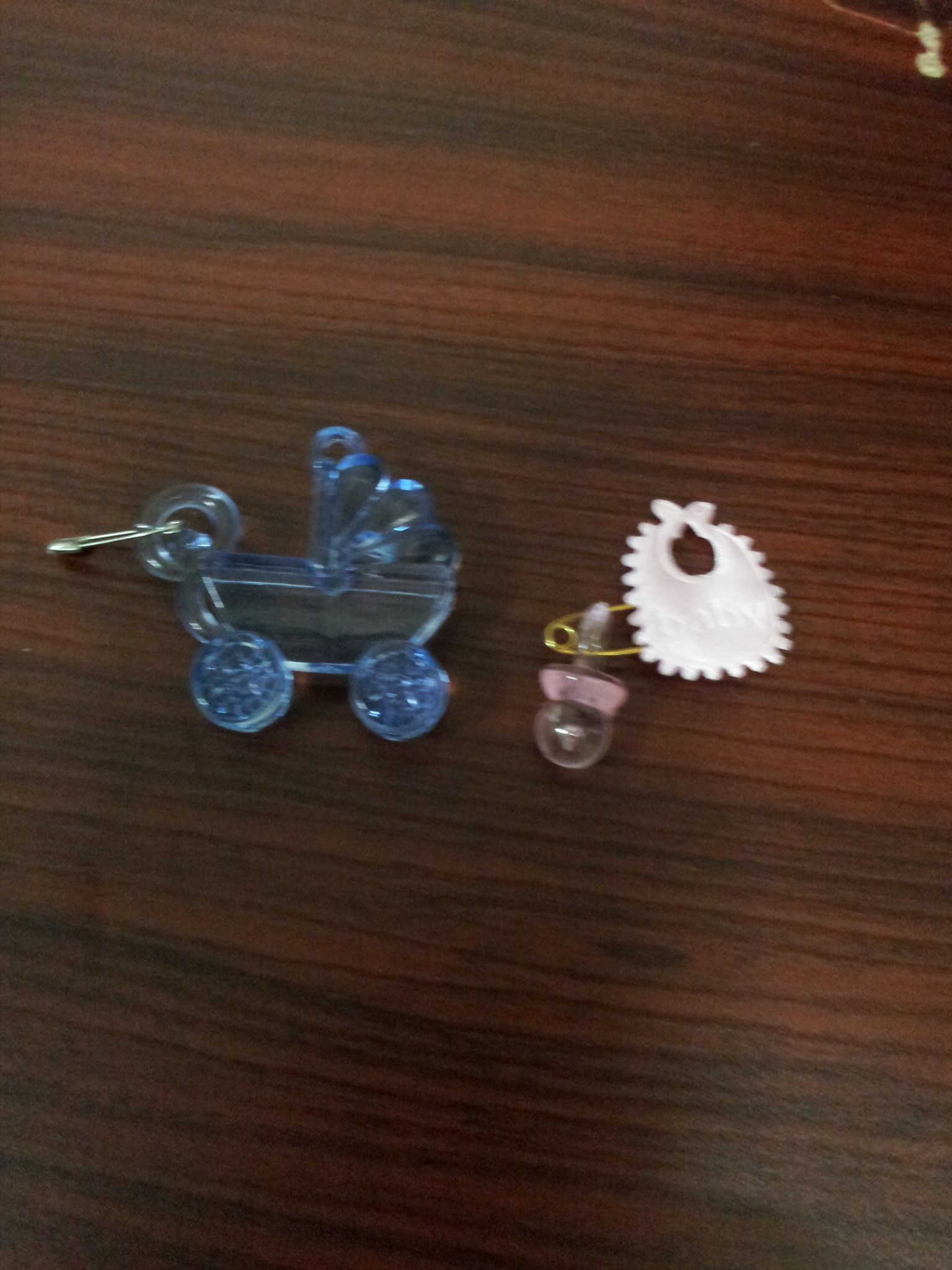
Since my son and daughter-in-law were aware of the baby’s gender, we also had the gender-reveal game where the guests were asked to pick their choice of pink or blue button-holes upon arrival, which they were required to wear during the party. In keeping with our custom, flowers (jasmine) were also distributed to the female guests.

Traditional Baby Shower button hole

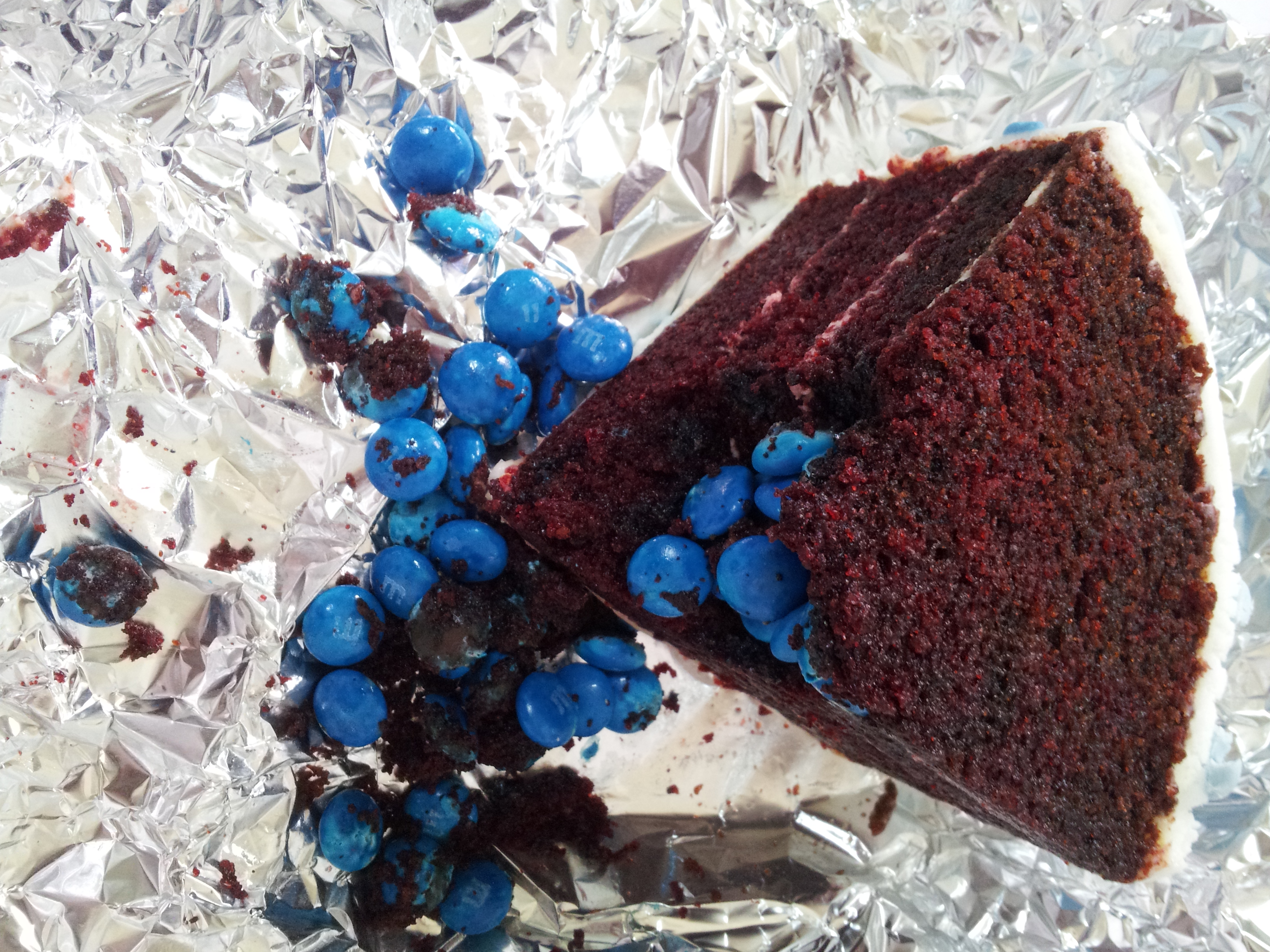
The cake was then cut to reveal the gender and this video says it all……………..

Charms Baby shower favors (22)

At the end of the party, home-made baby shower favors i.e. chocolate babies and coffee mugs filled with assorted chocolates were distributed to kids and edible favors made of marzipan and chocolate were distributed to families. A key-chain, with a picture of Charmaine and Raoul with a thank-you message was also distributed courtesy Charmaine’s parents which her father personally arranged.

Charms Baby Shower Key Chain

Home-made edible party favors, presentation:-

LEAVE A COMMENT :

← Back

Thank you for your response. ✨

Postpartum Care – Foods for lactating mothers


For details on Traditional Baby Shower click the link or the image below-

Published 18th January, 2016

Thiklem Sukho Randho (7)
Thiklem (Sukho Randho)

I became a grandmother this January the 10th and I cannot express how elated me and my family are on the birth of our first grandson, a son to my eldest son. I thought it opportune to write a post on Postpartum care dedicated to the new mother, my daughter-in-law, which I hope will also benefit all new mothers.

Postnatal or postpartum care refers to the confinement period immediately post delivery when physical changes that occurred in the body during the nine months preceding delivery, begin the healing process and getting back to its original state. As the new mother would be breastfeeding and also due to the loss of blood during delivery, it is necessary that high quality of nutrition must be provided in this period.

Culture plays a major role in postnatal care and beliefs. Much of the woman’s lifestyle and care during the postpartum period is strongly influenced by her culture. Every society has its own traditional beliefs and practices related to pregnancy and health care. Postpartum maternal health care greatly influences the health of both the mother and child. Like prenatal care, the postpartum health care that is typically provided during the six-week period after childbirth is very important to the mothers’ health. Effective postpartum care is essential to maximize the health of the mother and the new-born regardless of where a woman delivers. India, being a land of diverse cultures and traditions, postpartum care and diet varies, based on topography of the region, culture, tradition and religious practices.

Here I will outline some of the manglorean catholic practices. It is a common belief that the new mother’s internal organs are ‘fresh’ from childbirth and so it is important to consume foods that will provide heat and warmth to the body to accelerate the healing of the internal organs especially the reproductive organs. Nonetheless, it is imperative to have a balanced diet which includes, but not limted to, pure ghee, fenugreek seeds, fenugreek leaves, fennel seeds (saunf), garlic, ginger, carom seeds (ajwain) oats, green vegetables, dried fruits, seeds, etc. The mother must have a bowl of hot soup daily, either vegetable soup or tender fresh chicken soup. She should eat fish like, Pomfret, lady fish Kaane (Lady Fish) Curry, Raouns (Rawas/Indian Salmon), Hamour (Grouper) and avoid Mackerels, Sardines, King fish, shrimps, shell fish, etc. She must also avoid having pulses, starchy and root vegetables and meats like beef, to avoid bloating, indigestion and flatulence as this could adversely affect the nursing baby. Lots of green leafy vegetables and Yam is recommended in addition to carrots and beetroot as they are high in beta carotene and help boost liver health and are a good source of iron to alleviate post-pregnancy anemia.

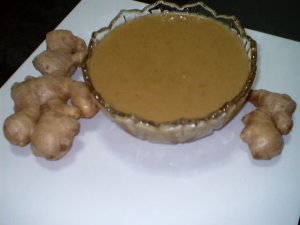
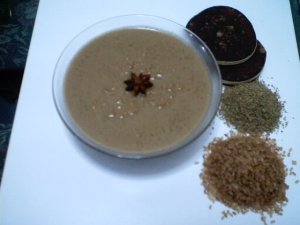
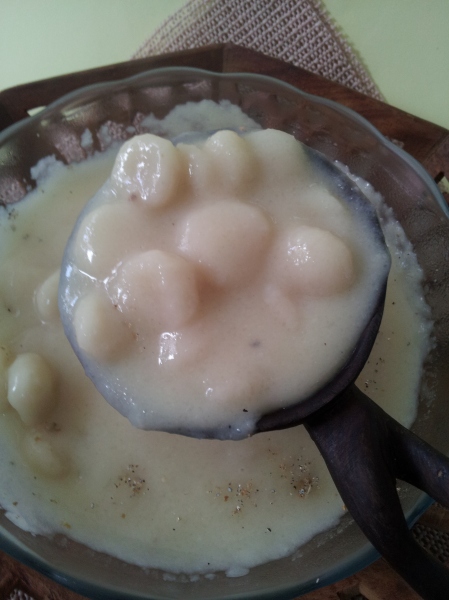
Recipes for some of the typical medicinal foods namely, Methi Paez (Fenugreek seed porridge), Garlic & Ginger which are ground to a paste and cooked with jaggery and pure ghee to a jam consistency, Ajwain Paez (Carom seed porridge), Gulianchi Kheer (Rice, jaggery and coconut milk pudding with rice dumplings) and Nivol (medium thick curry made using coconut, peppercorns, carom seeds and kokum i.e.dried mangosteen/red mango) to be consumed by lactating mothers is given below. These are my Late mother’s recipes from her book Mai’s Recipes. Mai’s Recipes Contact details.

I remember my mother saying that it is advisable to give the new mother methi paez and nivol on alternate days. Then a tablespoon of the ginger or garlic can be taken daily with breakfast or in between. Ajwain paez can be taken on some days and gulianchi kheer on some days i.e. all these foods are not to be taken everyday but spread over the confinement period so as to gain the maximum benefit from these nourishing ingredients.

Fenugreek Ajwain water should be taken by the mother instead of normal water.  This can be prepared by adding a teaspoon each of Fenugreek, Ajwain (Caron seeds), Cumin and Fennel (Badishep) seeds to one litre or 1.5 litres of water, bring to a boil, switch off flame, cover and let it infuse for 10 minutes. Strain and reserve, to be taken by the mother, preferably warm, throughout the day instead of normal water.

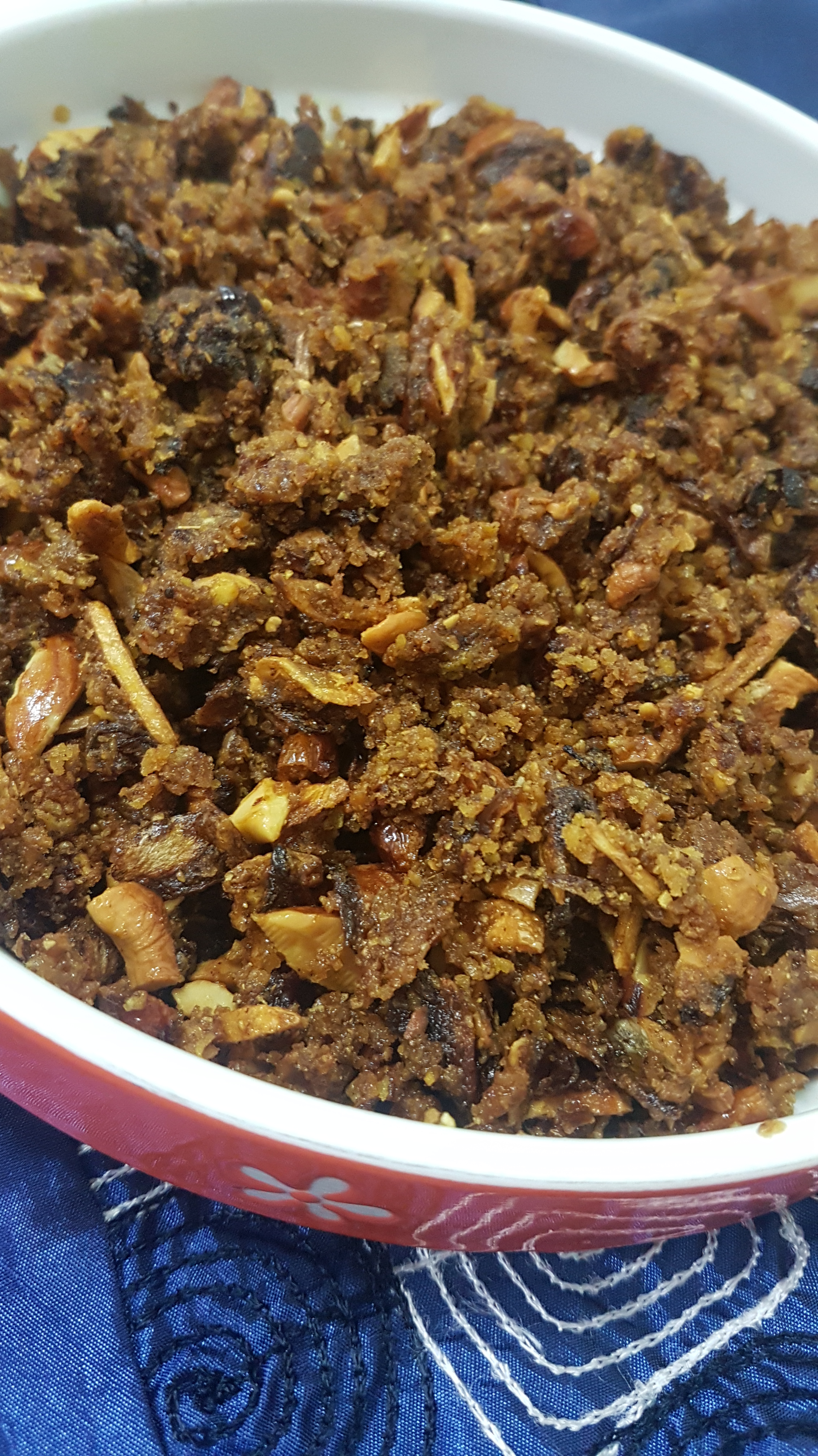
The other important lactating and strengthening food is ‘Randho’ which is a mixture of spices and various nuts and ‘Thiklem‘ a dry form of Randho which is also a mixture of spices and various nuts, onions etc. deep fried to golden brown with pure ghee. It is recommended to take a tablespoon at breakfast.

Click on the title for links to the recipe.

Thiklem (Sukho Randho)
141 Nivol[0]
Nivol

The postpartum practices are many, but I will list those that are important to both the baby’s and mother’s health for the first 40 days i.e. 6 weeks of confinement and commonly practiced by us:-
For Mother:-

  1. The daily oil massage and bath, ideally given by ‘Elderly lady who looks after the new mother’ (balnti posteli) experienced in bath and massage for new born baby and mother.
  2. Postpartum belt (usually an old cotton saree/cloth is used) tied over the tummy and waist of the mother to support the back and get rid of the baby pouch. As they say it also helps squeeze out the impure blood and other impurities from the uterus which are the remanants from the delivery.
  3. Restricted from using cold water for washing hands, taking bath, toilet use and drinking purpose. Only warm or hot water is recommended.
  4. Mother is advised to lie down most of the time and preferably with legs crossed to avoid air entering the body.
  5. Drinking kaljira kasai (black cumin decoction) for first three days after delivery.
  6. Consume special food (home medicine) to increase breast milk and strengthen the bones and muscles during postnatal period.
  7. Refrain from sex for 40 days mainly from a medical perspective as it would allow for the episiotomy wound to be healed and avoid any infections.
  8. It is also said that usually one peg of alcohol (brandy) may be given to mother to prevent her from catching cold and also helps her get good sleep.

In conclusion: Generally, women and their newborn are secluded from the rest of the household to limit contamination from the polluting powers of ‘after-birth’. These are widely practiced across India, and form an intrinsic part of women’s daily lives in traditional societies.

For Baby:-

  1. Daily Oil massage and bath.
  2. Practice of exposing the baby to the dhoonp (incense) smoke after bath to protect the baby from evil spirit.
  3. Application of Kajal on the baby’s forehead or eyes to ward of evil eye. A small dot may be applied near the hairline if you are not too happy with using kajal.
  4. Use of black thread on wrists/waist/neck to prevent evil eye.
  5. To clean coated tongue by using a cloth/gauze dipped in glycerine.
  6. Advised not to cut baby’s nails with nail-cutter but rather the mother should bite the nails to make them shorter or keep baby’s hands covered in mittens to avoid them scratching themselves.
  7. Practice of feeding the first milk (colostrum).
  8. Utmost care to umbilical cord, to be kept dry using boric powder or clean with antiseptic swabs and to bury the umbilical cord when it dries and falls.
  9. Baby is given sun-bath, usually early morning between 7:30 am and 8:30 am to prevent and cure baby jaundice if detected. During such sun-bath, baby’s eyes are to be protected from direct contact to sun.

Although modern medicine does not necessarily advocate these customs and beliefs, they have been followed by generations and we have not seen or heard of any adverse effects because of these practices but certainly know that they do have their own benefits.

The new mother then should just allow herself to be thoroughly pampered with ample rest, massages, nutritious food etc. that she is showered upon during this period.

Related posts:

References:

http://www.nitte.edu.in

2015 in review


The WordPress.com stats helper monkeys prepared a 2015 annual report for this blog.

Here’s an excerpt:

The concert hall at the Sydney Opera House holds 2,700 people. This blog was viewed about 11,000 times in 2015. If it were a concert at Sydney Opera House, it would take about 4 sold-out performances for that many people to see it.

Think you know how to boil an egg…… think again!


Published November 25, 2015

Eggknowledge!

We have very often heard the phrase “He doesn’t even know how to boil an egg”! Well, this may hold true for many of us.  Read on to find out why…..

There is a certain technique to making perfectly boiled eggs. All these years I just placed the eggs in a pan of water and boiled them away for 20 minutes or sometimes conveniently forgot about the boiling eggs thinking nothing could ruin a boiled egg.  But I was so wrong, I realised that eggs tearing through their shells, yolks tasting rubber-like and dry and the colour changing to a grey-green and giving off a sulphuric smell were all characteristics of an imperfectly or over-boiled egg!

The correct technique for boiled but runny eggs is to place the eggs in a pan of cold water to cover the eggs and switch off the heat as soon as the water begins boiling.  Cover the pan with a lid and leave the eggs in hot water from 3 to 20 minutes depending on how runny you like them. Transfer the eggs to cold/room temperature water to arrest further cooking. Then, just remove a piece of shell at the top of the egg, season with salt and pepper (if you wish) and dig into the creamy white and yolk with your spoon and yumm…delicious and healthy too!  You can even dunk your bread or piece of toast into it and enjoy.

For the perfect soft boiled and hard boiled eggs, bring water to a full rolling boil and simmer for 3 to 5 minutes for soft boiled, 7 to 10 minutes for hard-boiled eggs. Again depending on your desired consistency. Transfer the eggs to cold water, peel and enjoy.

Eggs3 (28)

Peeling can be a chore for perfectly boiled eggs, more so if  the eggs are fresh.  Old eggs (say a week or two old) make better boiled eggs.  They are also easier to peel and peeling them under running water also makes it easier. To test for freshness of the eggs, simply place the egg in a bowl of water.  Generally, if the egg is stale it will float and if it sinks it is fresh.  This is because as the eggs get older, the size of the airsac increases making it float.

In spite of several marketing claims that brown eggs have far more nutrition than white, this is but just a claim. The difference in the color of the egg only seems to be in the price as brown eggs cost five times more than white eggs and for what, only because they are brown and laid by hens with red feathers!! Yes, the color of the eggs are determined by the breed of hen as brown eggs are laid by hens with red feathers and white by hens with white feathers. An interesting observation I made in the process of this project was that with brown eggs the yolk i.e. the inside seemed to cook faster than the white i.e. the outside, as seen in the picture below.  Hmm…shouldn’t it be the other way round!!??

Eggs3 (25)

The color of the egg yolk also has nothing to do with the nutritional value of the egg but is determined by the diet of the hen. A dark yellow yolk indicates the hen was possibly fed green vegetables and a light yellow a diet of barley and wheat and medium yellow, alfalfa and corn.

Blood-spot that you see in an egg is from the rupture of a blood vessel in the egg yolk and is completely safe to eat.

Egg blood spot

Eggs are an excellent source of nutrients and contain some healthy unsaturated fats and healthy proteins. They also contain zeaxanthin, lutein and choline.  Zeaxanthin and lutein may preserve against loss of vision and choline has been associated with preserving memory and also promotes normal cell activity, liver function and the transportation of nutrients throughtout the body.  Eggs contain zero carbs and no sugar.  Eggs have all 9 essential amino acids. Eggs are naturally gluten free and hence make an awesome gluten free breakfast option.  A medium egg contains less than 70 calories.

There is no need to restrict eggs.  Neither The Department of Health nor the British Heart Foundation recommends a limit on the number of eggs you can eat.  In the past there have been reservations due to their cholesterol content but it is now known that too much saturated fat is more likely to raise cholesterol levels than eating foods rich in dietary cholesterol.  So go ahead and enjoy a breakfast of eggs, a protein packed breakfast helps sustain mental and physical energy throughout the day!

However, beware of fake eggs which are becoming a concern in China.  They are made to look real from a mixture of starch, coagulant and resin complete with pigment for color and a counterfiet shell. The ones below are real!

LEAVE A COMMENT :

← Back

Thank you for your response. ✨

The Science of Marinades


Published: November 14, 2015

Marinating food prior to cooking is the essence of food preparation for all types of grills, roasts and so on. Whether it’s a short dip or a long soak, marinating enhances a variety of foods. It’s a versatile and indispensable technique which helps to boost the flavor of meats and vegetables.

Marinating refers to soaking food in a flavorful liquid called a marinade. Marinating is a technique that’s been around at least since the Renaissance, when acidic mixtures were commonly used to help preserve foods.

One always speaks of marinating when they would like to tenderize food. But, contrary to this popular belief, marinating only flavors, not tenderizes, food.  You may also think marinating is time-consuming, but this is true only if you think marinating is to tenderize. In fact marinades only permeate the surface of the food and have little effect on the interior. If you really have no time, simply smear the food with the sauce or marinade as it is going on the grill or the pan. Tenderizing really comes from the way you cook it.

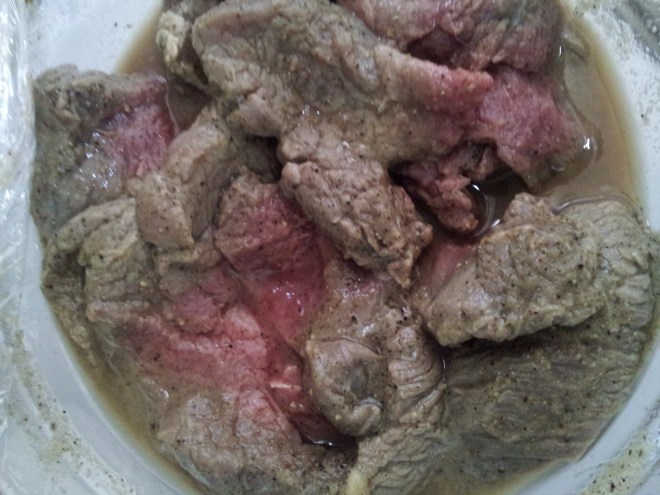
The beef steaks, shown in this picture, were left in the marinade for a couple of hours but the pink centre cleary illustrates how far the marinade has penetrated, which is only the outer layers of the steaks. Of course this would depend on the thickness of the meat, for thin cuts the marinade would permeate evenly.

Beef Steak step1

Beef Steaks in Marinade

The first and most basic of marinades almost always include an acidic element, such as citrus juice or vinegar which boosts flavors and may tenderize the surface proteins of meat.  Oil is another common constituent as it helps coat food, carries flavor and helps food stay moist.  Ingredients such as garlic, ginger, soy sauce, pepper, chillie, enhance the savory qualities of meats and fish.

The second type of marinade included the use of wine/alchohol.  However, when marinating fish or meat that is to be grilled or sauteed, avoid using wine or alchohol, because these cooking methods only heat the meat to about 135 to 165 degrees, well below the boiling point of alcohol, leaving  the meat with a taste and flavor of alcohol. Wine is fine for using in stews and braises because these dishes are cooked for a prolonged period at a temperature that boils off the alcohol and eliminates any harsh flavors.

A third kind of marinade includes those that ‘cook’ raw foods, usually seafood, as in the popular Latin dish Seviche.  Lime and/or lemon juice turns the flesh opaque and firm so it appears “cooked” but the food is actually still raw. Although the acid in a marinade appears to “cook” raw fish in a seviche, it doesn’t eliminate bacteria the same way cooking with heat does. When marinating fish that won’t be cooked, make sure the fish is sushi-grade, or frozen-at-sea (FAS) fish; both are safe for healthy adults to consume raw.

A fourth category of marinade is used to marinate cooked fish in a vinegar-based mixture to impart more subtle flavors. This type of dish is called Escabeche.

Foods kept for marinating should never be kept in aluminium or copper containers as the marinade is acidic and as these metals are reactive, the acids and will promote discoloration of the food and give it a metallic taste.  It is best to use non-reactive containers like glass, ceramic or stainless steel, even plastic is better than aluminium or copper.

Always marinate meat and fish in the refrigerator.  Some of the marinade may be used for basting after removing the meat or fish from it only if the marinade is boiled and cooked for five minutes to kill any bacteria. Marinade brushes and other utensils that are used with raw food should not be used again near the end of cooking.

The length of time you marinate food depends on both the food and the marinade. Delicate fish, shellfish and fruit usually soak for a shorter period of time (from 20 minutes to a few hours), while meats can go longer (up to a day or two, but I would really not want to go beyond 24 hours to preserve the texture of the cooked food). It is really not necessary to soak food too long in a marinade but I find it easier to marinate overnight or say half a day in advance, mainly for reasons of convenience. This allows pre-preparation of food and also for cooking to be done in stages to reduce the pressure and time rather than cooking from start to finish in one go. Especially for occasions, I usually plan a menu around food that requires some sort of marinating so that half the preparation can be done the previous night for an afternoon party or in the morning of the day for a dinner event. However meats should not be soaked in a highly acidic marinade too long as it would alter the texture of the meat which may turn grainy and mushy. If a recipe calls for half-cup of lemon juice, then that is a red-flag.

The science seems clear. ”Acid does break down protein, but after it breaks it down, it causes it to coagulate,” said Shirley O. Corriher, whose book, ”Cookwise” (William Morrow & Company, 1997), explores the reasons some recipes work and others do not. ”If you leave it too long, it toughens or turns to mush.”

While some may be tempted to poke holes in the meat to extend the flavoring beyond the surface, that technique has more drawbacks than benefits. It may improve the distribution of flavor, but more fluid will be lost during cooking, resulting in drier meat.

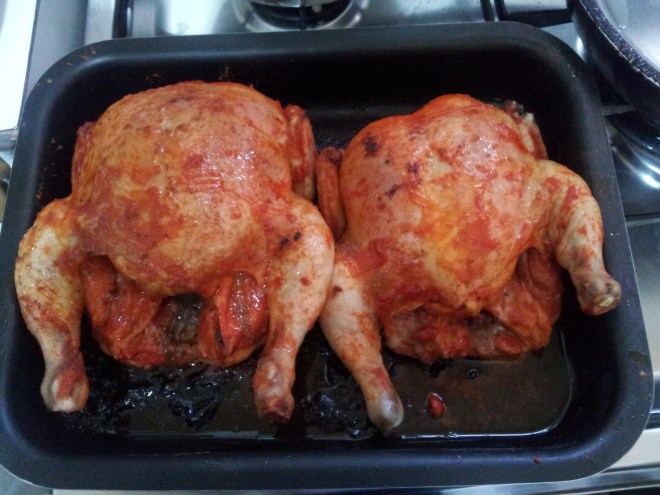
For Grilled Chicken Example I – The chicken was poked all over with a fork thinking the marinade would penetrate the meat and it would turn out more tasty, but instead the meat turned out dry and the skin shriveled up under the grill and the final presentation did not have a very appealing look.

Grilled Chicken 1

Grilled Chicken Example I

Grilled Chicken Example I

Grilled Chicken Example II – Marinade spices were smeared without poking holes in the chicken and the result was tender and juicy grilled chicken and which looked deliciously appealing.

Grilled Chicken Example II

Grilled Chicken Example II

Another acidic ingredient that has many fans is yogurt. In Indian cooking when food is prepared for the tandoor yogurt breaks down the fiber and tenderizes the meat. Science seems to support the yogurt partisans. Yogurt not only has a far milder acid than those in wine, lemon juice and vinegar, but also contains calcium, which activates enzymes in meat that break down the muscle fiber.

One area where even a harmonizing marinade is not necessary is with an ingredient that is already great and distinctive, like an excellent cut of meat, which needs no marinade to add flavor. (Credits: James Peterson, Mark Bittman, Eric Asimovor)

Illustrations & Recipes :

Tandoori Chicken

Tandoori Chicken

Recipe for Tandoori Chicken using yogurt marinade https://cooklikececilia.com/murgh-tandoori-tandoori-chicken/

Grilled Chicken (1)

Grilled Chicken

Recipe for Grilled Chicken using lemon juice https://cooklikececilia.com/grilled-chicken/

Beef Roast

My mum’s (Mais Recipes) Roast Beef recipe using vinegar https://cooklikececilia.com/roast-beef/

Chilli Beef8

Chilli Beef

Recipe for Chilli Beef https://cooklikececilia.com/chilli-beef/ using soy sauce,

All delicious and flavorful in their own right and enhanced with the appropriate combination of marinade ingredients.

LEAVE A COMMENT :

← Back

Thank you for your response. ✨

Pao-Bhaji – Mumbai’s Iconic Street-Food!


Pao Bhaji – Pav Bhaji

Published: October 22, 2015

Pao-Bhaji (or Pav Bhaji) is a simple potato and tomato dish, made famous on the side streets of the city that never sleeps and loves to eat out.

I can gorge on street-food anytime and my favorite is undoubtedly Pao-Bhaji. In the late 70’s when I used to work at New Marine Lines, behind the Income Tax Office, the office boy would gladly fetch Pao-Bhaji for my lunch on days I did not carry tiffin from home. This happened very often as it gave me an excuse to have this mouth-watering meal.  Those familiar with this area would have tasted this and many other delicious lunch-time options available on the lane leading to cross maidan.  The food-carts now, most certainly upgraded to food stalls.

Continue reading

A memorable holiday week in Goa


Published October 7, 2015

Fun, Food, Drink & Beaches………….Mapuca Friday Market too!

September 2015

Goa is known for it’s pure fresh air, scenic beauty, beautiful churches and temples, pristine waters and beaches, heritage structures, extraordinary landscapes, delicious food (especially seafood) and drinks.

10517958_10152298657103111_7178476683359903337_n
Aerial view of Goa
IMG-20150916-WA0005
Duler, my sister’s neighbourhood
IMG-20150916-WA0006
Duler
10685495_10152617200048111_2668028624263401109_n
Guirim, My neighbourhood
Guirim fields

My husband and I travelled by Air India direct flight from Kuwait (approx. 4 hr. flight time) and my sisters, brother-in-law and my brother joined us from Mumbai arriving Goa by car (approx. 10 to 11 hrs. travel time, around 604 km.). My brothers’ car made commuting in Goa very convenient.  It is a 8-seater Zylo and had more than enough room for our group of six.

We stayed at our apartment in Guirim, off the NH17, situated in a farm/village locale, untouched by tourism and away from the busy beaches and shopping areas. The peace and tranquility, shattered only by our own voices and laughter and occasional chirping of the birds.

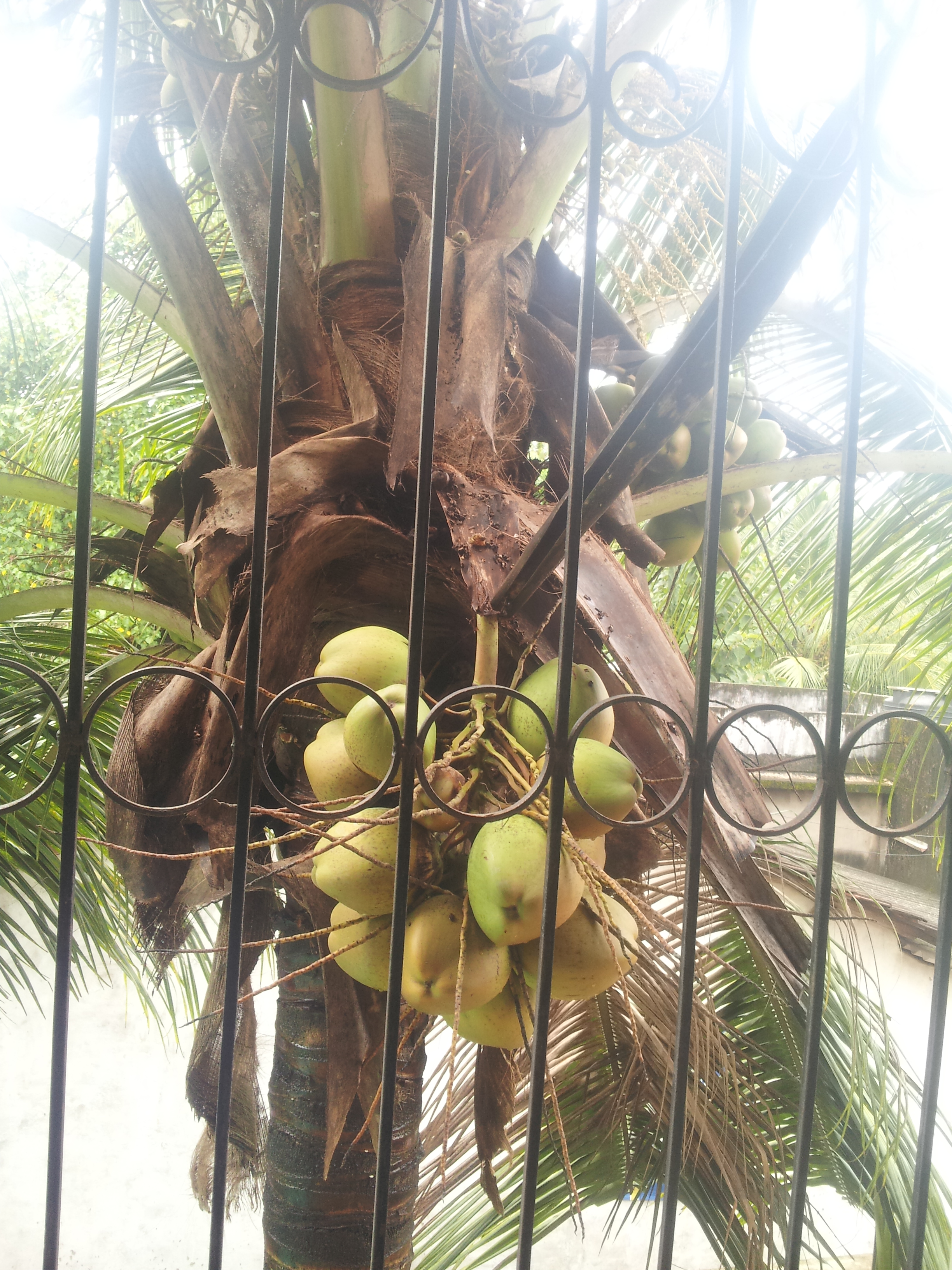
A coconut tree within arms reach from one of our bedroom windows.

As my husband always says…. there are more coconut trees than people in Goa!

Travelling by Air India was a revelation of the new markedly improved services, timely flight departure and arrival, in fact our flight on 25th September to Kuwait arrived 45 minutes early, which is highly commendable as we did have our apprehensions when we booked Air India.  The added advantage was 40 kgs. baggage allowance each and on the inbound sector as well; you must be Air India’s frequent flyer Flying Returns member to avail of the additional 10 kgs. Well the effort Air India is making to revamp it’s image and services must be applauded.

Each day we visited a different beach and restaurant for lunch. Had mainly seafood except one of my sisters who is allergic to seafood. However all dinner plans had to be cancelled as none was in the mood to venture out of the house after our blissful afternoon siesta, which sometimes stretched well into late evening as we used to return home around 3 or 4 pm from Lunch. The initial four days of rainy weather did add to the lethargy though… Moreover, all except one of my sister’s being or nearing 60’s, we just felt like chilling and relaxing at home giving us great opportunity to catch-up with each others news and helped us to bond and spend some quality family time together at home.

Before departing Kuwait we had scheduled Kamlabai in Mapuca for our first day lunch and were reminiscing and relishing our past lunches at Kamlabai. Imagine our disappointment when we found the restaurant bearing a notice ‘closed from 17th September until 2nd October’. At this point, we thought it must be closed for renovations, etc. but soon learnt that it is a holiday closure whereby the restaurant closes each year for 15 days during the Ganpati festival.  Not only Kamlabai but almost all hindu managed entities remain closed for this festival which is celebrated in a huge way by the Hindus in Goa and all employees go home to celebrate this festival. Am surprised we had never before heard of this shutting down of businesses for the Ganesh festival in Goa. Festivities are relatively peaceful albeit with some bursting of fire crackers and sans the un-manageable traffic jams and crowds experienced in Mumbai during Ganpati.

Day 1, Thursday 17 September

REIS CORNER

We then went looking for a place to eat lunch in Mapuca and ended up at Reis Corner

IMG-20150917-WA0005

Had Fish Thali and fried Bombay ducks, chicken and fruit salad, caramel custard and ice cream for dessert. The food was okay, nothing extraordinary.

Day 2, Friday 18 September

Headed to Calangute Beach for lunch at Souza Lobo.

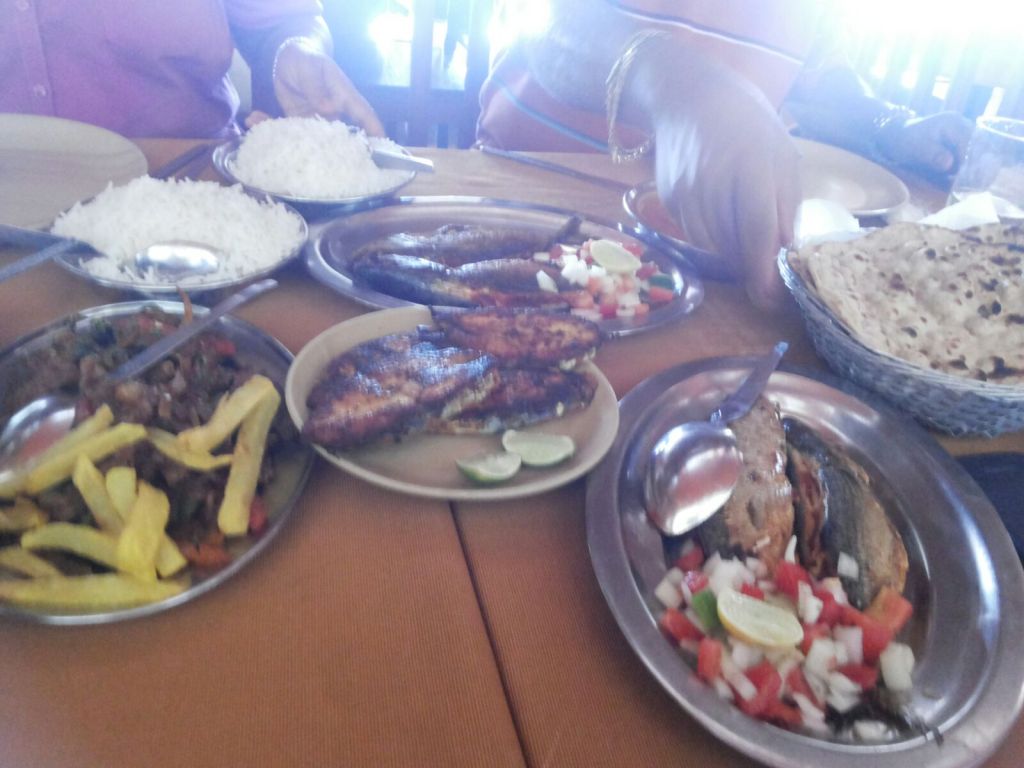
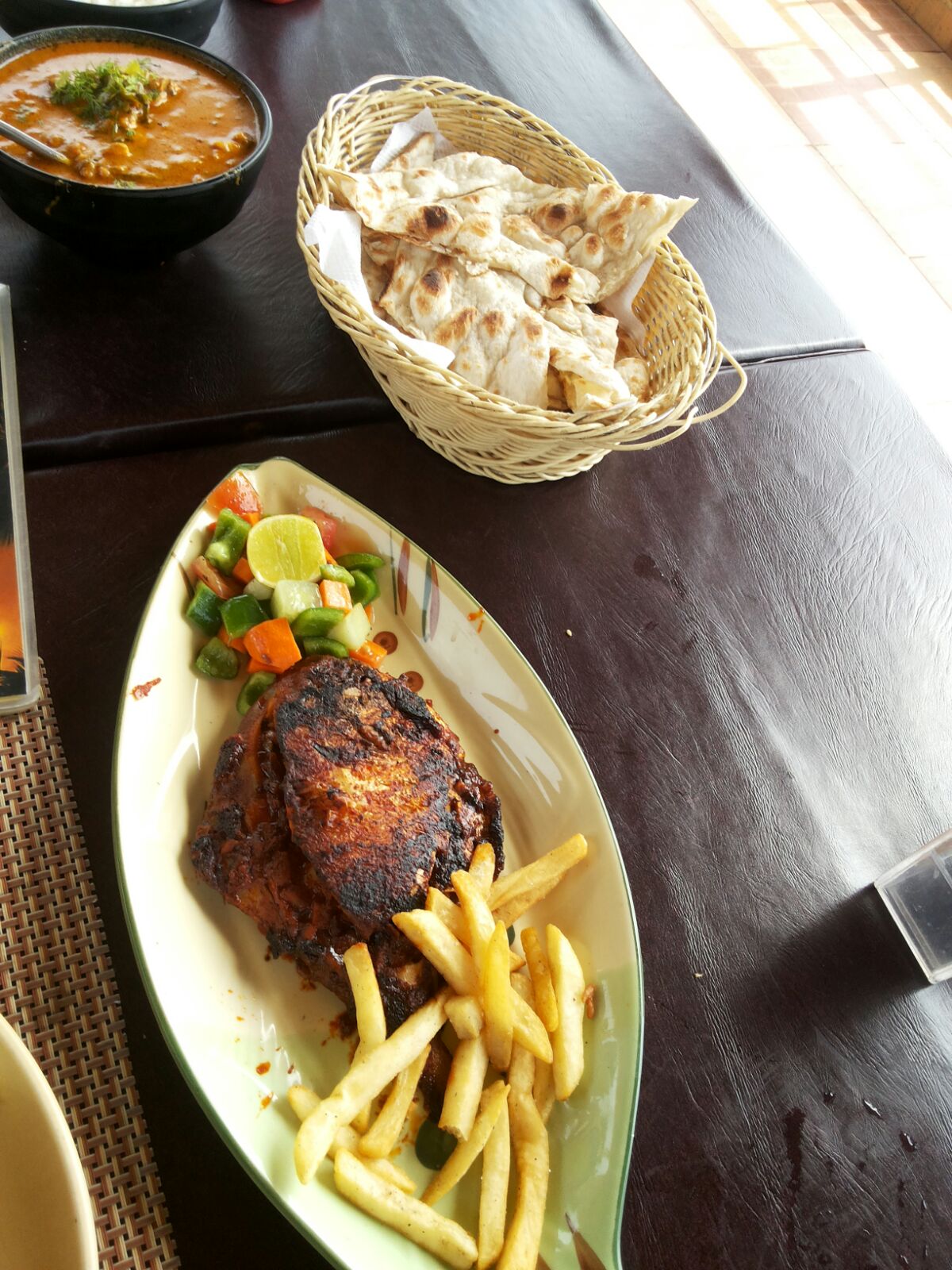
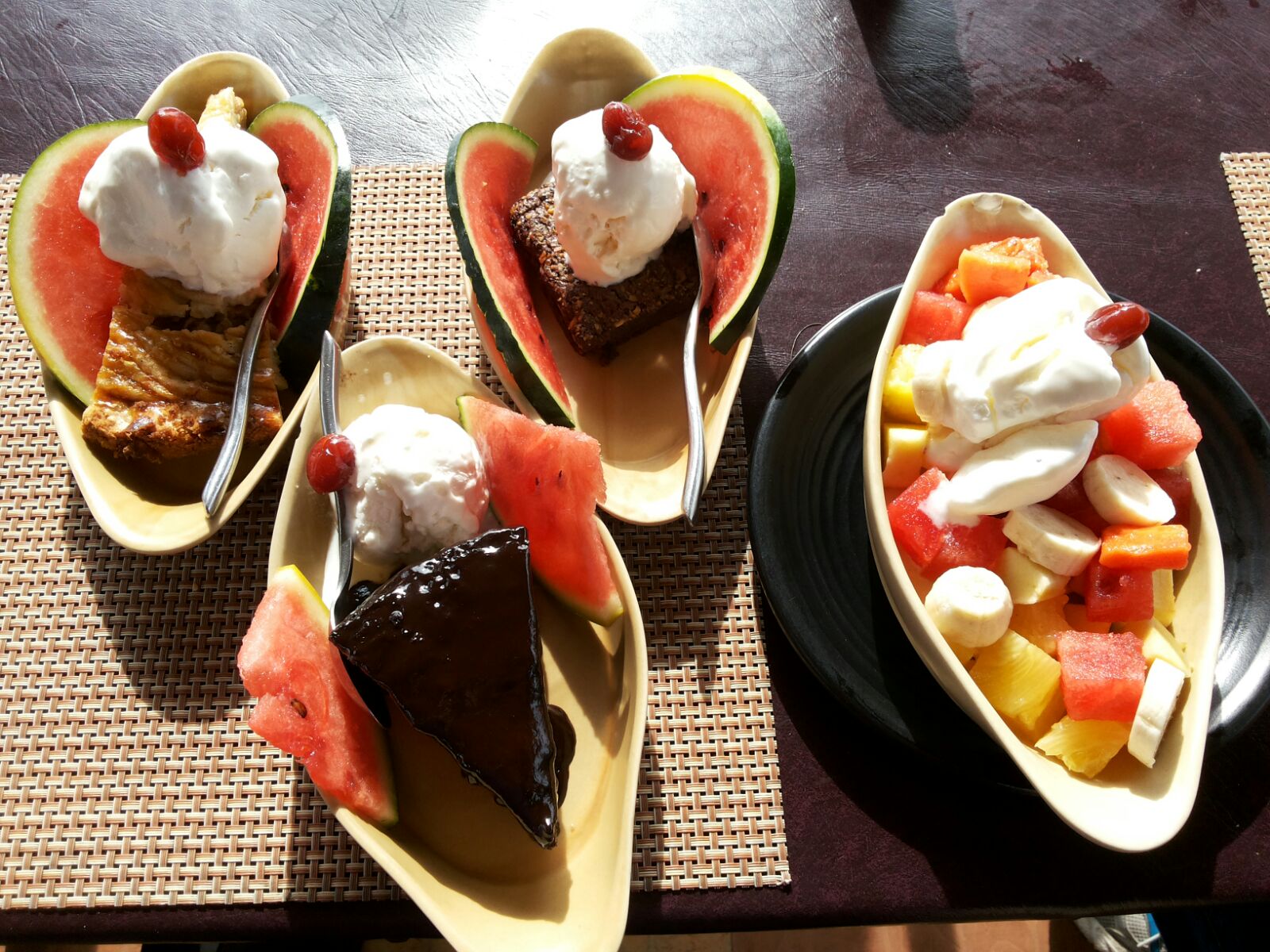
Ordered the seafood platter, mackerel rechado, fish curry (King fish) rice which came with curry fish as well as fried fish, beef chilli fry, rotis and naans. For dessert it was, chocolate brownie with ice cream, fruit salad, fruit salad with ice cream and chocolate crepe with traditional (coconut & jaggery) filling. I must say the seafood platter was awesome and delicious and so was the other food, desserts, drinks, service, etc.. Everything was simply perfect.

Day 3, Saturday 19 September

12002085_887989317903540_6537400387833427764_n
Aunt’s house at Chinchinim
12049277_887989527903519_6629622201566242102_n
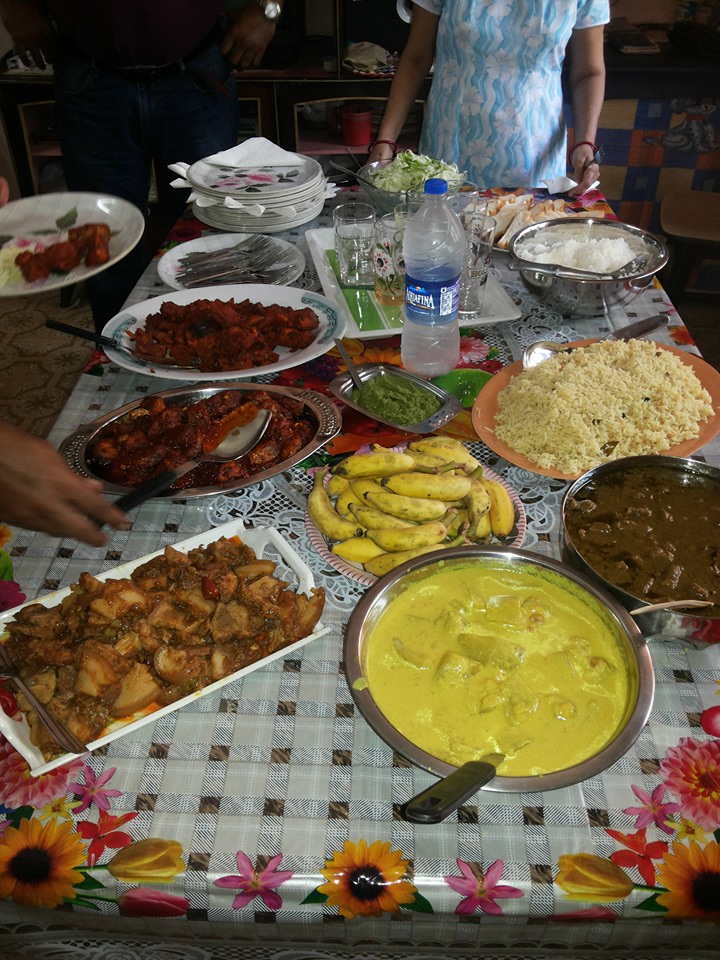
Sumptuous spread, Aunts, Chinchinim

We visited our Aunts in South Goa, Chinchinim, had a sumptuous lunch there. Thereafter, the plan was to visit Benaulim beach but were way too exhausted and headed straight home.

Day 4, Sunday 20 September

Attended the 10:15 a.m. English Mass at our Parish Church, St Diogo’s, Guirim

IMG-20150921-WA0011
St.Diogo’s, Guirim
IMG-20150921-WA0014
St. Diogo’s Church interior
IMG-20150921-WA0003
St. Diogo’s church main Alter

We returned home had a change of clothes and headed to Fat Fish which is located at Agar Wadoo, Calangute – Arpora Road, close to Baga Beach.

FAT FISH
IMG-20150921-WA0013
Fat Fish Restaurant

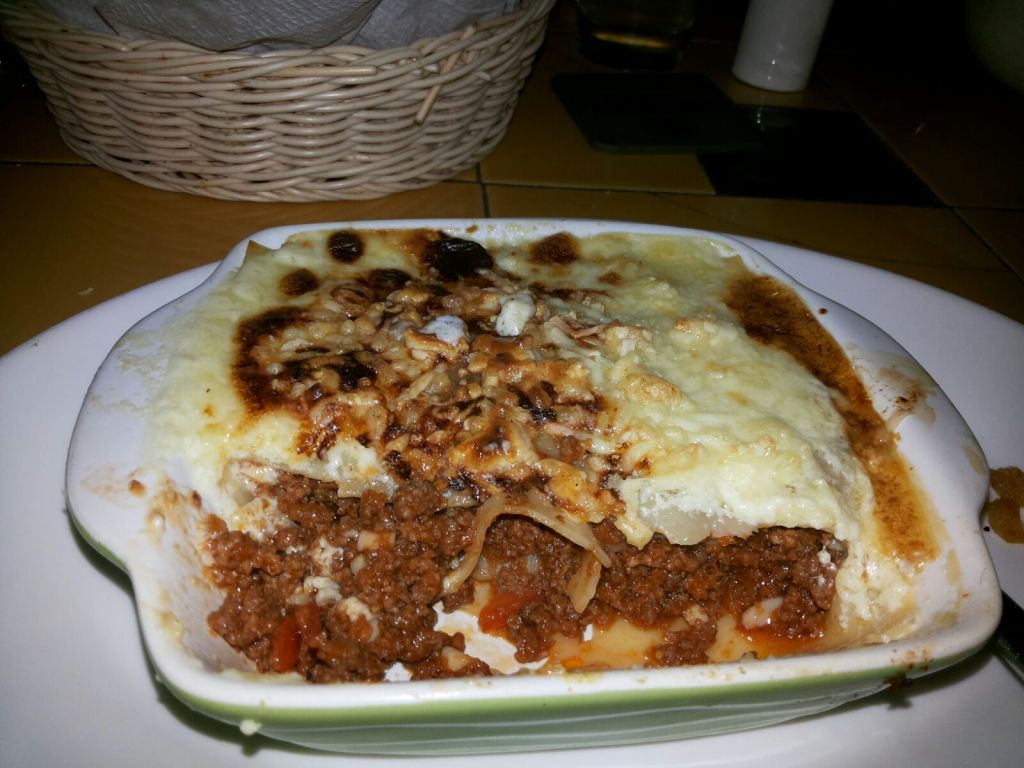
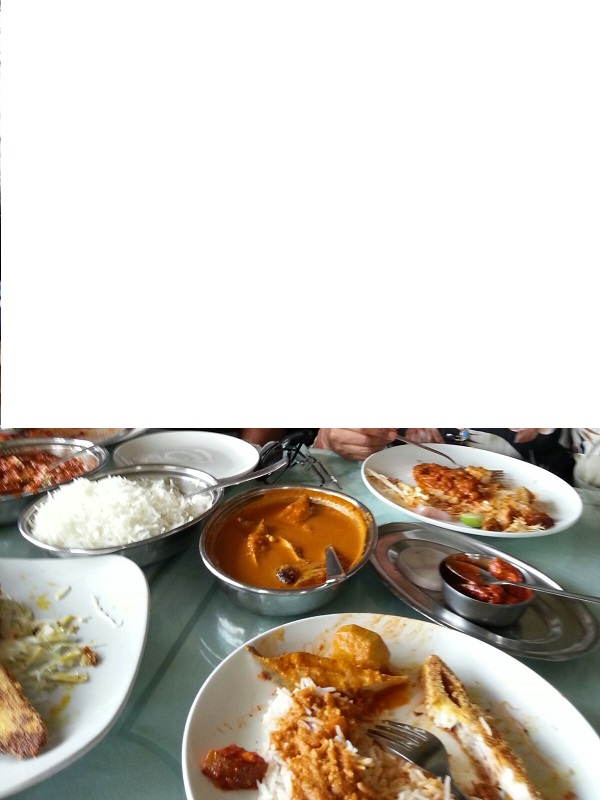
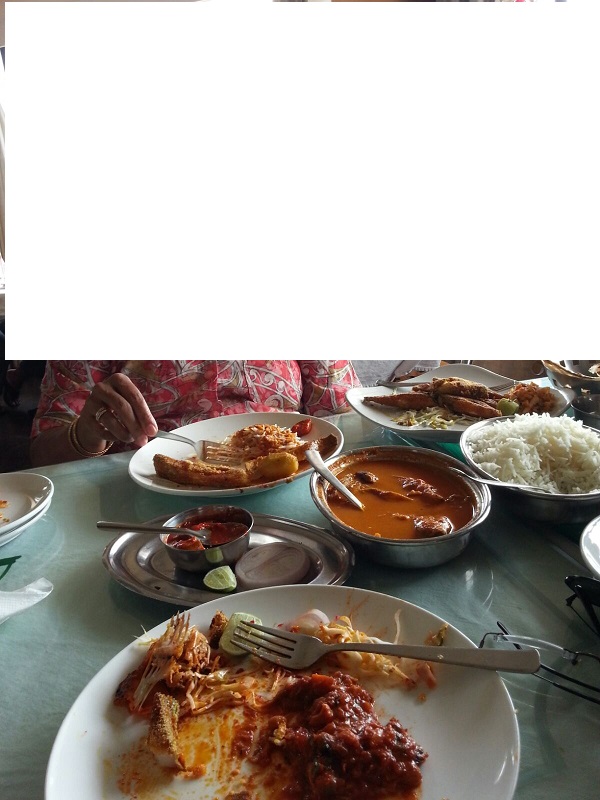
Loved the place and the food.  We had Shrimp cocktail (the shrimps looked limp though), King fish fry (they didn’t have the mussels in wine) mussels rawa fry, pomfret curry, pomfret fry and rice, rotis and naans and Lasagne. Everthing was delicious.

Worth a visit. Point to be noted –  when we enquired the price of the (above) pomfret prior to ordering it was Rs.800 each but after the order was placed we were informed that the price would be Rs.1000 each.  Now do we have a choice when we have decided to have pomfret!! Crabs were just for the picture, we didn’t have any.

Day 5, 21 September

Visited Dona Paula, but as the road leading to the beach was closed and it would have been a very long walk, we skipped Dona Paula and headed to Miramar Beach. Were highly impressed with the clean and beautiful beach, and didn’t find many people there neither were the shops and restaurants open.

20150921_121411 (1)
Miramar Beach

My son had recommended Tahlassa Restaurant and their mussels in ouzo sauce; and we were looking forward to it but sadly it was closed for the Ganesh holiday, another disappointment! We were then recommended Alcove Restaurant by a passerby.

IMG-20150921-WA0032
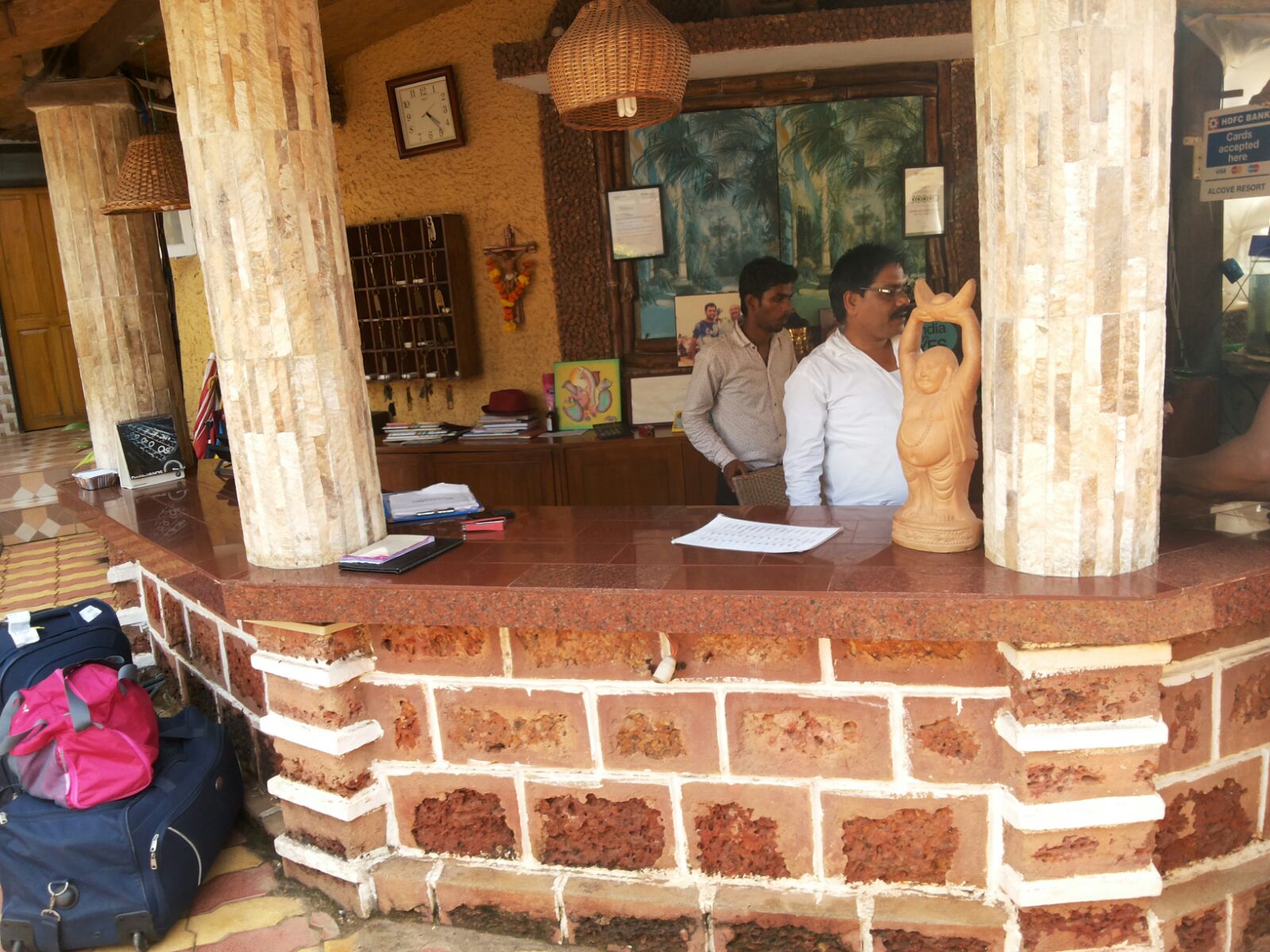
Alcove resort reception
IMG-20150921-WA0029
Alcove Resort & Swimming Pool

Turned out to be a splendid suggestion as the ambience and venue was simply amazing and the place spotlessly clean with courteous and helpful staff.  Our table faced the ocean overlooking Vagator Beach

IMG-20150921-WA0021
Vagator Beach
IMG-20150921-WA0019
Vagator Beach

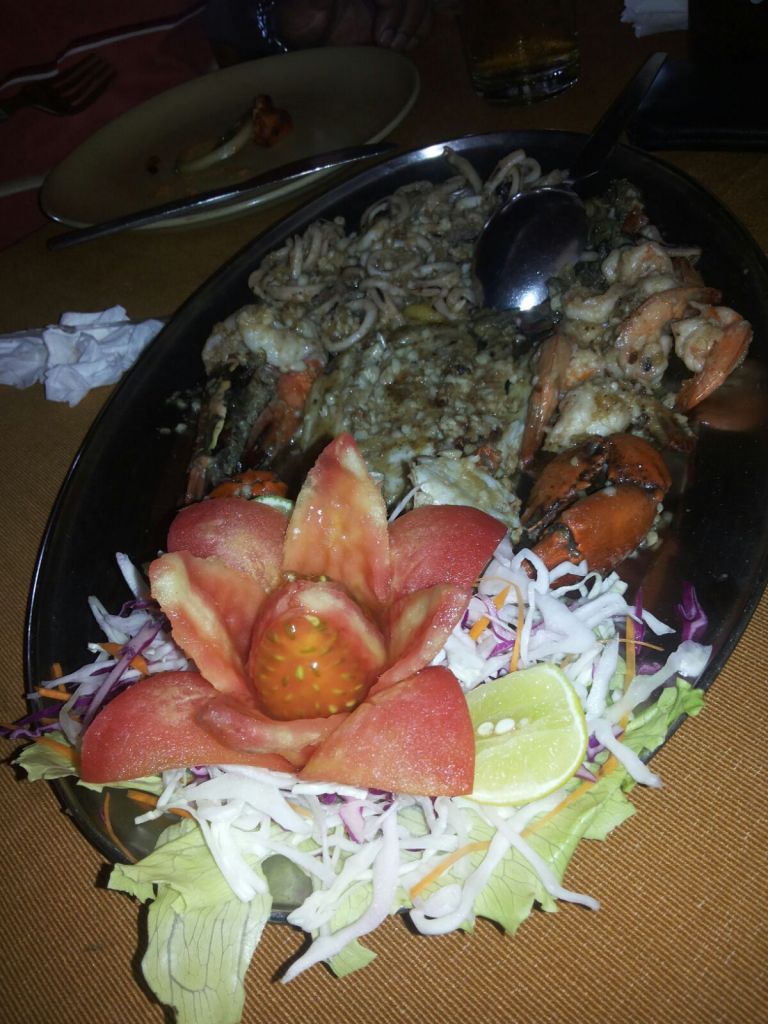
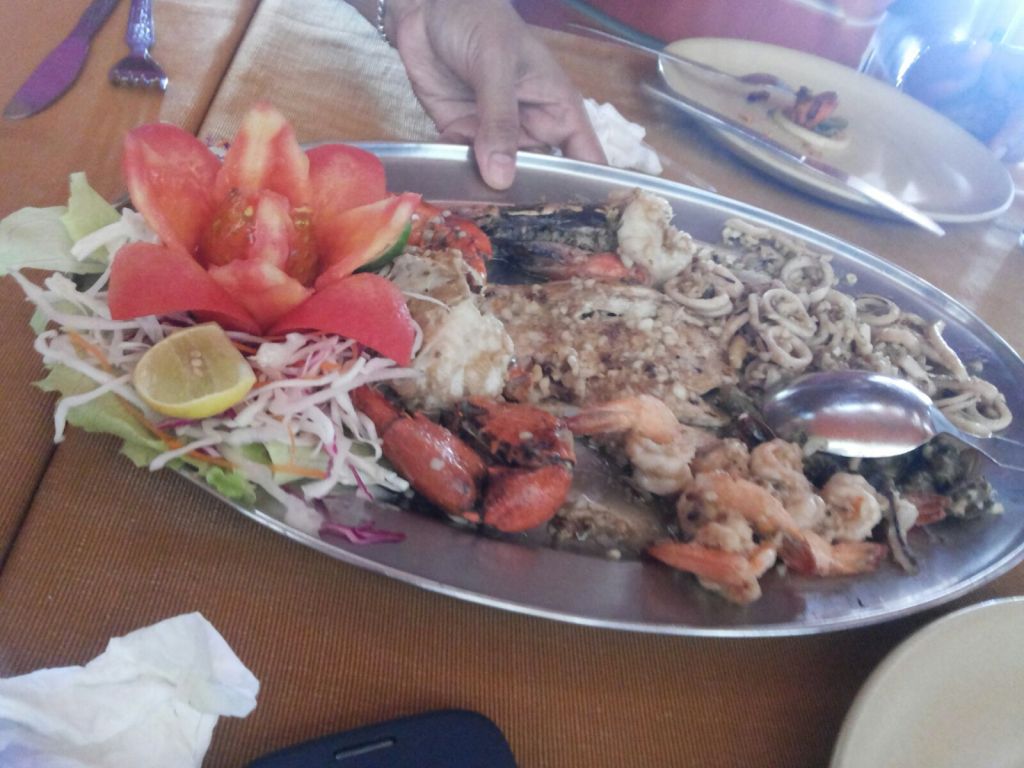
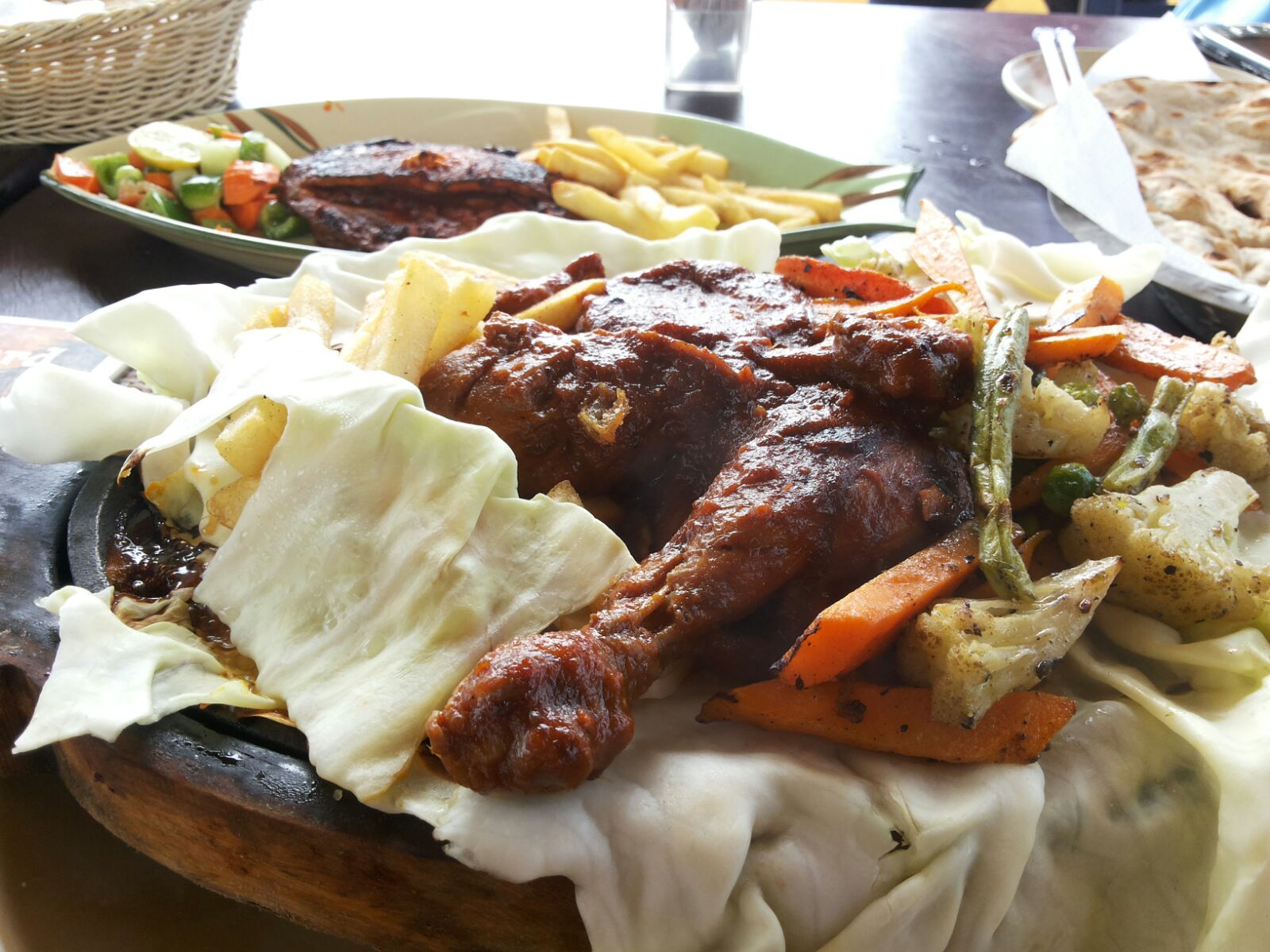
and enjoying a meal in this setting was a dream come true…couldn’t have asked for anything better.  With the cool, fresh sea-breeze blowing on us, we had grilled seafood platter, seafood sizzler, pomfret rechado, fish curry rice, vegetable caldin, green salad, rotis and naans and chicken sizzler and drinks, coconut water, fresh lime soda, fresh lime water. and for desserts, chocolate cheesecake, brownie with ice-cream, apple-pie, fruit salad with ice-cream.  If we had the capacity we would have ordered some more food just to spend more time there and enjoy the cool sea breeze.

Thoroughly enjoyed the meal and the surroundings and found the pricing reasonable compared to Fat Fish and Brittos.  Alcove restaurant is part of Alcove Resort and appears to be an excellent venue for family destination celebrations.  Will certainly keep in mind for future events, if any.

Day 6, 22 September

As it was the penultimate day of my family’s departure, we headed to Mapuca market for a bit of shopping and then went for Lunch to Ruchira Restaurant, located at Satyaheera hotel, Mapuca market.  Have visited this place on earlier occasions and liked it.

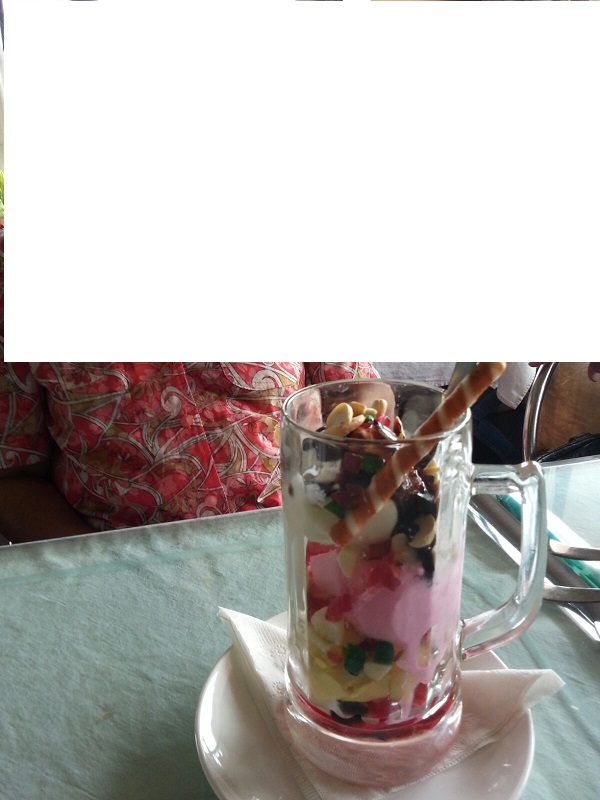
But what was surprising was the price of the pomfret. Fat Fish: Rs.1,000 each, Alcove: Rs.600 each, Ruchira: Just Rs.410 each…size of the fish being the same. Well this is the advantage of eating at city restaurants rather than beach venues where the food and drink has a premium. We ordered as usual fish curry rice which was pomfret fish curry/fried, fried shrimps, vegetables, rotis and naans and for dessert it was ‘Gadbad’ which is famous in Mangalore and is a delicious hotch-potch of three ice-cream flavours stacked together and fruit, nuts, etc thrown in.  You can really make a meal out of this dessert.

Day 7, 23 September

My family left early this morning to Mumbai.  My husband and I went to Mapuca for some purchases for Kuwait and then headed to Baga for Lunch at Britto’s.

20150924_122121

We have felt cheated at Britto’s in the past but decided to give it another try and were again disappointed.  The seafood platter, supposed to contain crabs, mussels, shrimps, squids and fish appeared with only squid, fish and tiny shrimp in sauce and the server didn’t think it was important to inform us that the other items on the platter are not available!  The fish curry/fry with rice, we were told would be king fish and were served some fish we could hardly recognize, a complete disappointment. In the past we have been cheated on the pomfret price so do be careful and check prices thoroughly before placing your order.

Day 8, 24 September

Made a couple of visits to neighbours and friends near by and some shopping at Mapuca.

Day 9, 25 Septermber

MAPUCA Friday Market

Being a Friday, had to visit Mapuca Friday market.


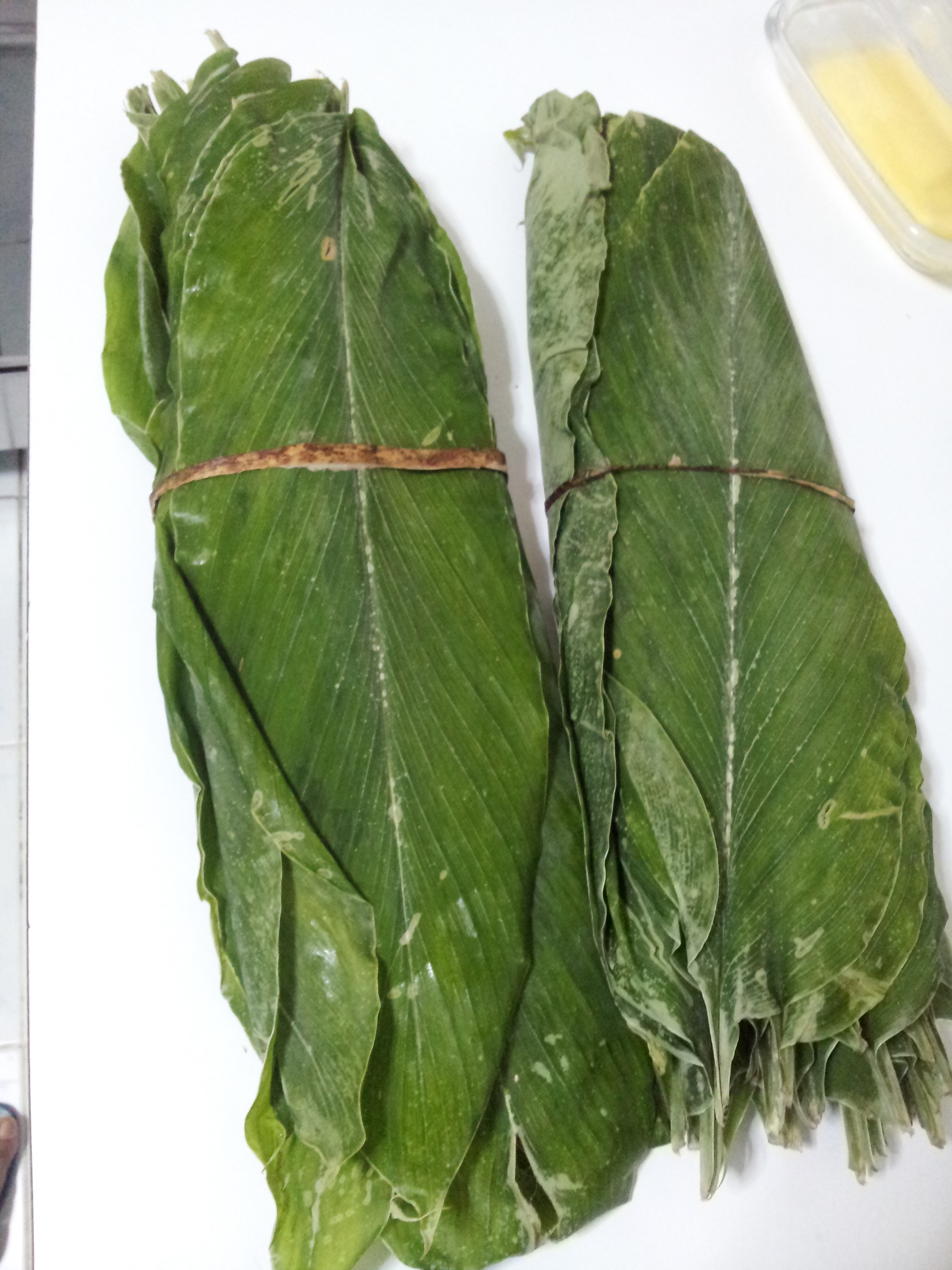
Was looking to buy Haldi (turmeric) leaves, Alun leaves, Alasande (osanay) and Ambade on this trip.

20151004_180009
20151002_093430
Alun stems with red beans1
Alun stems with red beans3
20150927_111551

Found them in plenty and upon my return to Kuwait prepared Patoleoshttps://cooklikececilia.com/patoleo/, Pathrode with the alun leaveshttps://cooklikececilia.com/pathrode/, Kaane (Lady fish) curry with ambadehttps://cooklikececilia.com/kaane-lady-fish-curry/, all my mother’s great recipes from ‘Mais Recipes’, check them out!  Also prepared my own version of Alun stems with alsande and ambade curry  https://cooklikececilia.com/alun-stem-with-alasande-red-kidney-beans-and-ambade-curry/, it was delicious.

Our programme to visit other restaurants and sight-seeing places on our itinerary remained incomplete due to the festive holiday, namely, The Spice Plantations, Dudhsagar water falls, Cruise on the ‘Santa Monica Riverboat’, etc.  Also the Anjuna Flea market and Arpora saturday night market are open only during season which is between November and April.  Hope to take in all of these in the future including visit to the casino, discos, etc.

A completely enjoyable, relaxing and satisfying holiday with my husband, siblings and brother-in-law.  We certainly look to a repeat of this experience with many more family and friends in the future.

Also read:

Goa, Restaurant & food review – 6th to 12th November, 2021

Goa Restaurant and food review – July-August 2022

LEAVE  A COMMENT :

← Back

Thank you for your response. ✨

A Birthday Lunch at Asha’s


20150905_140539
ASHA’S INDIAN RESTUARANT

Celebrated my birthday this 5th of September, 2015, at Asha’s with Lunch.  The plan was to go to Asha’s Avenues but as that was under renovation we decided to go to Asha’s Marina Crescent. The place was welcoming and had a pleasant ambience. Service was good and we did not have to wait too long for the food to be served. The food was good and not too spicy (except for the Biryani) as we ordered ‘medium spicy’. But was disappointed with the ‘Chingri Chaap’, didn’t taste like prawns at all. The Samosas were delicious. The desserts were not all that great and the Kulfi left a peculiar powdery taste on the tongue.

Continue reading

Know your sugars


Sugar (Sucrose) is a carbohydrate that occurs naturally in every fruit and vegetable and in greatest quantities in sugarcane and sugar beets which is then separated for our regular consumption.  For most of us sugar reminds us of sweet and happy moments in our lives be it birthdays, celebrations and holidays and the all too addictive morning cuppa! which most people with a health issue would now be having ‘UNSWEETENED’ and refraining from eating cakes and sweets.

But, thanks to the various sugar substitutes, it has been easier and healthier to bake your cake and eat it too! But the question remains – Are ingredient substitutes the answer to solving your health and weight problems Continue reading

Middle Eastern Cooking


The Middle East namely Kuwait has been my residence for the past 33 years and it is only natural that we are greatly influenced by middle eastern cooking, favorites being Kababs, Shawarmas, Falafel, Hummus, Tabbouleh, Moutabel Baba Ghannouj, Machboos Leham, and the daily favorite Khubz which we now cannot Continue reading

My Inspiration


My Recipe books My Inspiration

My cooking has mainly been inspired by these books which were gifted to me earlier in life by my Sisters, Mabel Dias (Prashad), Zenia Machado (Khana Khazana), Sheryl Newnes (Heart healthy & Low fat cooking).  My close friend Viola Netto gifted me The East Indian cookery book soon after my marriage and it served as a perfect guide to my meal preparation as a new home-maker. My note-books contain precious recipes shared by my Aunt Prescilla Fernandes and my neighboour Irene Vaz. Am not sure if they would remember sharing Continue reading

My Breakfast Diaries


Breakfast is the most important meal of the day and with some time-management it’s not difficult to cook-up a deliciously satisfying and healthy breakfast. On several occasions I have been asked, what are the various foods you prepare for breakfast.  I have also heard many times ‘I don’t know what to make for breakfast’ or ‘what can you make for breakfast?’ This post is for all you lovely people and there should be no excuse for ‘I don’t know what to make for breakfast’! Stay tuned…

I spend almost an hour and a half to two hours in the kitchen each morning before I leave for work (that’s because I am an early riser!). But you’ll don’t need to do that.  With a little bit of planning, most of the recipes Continue reading

Mais Recipes


I will be posting here recipes from the book ‘Mais Recipes’ so as to share them with as many people as possible.  Hope you’ll enjoy them.

Starting with a dessert…as they say in our country “muh meetha karo” which means “sweeten ones mouth” before embarking on an auspicious journey/event.

Bread Pudding

Bread Pudding

Continue reading