Uncategorized

Kulith (Horse gram) the poor man’s superfood!


Traditional foods

Kulith – Horse gram

kulith-and-moghe-curry-3

Kulith (Horse Gram)

Kulith sprouted vegetable (3)

Kulith (Horse Gram) sprouted

Kulith, horse gram, kulthi or madras gram is a poor man’s super food widely cultivated and consumed in mainly rural India and although it is a powerhouse of nutrients, the bean has sadly been ignored and overlooked in today’s modern day.

This post hopes to give this humble legume its due and to encourage you to cook and consume this nutrient dense bean called Kulith or horse gram.

Horse gram is light to digest, increases pitta and Rakta (blood) according to Ayurveda. The beans contain plenty of calcium, phosphorous, iron and has the highest protein value and is a high-powered legume which is why it is also used as a common feed for horses and so the name ‘Horse Gram’.

Soaking the horse gram overnight or sprouting it gives it a higher nutritive value and makes it more digestible. The soaked or sprouted bean also takes less time to cook.

Continue reading

Hotel Calcutta Kuwait – Valentine’s Family Lunch


February 2017

hotel-calcutta-2

Our Valentine’s family lunch this year was at “Hotel Calcutta”; the name clearly a misnomer for me as, in my mind it conjured up images of traditional Bengali cuisine known for its subtle flavors like the jhals, jhols, kormas, Posto, and desserts like Mishti Doi and Roshgollas and we were already discussing that we would skip the ‘Macher Jhol’, etc.  But the menu, though very limited, is predominantely influenced by the distinct Awadhi legacy of the Nawab era of the 1700’s which is derived from Mughlai cuisine. Typical Mumbai street fare like Pau Bhaji, Sev Puri, Bhel Puri, etc. has also made it to the menu and can be enjoyed in a 5-Star setting, not sure if these are also part of Calcutta street fare as I have not visited Calcutta. Continue reading

Thyme (Zaatar) the wonder herb


Published, 11th May, 2016


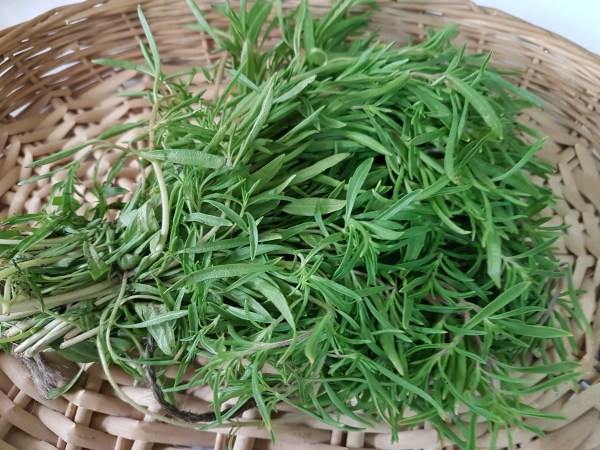
Thyme fresh (2)

Fresh Thyme

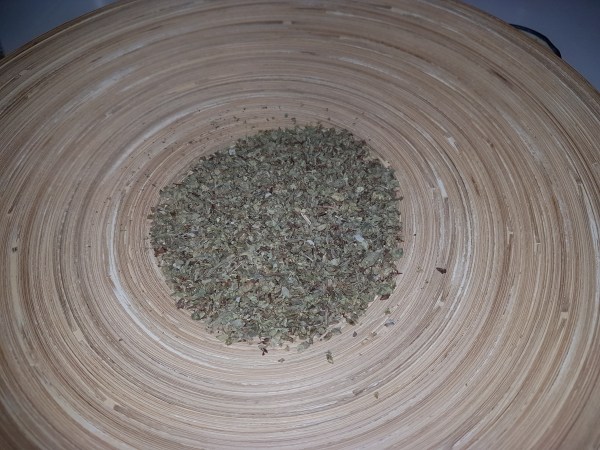
Thyme dried

Dried Thyme


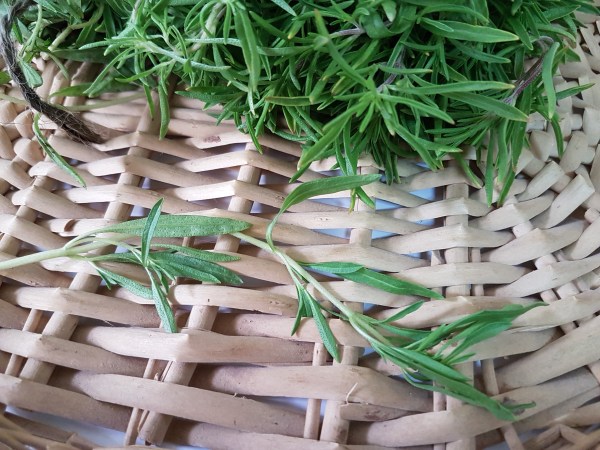
Thyme fresh (1)


Thyme is a wonderful ingredient that’s used in cuisines around the world, particularly in France, Italy, across the Mediterranean and in the Middle East.

Za’atar is the Arabic word for Thyme  but Zaatar is also a prepared condiment generally made with ground dried thyme, oregano, marjoram, or some combination thereof, mixed with toasted sesame seeds, and salt, though other spices such as sumac might also be added.

Thyme is a delicate looking herb with a strong penetrating fragrance and is a wonderful addition to bean, egg and vegetable dishes. Both fresh and dried thyme is available throughout the year.

Thyme has a long history of use in natural medicine in connection with chest and respiratory problems including coughs, bronchitis, and chest congestion and the health benefits of thyme are proven and  very real.

The volatile oil components of thyme have also been shown to have antimicrobial activity against a host of different bacteria and fungi and are packed with anti-septic, anti-viral, anti-rheumatic, anti-parasitic and anti-fungal properties, which explains why thyme-based formulas are used as an expectorant, diuretic, fungicide and antibiotic.

Thyme is also a powerful detoxifying agent, making it one of many liver detox foods. What’s more, the herb is a great immune system booster that encourages white blood cell formation while increasing resistance to foreign organisms.

Thyme as medicine

At the onset of a flu it is greatly advised to have Zaatar tea and I can swear by this decoction which not only helps flu and cold symptoms but also stomach and digestive tract ailments. Thyme herb tea is a popular health drink.

To Prepare the tea take 2 cups water and bring it to a boil then add 1 tsp. of dried sage, 3/4 tsp. dried thyme, 1/2 tsp marjoram and a 1/4 tsp. of rosemary.  Stir and switch off flame and keep covered to infuse for 10 minutes.  Strain and sip hot.

These four herbs are a must in my pantry and serve as a natural home remedy for a variety of ailments from stomach upsets to the common cold and influenza.

Thyme is effective against infections, most specifically respiratory and digestive. It can be taken for diarrhea, infections of the vagina including thrush and infections in the fallopian tubes. It has a relaxing effect on muscles in the bronchi and helps to relieve asthma, whooping cough, laryngitis, bronchitis and dry coughs. Mouth and gum infections can be treated with a solution made from as little as .1 percent thyme oil. Inhalation therapy is useful for those who suffer from chronic sinus infections. As an antioxidant, thyme protects the body from the effects of aging. As a stellar digestive herb, thyme can enhance appetite and digestion while stimulating the liver.

Thyme as food

For thousands of years, herbs and spices have been used to help preserve foods and protect them from microbial contamination, now research shows that both thyme and basil contain constituents that can both prevent contamination and decontaminate previously contaminated foods. Prior to the invention of the refrigerator, thyme was even used to help keep meats from spoiling.

It makes good sense to include thyme and basil in more of your recipes, particularly for foods that are not cooked such as salads. Adding fresh thyme and/or basil to your next vinaigrette will not only enhance the flavor of your fresh greens, but will help ensure that the fresh produce you consume is safe to eat.

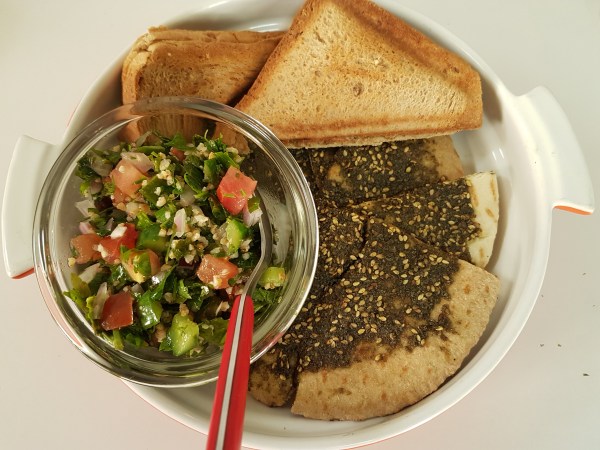
The ideal way to introduce Zaatar in our regular diet is to have it on bread. Having spent the last more than 30 years in the Middle East, we have grown up eating Fatayers (arabic pies with various fillings) and man’eesh bi zaatar (zaatar pastries). But an instant zaatar pastry can be made at home.  All you need is readymade zaatar, olive oil and arabic/pita bread. Zaatar goes well with white cheese or Labneh for breakfast and can be prepared as follows for a nutritious & healthy breakfast, meal, appetizer or starter.

Ingredients: 1 cup zaatar, Olive oil as required, various types of bread, Labneh if required.

Take the zaatar in a bowl and gradually add the olive oil and mix to a paste like consistency.  Apply on arabic/pita bread or any bread of your choice and toast in a preheated oven, pan or electric sandwich toaster till it heats through and the underside of the bread is slightly crisp.  If using labneh, apply to bread, sprinkle over with dry zaatar or apply the zaatar paste, cover with another slice of bread and toast in a sandwich toaster.

Serve with Tabbouleh for breakfast or as a starter or appetiser.

Zaatar (1)

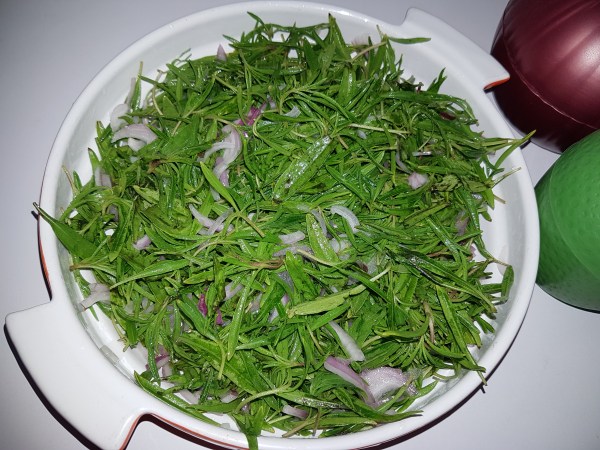
Fresh Thyme Salad  (Salatat Zaatar) Fresh Thyme Salad

20160509_200607

Fresh Thyme Salad

Ingredients

  • 1 bunch fresh wild thyme
  • 1 medium onion, finely chopped
  • ½ bunch green onions (optional)
  • 1 lemon, juice
  • 1 tbsp. olive oil
  • ¼ tsp. salt or to taste
  1. Clean the thyme and pick the leaves and tender stalks and discard the stems.
  2. Wash and drain well.
  3. Mix with the finely chopped onion, lemon juice, olive oil a d salt.
  4. Serve with a main course or with just some warm pita bread.
  5. Rocket leaves, mint and parsley may be added if desired.


Thyme is a nutrient-dense spice and is an excellent source of vitamin C, a very good source of vitamin A, iron, manganese, copper and dietary fibre. Whenever possible, choose fresh thyme over dried as it is superior in flavor.  The leaves must look fresh and be a vibrant green-grey in colour and free of dark spots and yellowing.

Fresh thyme should be stored in the refrigerator wrapped in a slightly damp paper towel. Dried thyme should be kept in a tightly sealed glass container in a cool, dark and dry place where it will keep fresh for about six months.

Thyme, either in its fresh or dried form, should be added toward the end of the cooking process since heat can easily cause a loss of its delicate flavor.

A Few Quick Serving Ideas

  • Add thyme to your favorite pasta sauce recipe.
  • Fresh thyme adds a wonderful fragrance to omelets and scrambled eggs.
  • Hearty beans such as kidney beans, pinto beans and black beans taste exceptionally good when seasoned with thyme.
  • When poaching fish, place some sprigs of thyme on top of the fish and in the poaching liquid.
  • Season soups and stocks by adding fresh thyme.

Ref: whfoods.org

Read more: http://naturalsociety.com


Easter Eggs


A decade ago and very many years before that; come Easter season and I used to admire pictures of Chocolate Easter bunnies and eggs and Marzipan Easter eggs that used to appear in various magazines and wonder at the enormity of process making these gorgeous master-pieces.  I used think how difficult and impossible a task making them at home must be even whilst toying with the idea myself.  With three young children of our own and several children in the family and friends’ circle, it was a challenge to find “reasonably priced” good quality ‘edible’ easter eggs.

So about ten years ago when my niece Melissa (Dias) Pereira was in Kuwait and I was going through Femina which had pictures of the Easter Bunny, I wondered aloud how does one make these bunnies and to my great surprise she said “Aunty Zenia makes exactly these at home!”.  This was a revelation.  I knew my sister made marzipan easter eggs but had no idea about the chocolate ones.  As Melissa was due to visit Mumbai in the next few days, she volunteered to bring the chocolate molds etc.  and with my sister Zenia Machado’s recipes and tips and encouragement not to mention the chocolate molds, ribbons, wrapping papers, etc.that she was kind enough to send and by sourcing other things from local market, Melissa and I embarked on our first Easter Egg sale project in 2005 with these baskets, etc:

2005  Melissa & my first Easter Egg venture

Although it was a stressful two to three weeks of chocolate making in our spare time, I found it thoroughly rewarding and enjoyable even though it meant staying up late nights to fulfill orders and then having to rush to work early next morning. Both Melissa and my sister Zenia and I have come a long way since then….  Melissa is now settled in the UAE and works independently managing her cakes and confectionery business from home and my sister Zenia’s www.Julianz.in is well known in Mumbai!

That’s how my passion for chocolate making was stirred.  Since 2005, it’s been an On Off venture with my daughter Nicole joining the league since a few years…….would say we have acquired these genes from my mother and so it carries forth.  My husband Rudy has been a strong support and wrapping the chocolates has almost always been done by him.

2006 added the following and soft toys to the baskets :

2009 revamped and added a whole lot of new products some of which were made by my daughter Nicole:

2012 following Easter goodies made by Nicole, like Bunny and Egg cupcakes, Easter cookies and cake pops were added to the catalogue:

2014 added the following...

Since 2015 I have scaled down the venture and supply only to the local charity Easter bazaar held at a church/school. 2015 added Easter cookies:

Easter cookies

2016 made the following new product, half hollow egg with chocolates with almond, pistachio and cashewnut:

So much for my Easter ventures…….

Making your own Easter Eggs

In this blog I would like to share my knowledge and the art of ‘How to make Chocolate Easter Eggs’ to demonstrate step-by-step how easy it is to make your own!

The beautiful ‘blue’ colored nails and fingers are my younger daughter-in-law’s.  Valencia assisted me in making these Easter chocolates this year.

Ingredients and accessories

  • Chocolate Dark, Milk and White, as required
  • Chocolate molds
  • Rubber spatulas
  • Glass or ceramic bowls

Step 1 Melting plain Chocolate

Microwave method (I use this method)

Break or chop the chocolate and place in a clean dry microwave-safe bowl.  A glass bowl is best because it conducts the heat from the chocolate as it melts, and reduces the risk of over-heating.  For small quantities it is safest to use a LOW or MEDIUM setting.  For larger quantities and once you become experienced, use HIGH .  The table below should only be used as a guide because melting times vary according to the brand and type of chocolate, the initial temperature of the chocolate and the size and material of the bowl used.  Check the chocolate frequently and prod it with a spoon – it may look solid when in fact it has melted.  White chocolate will burn more easily so watch it carefully.  A few lumps that appear after microwaving will dissolve upon stirring and help bring the temperature down of the chocolate which is a key to tempering chocolate.  The super-market bars of cooking chocolate, also referred to as Baker’s chocolate, do not really require tempering but heating and cooling the chocolate (tempering) is important to avoid the patchy and mottled look, which doesn’t alter taste but wouldn’t give you the glossy professional finish.

Approximate melting times in a 650-watt microwave oven

QUANTITY                      LOW                   HIGH

  •  50 g (2 oz)                     5 mins                2 mins
  •  75 g (3 oz)                     5 mins                2 mins
  • 125 g (4 oz)                    5 mins                2 mins
  • 172 g (6 oz)                    6 mins               2 mins
  • 225 g (8 oz)                    6 mins               2 1/2 mins

Bain Marie (double boiler) method

Cut the chocolate into small pieces and put it in  the top of a double saucepan.  The bottom pan should  be three-quarters full of gently simmering water.  If you haven’t got a double saucepan, put the chocolate in a clean, dry heatproof, preferably glass bowl and set it over a saucepan that’s about one third full of gently simmering water.  The bowl should fit snugly over the saucepan so that no steam can escape  round the sides.  The base of the bowl or top pan should not touch the water below.  Heat the water gently but do not allow it to boil. Leave the bowl on the pan until the chocolate looks melted. Remove the bowl or pan  from he heat and gently stir the chocolate until it is completely melted.  The temperature of the chocolate should not go above 50 deg C (122 deg F).  If water or steam come into contact with the chocolate, the texture will be spoilt and the chocolate will ‘sieze’, that is it will turn into a solid mass and will not melt.

Step 2 Filling the chocolate molds

Using cotton wool or soft muslin cloth polish the insides of the Easter candy molds. Place on a tray or counter lined with  baking parchment.

Spoon the chocolate into the molds (do not over fill) and tap the mold lightly to smoothen the surface and remove air-bubbles, if any.

Step 3 Setting the chocolate

Place the molds in the freezer for a few minutes until set and the underside of the mold appears opaque.  If it has wet patches on the underside, then it is not fully set.  Keep a while longer.Easter Chocolates Eggs (19)

Step 4 Unmolding the chocolate

Remove molds from the freezer and unmold by turning the mold upside-down onto a flat surface. Tap the mold lightly to release the chocolate.  Leave to dry.

Step 5 Presentation

Finish by wrapping in colored chocolate paper and decorative boxes and ribbons.

Be creative and make chocolate eggs with fruit and nuts, rice krispies, praline, marzipan, truffles….

To make Hollow Egg:

Fill the mold with melted chocolate and place in the freezer for a few minutes till the sides are set but the centre is still soft.  Remove and pour out the soft chocolate from the centre.  Smoothen the interior of the egg with your fingers and place it back in the freezer until completely set.  Unmould and when dry join two halves together by applying some melted chocolate around the edges to form a full hollow egg. Prior to sealing the two halves, place some candy or small toy inside for a beautiful surprise for the kids.  Wrap and tie bows with colorful ribbons.

To make Chocolate with marzipan eggs:

  • Ingredients of Marzipan
  • 250 gm. Blanced almonds
  • 500 gms. Icing sugar
  • Rose water for kneading

Powder the almonds and mix with icing sugar.  Knead to a soft dough using rose water a little at a time.  Make small egg shaped portions depending on the size of the chocolate mold. The marzipan egg must be smaller than the chocolate mold.

Pour a little melted chocolate in the mold.  Place the marzipan egg in the centre and press lightly.  Pour more chocolate over the marzipan to cover and fill the mold.  Put in the freezer to set.  Unmold when the underside of the mold turns opaque.  Leave to dry, then wrap each half in choclate wrapping paper.  Place two halves together and wrap again in decorative paper for a full 3D egg!

Ref: Good Housekeeping

LEAVE A COMMENT :

Go back

Your message has been sent

Warning
Warning
Warning
Warning

Warning.

2015 in review


The WordPress.com stats helper monkeys prepared a 2015 annual report for this blog.

Here’s an excerpt:

The concert hall at the Sydney Opera House holds 2,700 people. This blog was viewed about 11,000 times in 2015. If it were a concert at Sydney Opera House, it would take about 4 sold-out performances for that many people to see it.

Think you know how to boil an egg…… think again!


Published November 25, 2015

Eggknowledge!

We have very often heard the phrase “He doesn’t even know how to boil an egg”! Well, this may hold true for many of us.  Read on to find out why…..

There is a certain technique to making perfectly boiled eggs. All these years I just placed the eggs in a pan of water and boiled them away for 20 minutes or sometimes conveniently forgot about the boiling eggs thinking nothing could ruin a boiled egg.  But I was so wrong, I realised that eggs tearing through their shells, yolks tasting rubber-like and dry and the colour changing to a grey-green and giving off a sulphuric smell were all characteristics of an imperfectly or over-boiled egg!

The correct technique for boiled but runny eggs is to place the eggs in a pan of cold water to cover the eggs and switch off the heat as soon as the water begins boiling.  Cover the pan with a lid and leave the eggs in hot water from 3 to 20 minutes depending on how runny you like them. Transfer the eggs to cold/room temperature water to arrest further cooking. Then, just remove a piece of shell at the top of the egg, season with salt and pepper (if you wish) and dig into the creamy white and yolk with your spoon and yumm…delicious and healthy too!  You can even dunk your bread or piece of toast into it and enjoy.

For the perfect soft boiled and hard boiled eggs, bring water to a full rolling boil and simmer for 3 to 5 minutes for soft boiled, 7 to 10 minutes for hard-boiled eggs. Again depending on your desired consistency. Transfer the eggs to cold water, peel and enjoy.

Eggs3 (28)

Peeling can be a chore for perfectly boiled eggs, more so if  the eggs are fresh.  Old eggs (say a week or two old) make better boiled eggs.  They are also easier to peel and peeling them under running water also makes it easier. To test for freshness of the eggs, simply place the egg in a bowl of water.  Generally, if the egg is stale it will float and if it sinks it is fresh.  This is because as the eggs get older, the size of the airsac increases making it float.

In spite of several marketing claims that brown eggs have far more nutrition than white, this is but just a claim. The difference in the color of the egg only seems to be in the price as brown eggs cost five times more than white eggs and for what, only because they are brown and laid by hens with red feathers!! Yes, the color of the eggs are determined by the breed of hen as brown eggs are laid by hens with red feathers and white by hens with white feathers. An interesting observation I made in the process of this project was that with brown eggs the yolk i.e. the inside seemed to cook faster than the white i.e. the outside, as seen in the picture below.  Hmm…shouldn’t it be the other way round!!??

Eggs3 (25)

The color of the egg yolk also has nothing to do with the nutritional value of the egg but is determined by the diet of the hen. A dark yellow yolk indicates the hen was possibly fed green vegetables and a light yellow a diet of barley and wheat and medium yellow, alfalfa and corn.

Blood-spot that you see in an egg is from the rupture of a blood vessel in the egg yolk and is completely safe to eat.

Egg blood spot

Eggs are an excellent source of nutrients and contain some healthy unsaturated fats and healthy proteins. They also contain zeaxanthin, lutein and choline.  Zeaxanthin and lutein may preserve against loss of vision and choline has been associated with preserving memory and also promotes normal cell activity, liver function and the transportation of nutrients throughtout the body.  Eggs contain zero carbs and no sugar.  Eggs have all 9 essential amino acids. Eggs are naturally gluten free and hence make an awesome gluten free breakfast option.  A medium egg contains less than 70 calories.

There is no need to restrict eggs.  Neither The Department of Health nor the British Heart Foundation recommends a limit on the number of eggs you can eat.  In the past there have been reservations due to their cholesterol content but it is now known that too much saturated fat is more likely to raise cholesterol levels than eating foods rich in dietary cholesterol.  So go ahead and enjoy a breakfast of eggs, a protein packed breakfast helps sustain mental and physical energy throughout the day!

However, beware of fake eggs which are becoming a concern in China.  They are made to look real from a mixture of starch, coagulant and resin complete with pigment for color and a counterfiet shell. The ones below are real!

LEAVE A COMMENT :

Go back

Your message has been sent

Warning
Warning
Warning
Warning

Warning.

The Science of Marinades


Published: November 14, 2015

Marinating food prior to cooking is the essence of food preparation for all types of grills, roasts and so on. Whether it’s a short dip or a long soak, marinating enhances a variety of foods. It’s a versatile and indispensable technique which helps to boost the flavor of meats and vegetables.

Marinating refers to soaking food in a flavorful liquid called a marinade. Marinating is a technique that’s been around at least since the Renaissance, when acidic mixtures were commonly used to help preserve foods.

One always speaks of marinating when they would like to tenderize food. But, contrary to this popular belief, marinating only flavors, not tenderizes, food.  You may also think marinating is time-consuming, but this is true only if you think marinating is to tenderize. In fact marinades only permeate the surface of the food and have little effect on the interior. If you really have no time, simply smear the food with the sauce or marinade as it is going on the grill or the pan. Tenderizing really comes from the way you cook it.

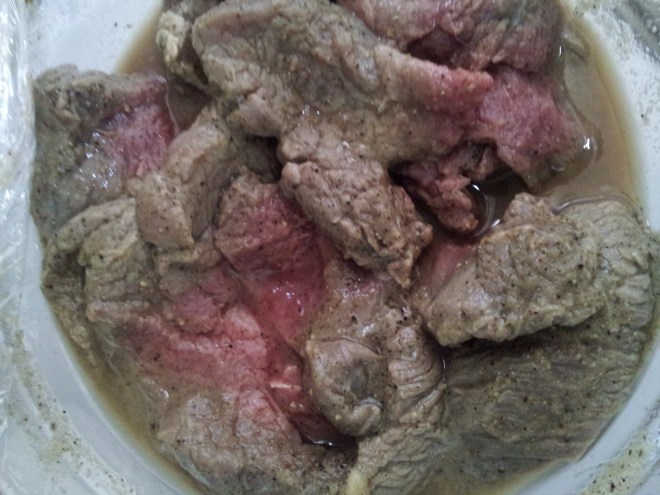
The beef steaks, shown in this picture, were left in the marinade for a couple of hours but the pink centre cleary illustrates how far the marinade has penetrated, which is only the outer layers of the steaks. Of course this would depend on the thickness of the meat, for thin cuts the marinade would permeate evenly.

Beef Steak step1

Beef Steaks in Marinade

The first and most basic of marinades almost always include an acidic element, such as citrus juice or vinegar which boosts flavors and may tenderize the surface proteins of meat.  Oil is another common constituent as it helps coat food, carries flavor and helps food stay moist.  Ingredients such as garlic, ginger, soy sauce, pepper, chillie, enhance the savory qualities of meats and fish.

The second type of marinade included the use of wine/alchohol.  However, when marinating fish or meat that is to be grilled or sauteed, avoid using wine or alchohol, because these cooking methods only heat the meat to about 135 to 165 degrees, well below the boiling point of alcohol, leaving  the meat with a taste and flavor of alcohol. Wine is fine for using in stews and braises because these dishes are cooked for a prolonged period at a temperature that boils off the alcohol and eliminates any harsh flavors.

A third kind of marinade includes those that ‘cook’ raw foods, usually seafood, as in the popular Latin dish Seviche.  Lime and/or lemon juice turns the flesh opaque and firm so it appears “cooked” but the food is actually still raw. Although the acid in a marinade appears to “cook” raw fish in a seviche, it doesn’t eliminate bacteria the same way cooking with heat does. When marinating fish that won’t be cooked, make sure the fish is sushi-grade, or frozen-at-sea (FAS) fish; both are safe for healthy adults to consume raw.

A fourth category of marinade is used to marinate cooked fish in a vinegar-based mixture to impart more subtle flavors. This type of dish is called Escabeche.

Foods kept for marinating should never be kept in aluminium or copper containers as the marinade is acidic and as these metals are reactive, the acids and will promote discoloration of the food and give it a metallic taste.  It is best to use non-reactive containers like glass, ceramic or stainless steel, even plastic is better than aluminium or copper.

Always marinate meat and fish in the refrigerator.  Some of the marinade may be used for basting after removing the meat or fish from it only if the marinade is boiled and cooked for five minutes to kill any bacteria. Marinade brushes and other utensils that are used with raw food should not be used again near the end of cooking.

The length of time you marinate food depends on both the food and the marinade. Delicate fish, shellfish and fruit usually soak for a shorter period of time (from 20 minutes to a few hours), while meats can go longer (up to a day or two, but I would really not want to go beyond 24 hours to preserve the texture of the cooked food). It is really not necessary to soak food too long in a marinade but I find it easier to marinate overnight or say half a day in advance, mainly for reasons of convenience. This allows pre-preparation of food and also for cooking to be done in stages to reduce the pressure and time rather than cooking from start to finish in one go. Especially for occasions, I usually plan a menu around food that requires some sort of marinating so that half the preparation can be done the previous night for an afternoon party or in the morning of the day for a dinner event. However meats should not be soaked in a highly acidic marinade too long as it would alter the texture of the meat which may turn grainy and mushy. If a recipe calls for half-cup of lemon juice, then that is a red-flag.

The science seems clear. ”Acid does break down protein, but after it breaks it down, it causes it to coagulate,” said Shirley O. Corriher, whose book, ”Cookwise” (William Morrow & Company, 1997), explores the reasons some recipes work and others do not. ”If you leave it too long, it toughens or turns to mush.”

While some may be tempted to poke holes in the meat to extend the flavoring beyond the surface, that technique has more drawbacks than benefits. It may improve the distribution of flavor, but more fluid will be lost during cooking, resulting in drier meat.

For Grilled Chicken Example I – The chicken was poked all over with a fork thinking the marinade would penetrate the meat and it would turn out more tasty, but instead the meat turned out dry and the skin shriveled up under the grill and the final presentation did not have a very appealing look.

Grilled Chicken 1

Grilled Chicken Example I

Grilled Chicken Example I

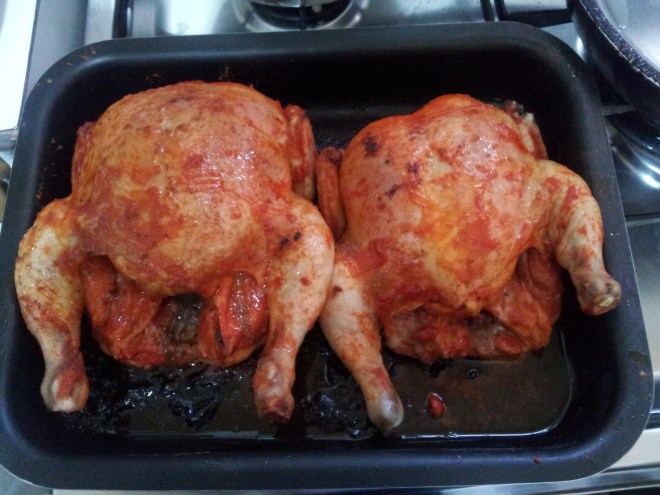
Grilled Chicken Example II – Marinade spices were smeared without poking holes in the chicken and the result was tender and juicy grilled chicken and which looked deliciously appealing.

Grilled Chicken Example II

Grilled Chicken Example II

Another acidic ingredient that has many fans is yogurt. In Indian cooking when food is prepared for the tandoor yogurt breaks down the fiber and tenderizes the meat. Science seems to support the yogurt partisans. Yogurt not only has a far milder acid than those in wine, lemon juice and vinegar, but also contains calcium, which activates enzymes in meat that break down the muscle fiber.

One area where even a harmonizing marinade is not necessary is with an ingredient that is already great and distinctive, like an excellent cut of meat, which needs no marinade to add flavor. (Credits: James Peterson, Mark Bittman, Eric Asimovor)

Illustrations & Recipes :

Tandoori Chicken

Tandoori Chicken

Recipe for Tandoori Chicken using yogurt marinade https://cooklikececilia.com/murgh-tandoori-tandoori-chicken/

Grilled Chicken (1)

Grilled Chicken

Recipe for Grilled Chicken using lemon juice https://cooklikececilia.com/grilled-chicken/

Beef Roast

My mum’s (Mais Recipes) Roast Beef recipe using vinegar https://cooklikececilia.com/roast-beef/

Chilli Beef8

Chilli Beef

Recipe for Chilli Beef https://cooklikececilia.com/chilli-beef/ using soy sauce,

All delicious and flavorful in their own right and enhanced with the appropriate combination of marinade ingredients.

LEAVE A COMMENT :

Go back

Your message has been sent

Warning
Warning
Warning
Warning

Warning.

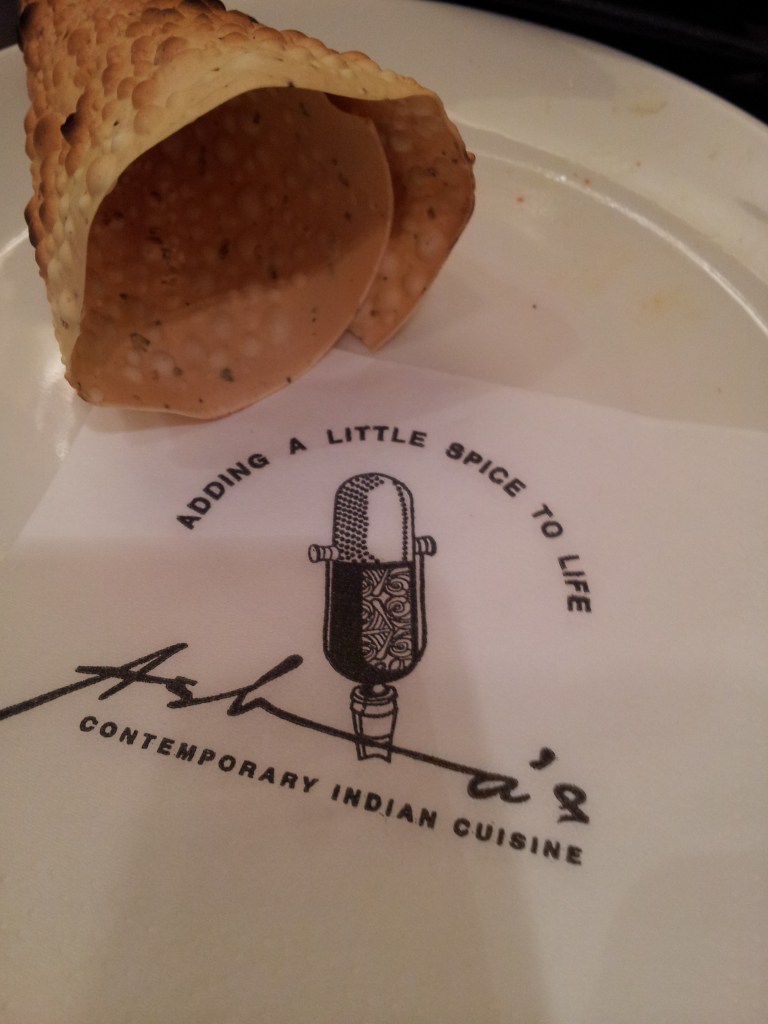
A Birthday Lunch at Asha’s


20150905_140539
ASHA’S INDIAN RESTUARANT

Celebrated my birthday this 5th of September, 2015, at Asha’s with Lunch.  The plan was to go to Asha’s Avenues but as that was under renovation we decided to go to Asha’s Marina Crescent. The place was welcoming and had a pleasant ambience. Service was good and we did not have to wait too long for the food to be served. The food was good and not too spicy (except for the Biryani) as we ordered ‘medium spicy’. But was disappointed with the ‘Chingri Chaap’, didn’t taste like prawns at all. The Samosas were delicious. The desserts were not all that great and the Kulfi left a peculiar powdery taste on the tongue.

Continue reading

Know your sugars


Sugar (Sucrose) is a carbohydrate that occurs naturally in every fruit and vegetable and in greatest quantities in sugarcane and sugar beets which is then separated for our regular consumption.  For most of us sugar reminds us of sweet and happy moments in our lives be it birthdays, celebrations and holidays and the all too addictive morning cuppa! which most people with a health issue would now be having ‘UNSWEETENED’ and refraining from eating cakes and sweets.

But, thanks to the various sugar substitutes, it has been easier and healthier to bake your cake and eat it too! But the question remains – Are ingredient substitutes the answer to solving your health and weight problems Continue reading

Middle Eastern Cooking


The Middle East namely Kuwait has been my residence for the past 33 years and it is only natural that we are greatly influenced by middle eastern cooking, favorites being Kababs, Shawarmas, Falafel, Hummus, Tabbouleh, Moutabel Baba Ghannouj, Machboos Leham, and the daily favorite Khubz which we now cannot Continue reading

My Inspiration


My Recipe books My Inspiration

My cooking has mainly been inspired by these books which were gifted to me earlier in life by my Sisters, Mabel Dias (Prashad), Zenia Machado (Khana Khazana), Sheryl Newnes (Heart healthy & Low fat cooking).  My close friend Viola Netto gifted me The East Indian cookery book soon after my marriage and it served as a perfect guide to my meal preparation as a new home-maker. My note-books contain precious recipes shared by my Aunt Prescilla Fernandes and my neighboour Irene Vaz. Am not sure if they would remember sharing Continue reading

My Breakfast Diaries


Breakfast is the most important meal of the day and with some time-management it’s not difficult to cook-up a deliciously satisfying and healthy breakfast. On several occasions I have been asked, what are the various foods you prepare for breakfast.  I have also heard many times ‘I don’t know what to make for breakfast’ or ‘what can you make for breakfast?’ This post is for all you lovely people and there should be no excuse for ‘I don’t know what to make for breakfast’! Stay tuned…

I spend almost an hour and a half to two hours in the kitchen each morning before I leave for work (that’s because I am an early riser!). But you’ll don’t need to do that.  With a little bit of planning, most of the recipes Continue reading

Mais Recipes


I will be posting here recipes from the book ‘Mais Recipes’ so as to share them with as many people as possible.  Hope you’ll enjoy them.

Starting with a dessert…as they say in our country “muh meetha karo” which means “sweeten ones mouth” before embarking on an auspicious journey/event.

Bread Pudding

Bread Pudding

Continue reading

About Me & My Cooking


My Cooking Diaries

Cooking is my passion.  Had I realised this in my earlier years I would have quite certainly opted for a career related to food …. and most likely… FOOD TECHNOLOGY.  The art and science of food and it’s preparation truly excites and fascinates me, but lacking the required expertise, I fulfil my passion by just trying out various recipes!

Ever since I was a child I used to collect all kinds of recipes.  The moment I picked a magazine I would first flip through to the recipe section.  Being a voracious reader, in addition to various fiction, non-fiction, romance, mystery….I grew up reading Eve’s Weekly, Illustrated Weekly, Readers Digest, Femina, etc. and I used to keep a scrap-book with cuttings of recipes from all magazines.  I have also noted down recipes shared by my friends and relatives. This hobby opened new avenues for me to pursue Continue reading