Authentic tried and tested simple recipes in mainly Indian cooking, including traditional mangalorean, Goan, East Indian, North Indian recipes and much more…
A crispy and delicious hot snack to provide some warmth on a wet rainy day or cold weather or simply when relaxing at home wth a nice hot cup of tea or coffee!
To get crisp and crunchy edges, make sure the batter is thick and dry. Batter should not be of dropping consistency. You can achieve this by heating gradually in the microwave after grinding the dals, till you get the right consistency. Mix and then add the rest of the ingredients. When frying take a teaspoon of batter and slide with another spoon into the oil. Avoid making balls with your hand as that would give you smooth edges, you want uneven edges for these vadis to add to the crispiness and crunchiness!!
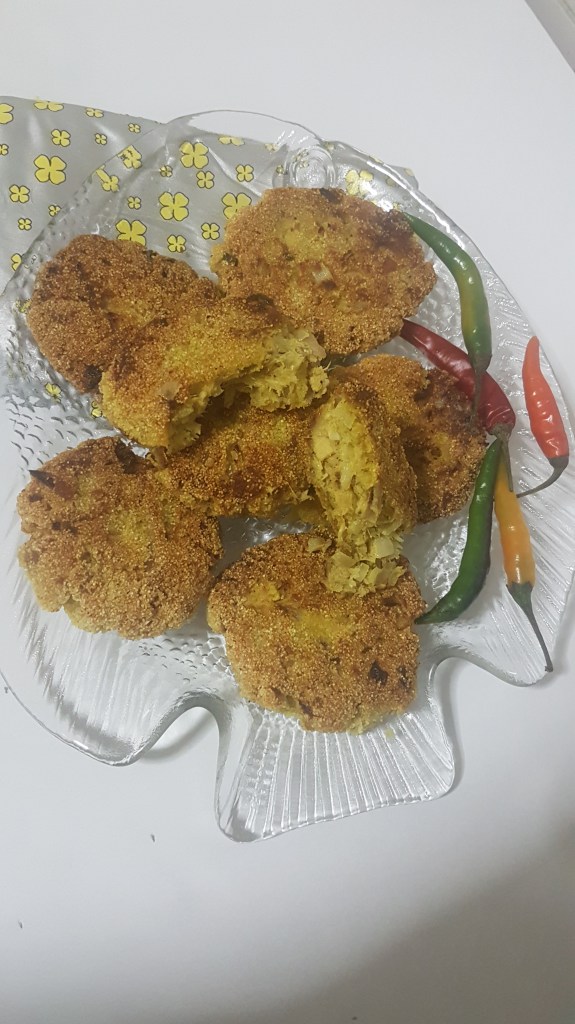
I owe my gratitude to our dear family friend Anita Martins for this easy and simply delightful recipe. Would never have know the ‘mayonnaise’ trick that really takes the taste to another level. Yes, absolutely, you add some mayonnaise to the tuna mix!!
This recipe is a hit at our home and made almost on a weekly basis as it is one of my childrens’ favorite. Even though they hardly eat fish, except for shrimp, they are game anyday for Tuna cutlets provided the tuna is out of a can! Moreover, since it is so quick and simple it is a go to recipe if short on time or out of options on what side dish to make. Goes very well with Dal or Moghe Sar, Vegetable curry,Kuwalo Bafad, etc.
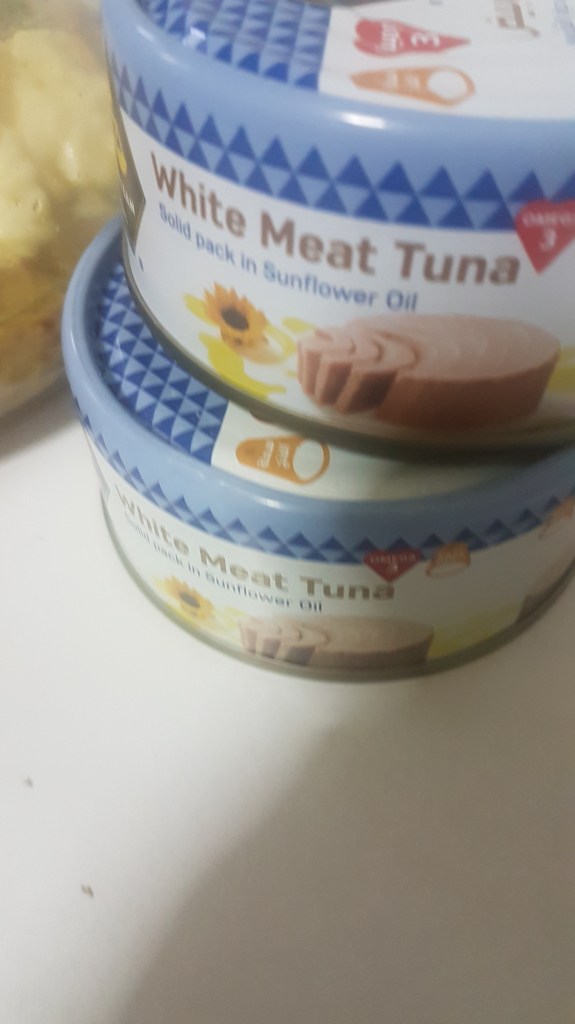
I prefer using the “White Meat Tuna in Sunflower Oil” and also add the oil to the mixture. This really adds to the taste and texture of the cutlets. Although making the cutlets would be a little difficult to handle due to the wet mixture, but once you roll in the semolina it becomes easier to shape.
Fry the cutlets as soon as the mixture is ready otherwise the onions may begin leaving moisture and as the mixture already has the fish oil it will tend to become too wet to handle. If there is a gap between preparation and frying, just put all the ingredients in the bowl and mix just before frying. Also making the cutlets and keeping them aside before frying will tend to break them. Just roll the ball of mixture in semolina and keep aside and form the cutlets when you are ready to place on the frying pan.
½ tsp. black pepper powder (use white peper instead, if available)
Small bunch fresh coriander (optional)
1 tsp. salt
Rava (Semolina) to coat the cutlets
Oil for shallow frying
Method
Empty the contents of the fish tins in a bowl alongwith its oil. Don’t be tempted to discard the oil as it adds to the flavor.
Chop the onions, chillies, ginger & coriander leaves finely and add to the fish.
Add the egg, mayonnaise, lemon juice, turmeric, garam masala & pepper powder and salt. Mix everything well.
Heat a frying pan on medium low and add 4 tbsp. oil.
Take a portion of the mixture the size of a lemon and roll in semolina.
Form the balls into cutlets on the palms of your hand and gently place on the frying pan and shallow fry on medium low till crisp and brown on both sides.
P.S.: The mixture will be quite wet but when rolled in the semolina will be easier to handle and will set when frying. Do not put too much oil, just fry in enough oil on medium low. The cutlets may break if fried in too much oil.
Typical daily diet for lactating mothers, to be followed for atleast one month after delivery.
A constant dilemma usually faced is what to cook? and what to eat? and for women who have given birth many foods are restricted especially when breastfeeding their baby. Hence, the food choices get further narrowed down. This post is to alleviate some of the confusion as to the diet required to be followed by lactating mothers. Hopefully, these tips would also take away some of the stress in menu planning, faced by those caring for “mother and babe”.
Points to bear in mind:-
Include more of nuts, fruit, vegetables in your diet.
Meals should be light, freshly cooked and easily digestible.
Avoid packaged and processed foods, aerated drinks, alcohol and packaged juices. Fresh juices are preferable, include yogurt and buttermilk, if possible.
Use only healthy fats like pure ghee, coconut oil, olive oil, sesame oil for cooking.
Avoid heavily spiced food.
Limit sweets and fried food.
Avoid left-over food from previous day etc, as far as possible.
Avoid Pork and Beef.
Avoid Mackerels, Sardines, King Fish, Shrimps & Crabs, Shell-fish i.e. anything from the Crustaceans, shellfish, mollusks group.
Avoid potatoes, brinjals, starchy food and pulses to avoid flatulence and indigestion which can affect the baby through the breast milk.
Daily Diet Plan – Schedule is approximate and should be adjusted to suit your day. Most of the recipes are available on this site and can be accessed by clicking on the link. Additional options/recipes can be found in the book “Mais Recipes”.
Fenugreek/Ajwain (Carom seeds) tea 3 to 4 times a day or throughout the day instead of plain water.
To prepare Fenugreek Ajwain water : Add a teaspoon each of Fenugreek, Ajwain (Carom seeds), Cumin and Fennel (Badishep) seeds to one litre or 1.5 litres of water, bring to a boil, switch off flame, cover and let it infuse for 10 minutes. Strain and reserve, to be taken by the mother, preferably warm, throughout the day instead of normal water
On rising
Warm water or Ajwain/Fenugreek tea, 5 to 10 soaked almonds with 1 or 2 dates. (Pre-soak the almonds the previous night, next morning peel and eat).
Breakfast – 08:00 a.m. approx.
1.Preferably hot/warm breakfast consisting of either of the following options :
And for some quick breakfasts (especially for new mothers managing on their own without help) Toast n Boiled eggs, Bread Butter Jam, Cereal like corn flakes, Waffles, etc. are some options.
2. Milk, or tea coffee made with milk
3. A tablespoon of the lactating traditional preparation Thiklem.
Mid-morning: 11:00 a.m. approx.
Porridge made of oats, ragi (tisan), vermicilli, rawa, or bread butter with tea coffee made with milk.
Vegetables like, leafy greens, spinach, pumpkin, gourds, french beans, tendli (Ivy Gourd/Gherkins) yam (very good for internal healing), lady fingers, raw banana.
Similar to lunch options. With Rice preferably, or with any type of bread.
Bedtime: 10:00 p.m. (Optional)
Hot milk or Turmeric Milk (Haldi Doodh). Helps in healing and promotes good sleep, immunity booster.
To prepare Turmeric Milk – Boil one cup milk with 3/4 tsp. turmeric powder, 1 tsp. Misri (Candy sugar) or honey, 1/4 tsp. pepper powder. Sip slowly while hot. If using honey do not add while boiling, add after boiling, stir and drink hot.
Fruit – Anytime in between meals – Preferably seasonal fruit, Apples, Pears, Oranges, Bananas, Avocados, Cantaloup, Chickoo, Figs, Cherries, Grapes.
N.B. : Above is a guide for menu planning alongwith traditional mangalorean foods to consume while breastfeeding. Please bear in mind I am niether a dietician nor a nutritionist. The guide is what I have learnt from my mother and from elders in our family and from my personal experiences of giving birth to three children and having three grandchildren. As I have benefitted from these experiences, I am sharing the information. Please seek professional or medical advice when necessary.
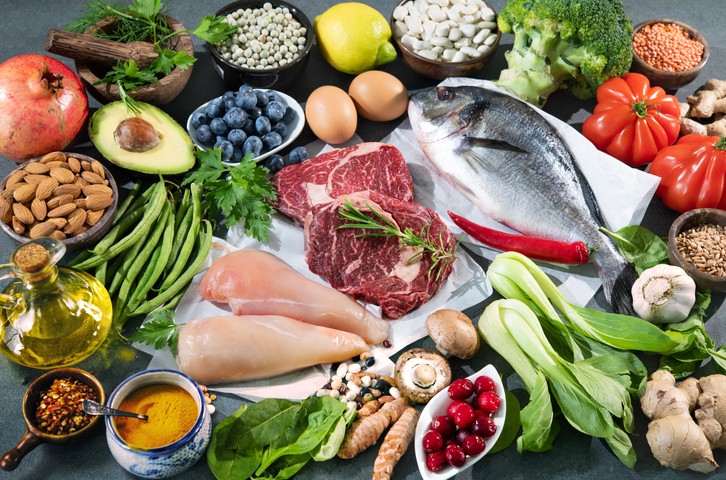
Leafy green vegetables are high in nutrients, low in calories, important for skin, hair, bone and overall health, while providing the necessary protein, iron, vitamins and minerals. It is advisable to incorporate a leafy vegetable daily into our diets for optimum health. It is also affordable and easy to prepare.
Here are a few easy recipes using spinach:-
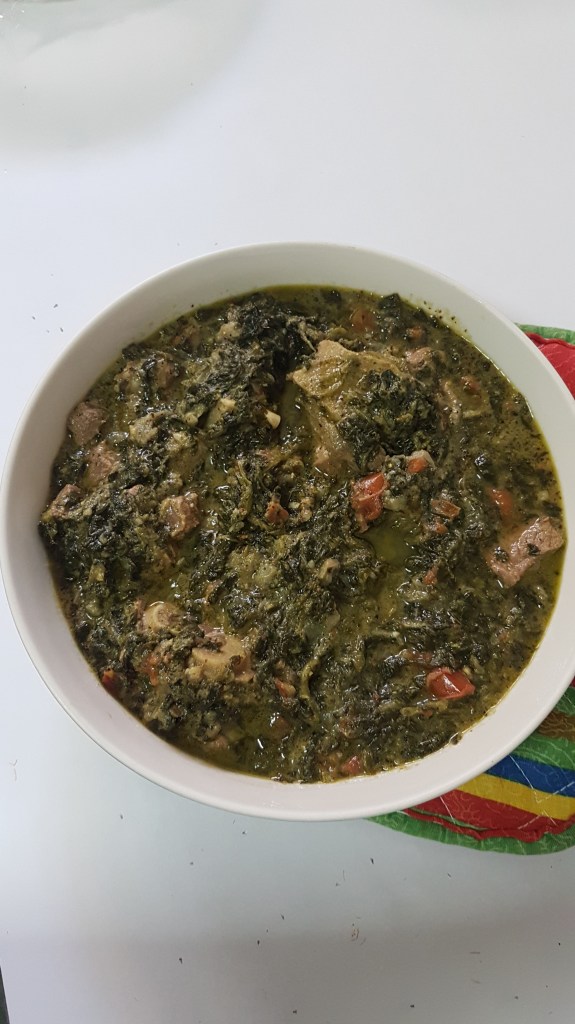
Mutton Palak – A delicious non-vegetarian dish using spinach with the least amount of spice, yet full of flavour.
3. Kashmiri Saag – Spinach cooked with a exorbitant amount of garlic and red chillies, but does not overwhelm the dish, just makes it superbly but mildly spiced with the flavors of garlic.
4. Dahi Palak – A dish you can throw together in minutes yet turns out delicious. Serve with steamed rice, Khichidi, Pulao or with rotis or any Indian bread.
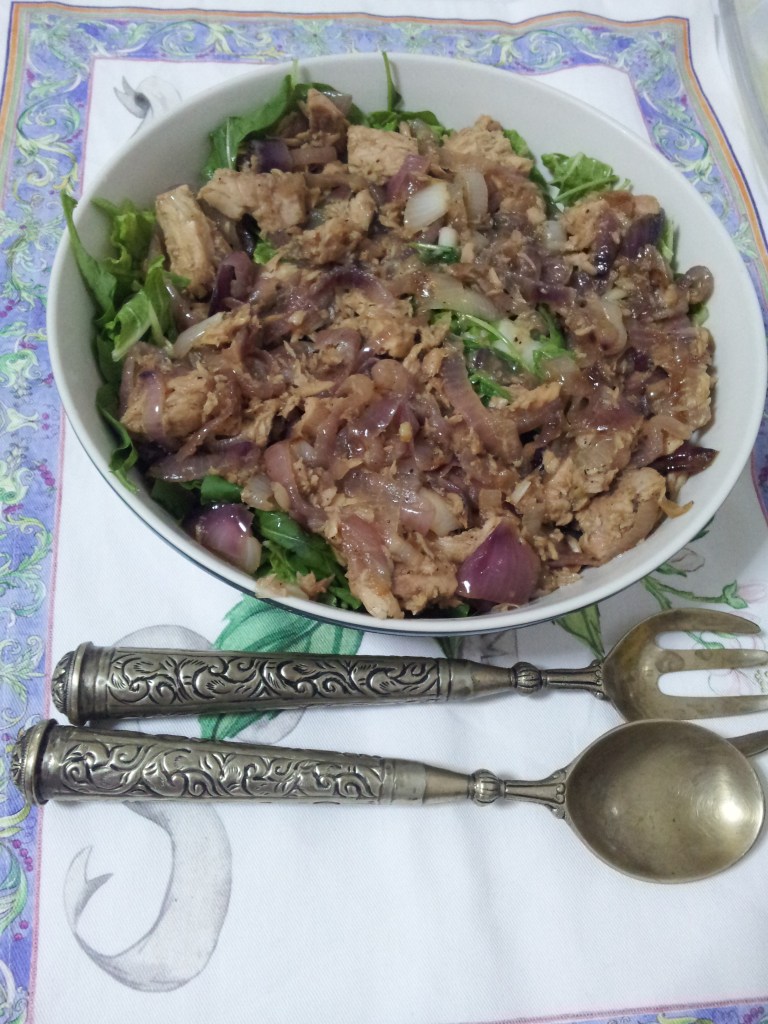
5. Tuna & Braised Onion Salad – A salad which doubles up also as a main course! Just enjoy it with some crusty bread or Pita bread or any Indian bread and your meal is done for the day!!
Spinach and leafy vegetables can also be cooked using the simple mangalorean ‘Thel Piao” method using green chillies, onion, garlic, a little oil and water and cooking till done and then garnishing with fresh coconut.
Curries like spinach or Valchi Bhaji with prawns, or black-eyed beans are some of popular recipes using leafy vegetables. My recipe for Alun stem with Alasande can be used for these dishes.
The book “Mais Recipes” has the recipes for these dishes.
Would be happy to notify you whenever a new post is published. Please enter your email ID and follow me. Thank you!
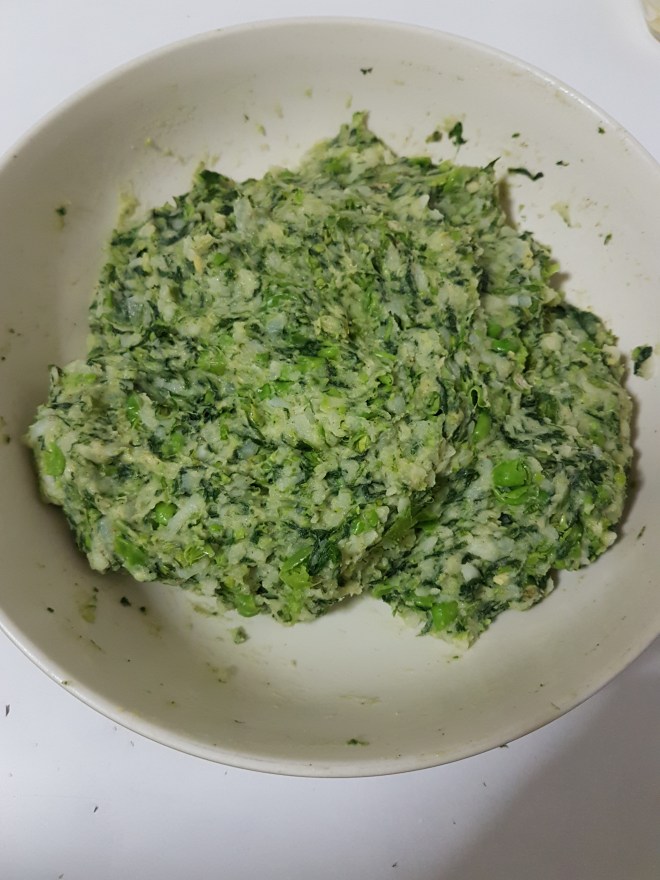
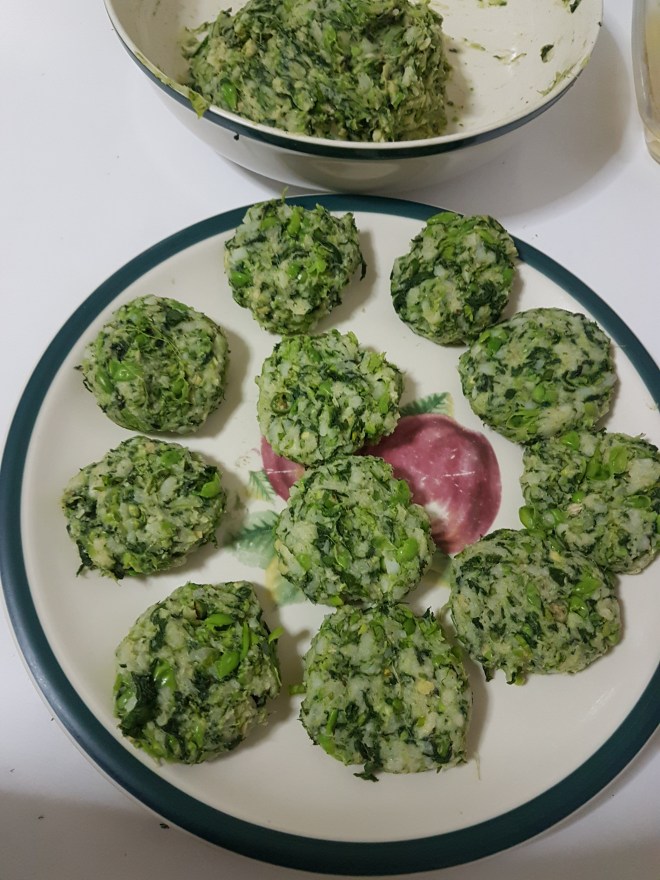
Boil potatoes, peel and grate. Boil the peas and mash coarsely. Blanch the spinach in salted water, refresh in cold water and squeeze out excess water and chop finely.
Chop ginger, chilles and coriander leaves. Mix the grated potatoes, peas and spinach with the chillies, ginger, coriander leaves, chaat masala and salt. Add cornflour for binding.
Form into patties and deep fry or shallow fry in hot oil for 3 to 4 minutes.
Extraordinary dishes prepared with ordinary vegetables!!
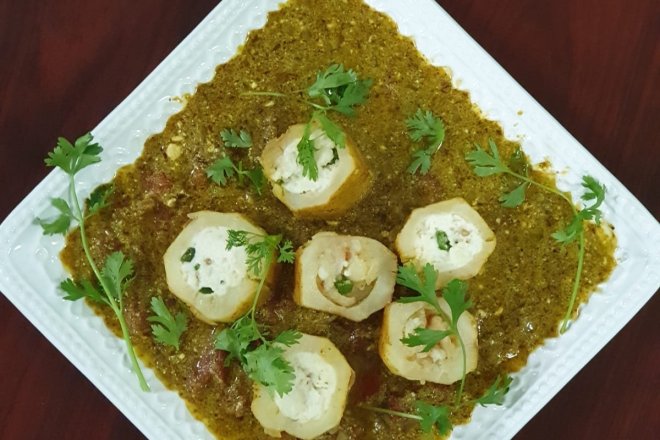
Potatoes stuffed with paneer and cooked in a tangy chutney gravy, sure to leave your palates tingling!
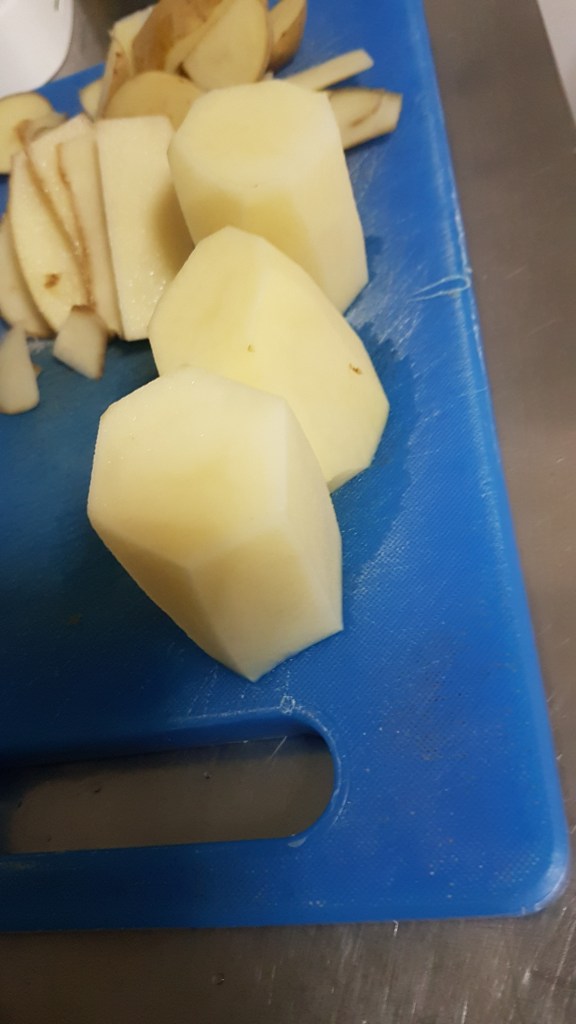
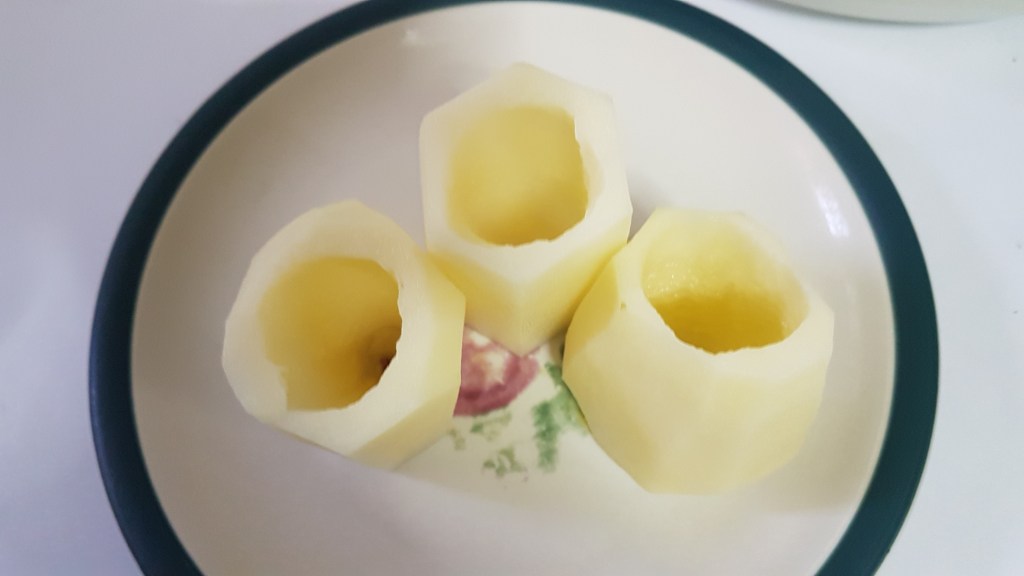
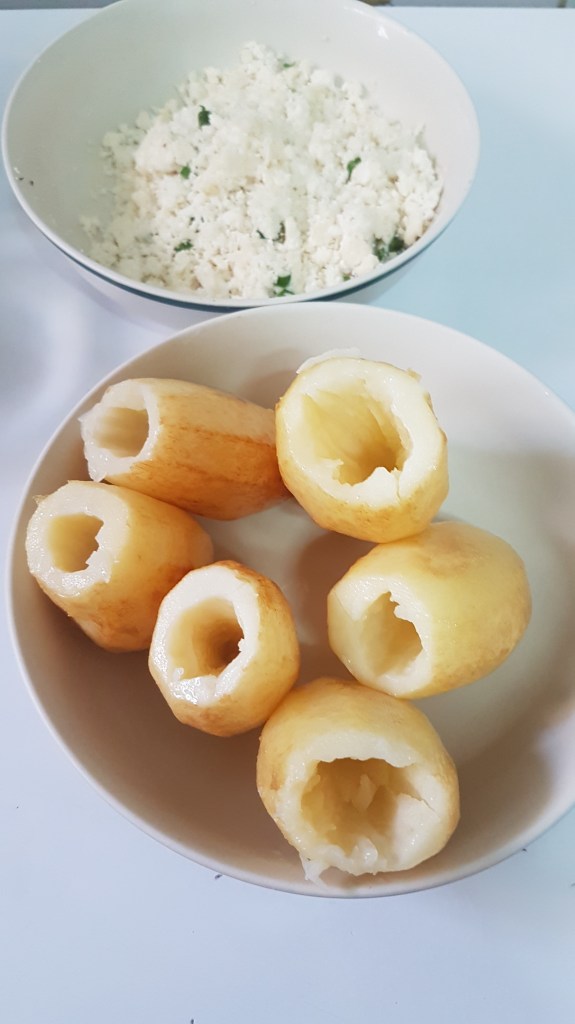
Clean the potatoes and trim the sides to make barrel shapes. Scoop out the centre to form a hollow leaving ¼ inch around. Deep fry in oil till light brown.
Grate paneer and mix with the chopped chillies and cashewnut pieces. Stuff the potatoes with this filling. Keep aside.
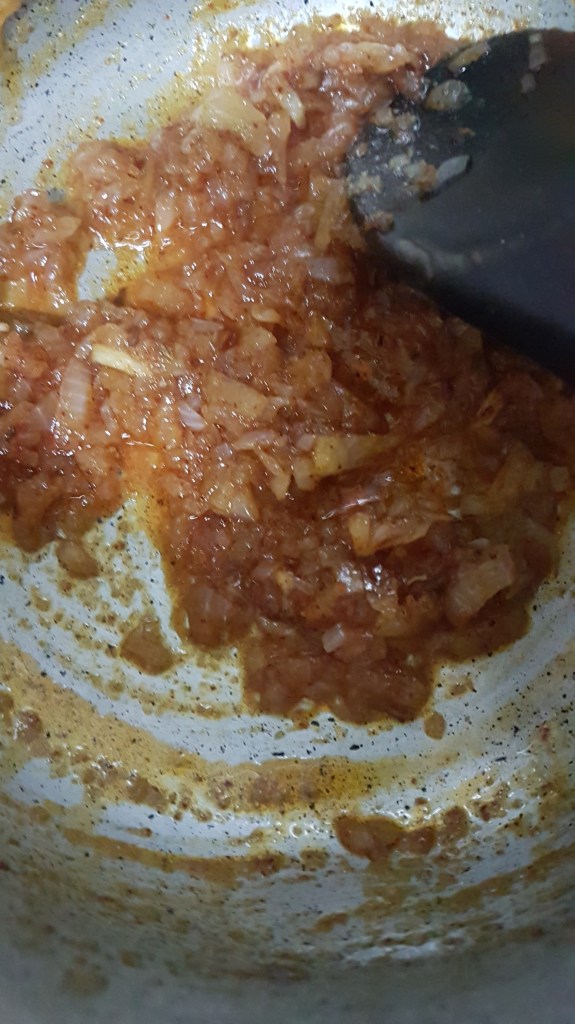
Grind the chutney ingredients to a paste. Whisk yogurt in a bowl. Wash and chop tomatoes. Heat ghee in a vessel, add cumin and finely chopped onions or the ½ cup boiled onion paste and sauté for a minute. Boiled onion paste will give you a smoother gravy. Add the ginger garlic paste with ¼ cup water and stir till fat leaves the masala. Add the chutney masala and red chilli powder, sauté for few seconds. Add yogurt and 1 cup water, mix, bring to a boil, reduce heat to low and simmer till fat leaves the masala.
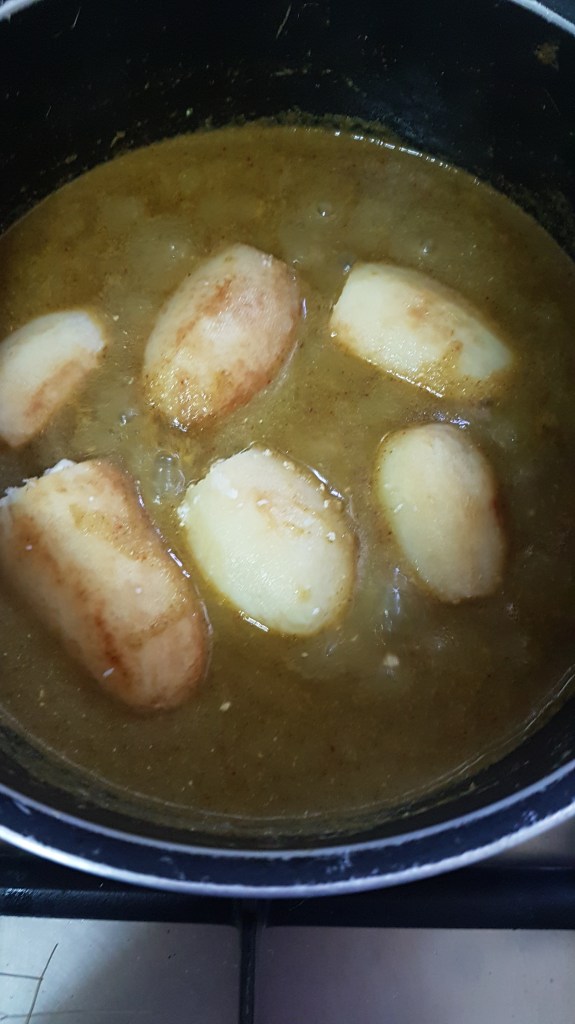
Add the whole stuffed potatoes and simmer for few minutes until fully cooked. Add tomatoes and simmer for a minute, add cashewnut paste and stir carefully. Sprinkle the garam masala and bring to a boil.
2 medium onions, chopped finely or ½ cup boiled onion paste –To make boiled onion paste: Peel, wash and roughly chop onions. Place in a vessel, add 1 bay leaf, 1 black cardamom and ½ cup water. Bring to boil and cook on low till onions are transparent and liquid has evaporated. Grind to a paste.
2 tbsp. ginger garlic paste
1 tsp. cumin
1 tsp. red chilli powder
1 cup yogurt
½ cup tomatoes
3 tbsp. cashewnut paste – To make cashewnut paste: Soak the cashewnuts in water for 30 minutes and grind to a paste.
2 tsp. garam masala
Salt
Method
Wash the potatoes and trim the sides to make barrel shapes.
Scoop out the centre to form a hollow leaving ¼ inch around.
Deep fry in oil till light brown.
Mash the paneer and mix with the chopped chillies and cashewnut pieces.
Stuff the potatoes with this filling. Keep aside.
Grind the chutney ingredients to a paste.
Whisk yogurt in a bowl.
Wash and chop tomatoes.
Heat ghee in a vessel, add cumin and finely chopped onions or the ½ cup boiled onion paste and sauté for a minute. Boiled onion paste will give you a smoother gravy.
Add the ginger garlic paste with ¼ cup water and stir till fat begins to separate.
Add the chutney masala and red chilli powder, sauté for few seconds.
Add yogurt and 1 cup water, mix, bring to a boil, reduce heat to low and simmer till fat leaves the masala.
Add the whole stuffed potatoes and simmer for few minutes until fully cooked.
Add tomatoes and simmer for a minute, add cashewnut paste and stir carefully.
Sprinkle the garam masala powder and bring to a boil.
Adjust seasoning. Cook in and open vessel, do not cover.
To serve, cut the potatoes carefully in half to reveal the stuffing.
Extraordinary dishes prepared with ordinary vegetables!!
This recipe has been in my book since I was in school in the early 70’s, which was shared by Irene Vaz. In those days “Dalda” a brand of hydrogenated vegetable oil, was an household name for an affordable ‘ghee’ substitute, made famous by Lintas the company responsible for their advertising. One of their vigorous campaigns was a recipe contest and the winning recipes were published. A must ingredient in every recipe was Dalda! Have your ever seen a recipe calling for ‘Parachute’ rather than ”Coconut Oil’? But with Dalda it was the brand that was made famous rather than the product (vanaspati). Vanaspati is a thick vegetable oil NOT Ghee, but was commonly used instead of ghee.
Musallam Phool Gobi is from this recipe contest. Although I had it since the 70’s I tried it only in the 90’s when we invited two of our friends and their families over for Lunch as their parents were visiting Kuwait. The parents were strict vegetarians and wanting to impress them I prepared this dish, but they didn’t believe that it was home-cooked and kept insisting that it was certainly ordered from a restuarant. So that’s how delicious it turns out!
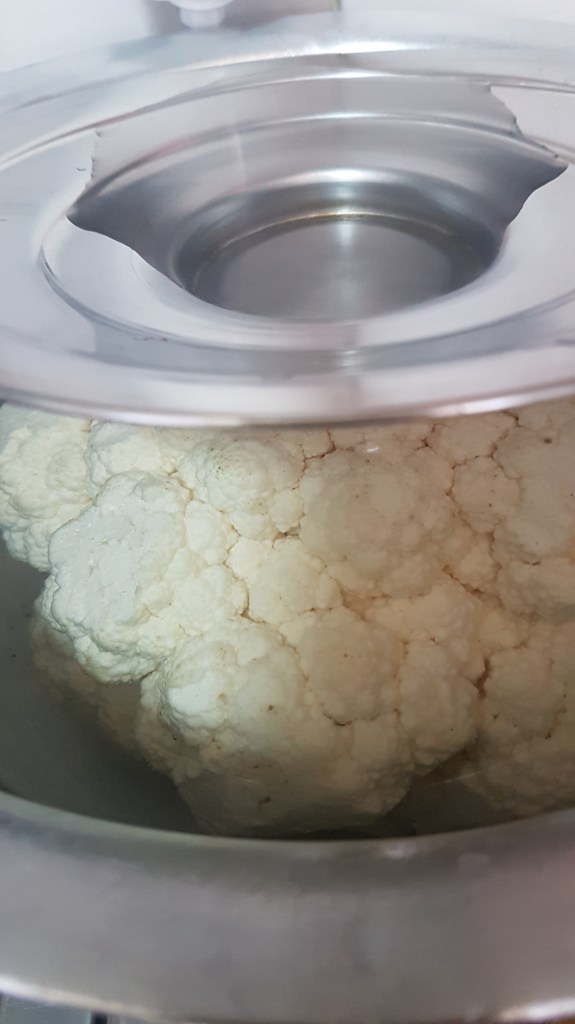
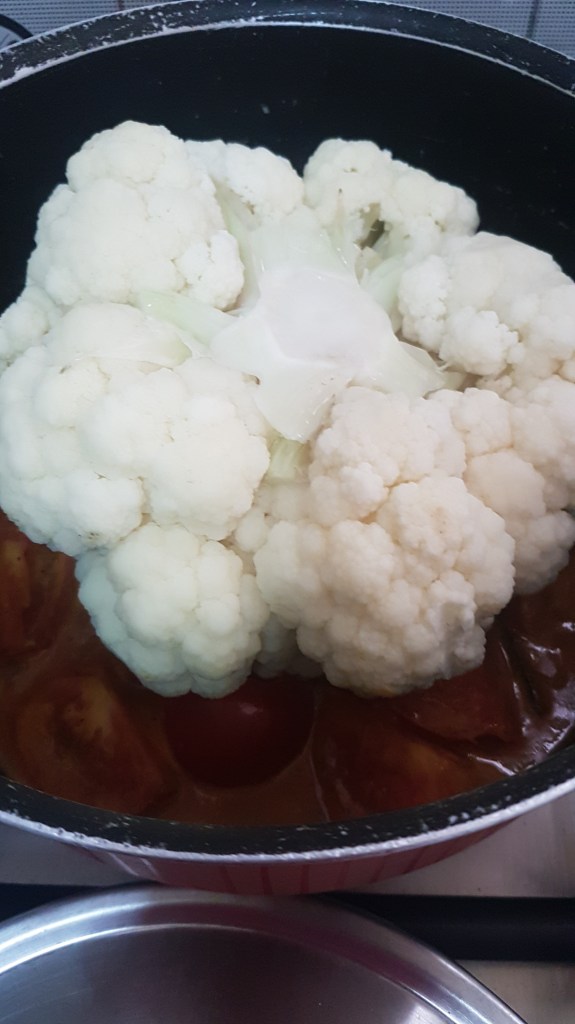
To prepare Musallam Phool Gobi, clean cauliflower and remove the leaves. Wash whole flower well and soak it in warm salted water to 10 to 15 minutes. Drain and rinse.
Immerse in salted water
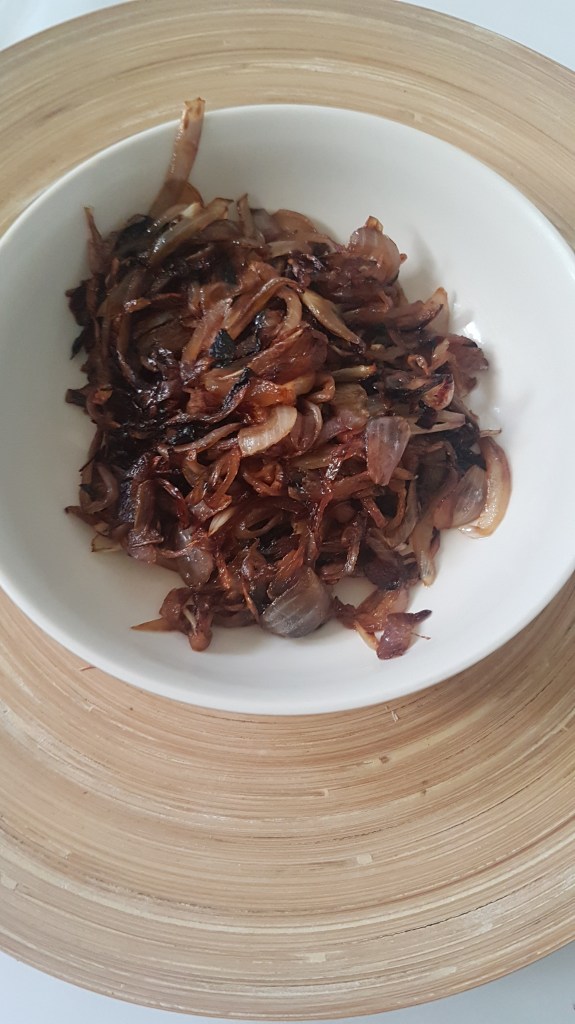
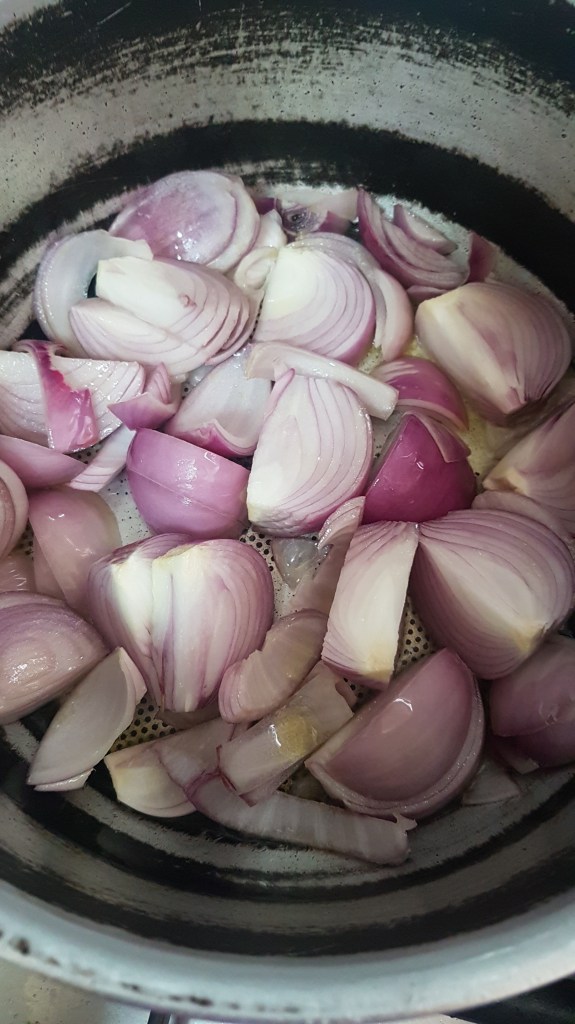
Wash and cut tomatoes into fours. Slice onions finely. Grind the ingredients from garlic to salt. Heat 2 tbsp. ghee in a pan and fry the onions till golden brown, remove and set aside.
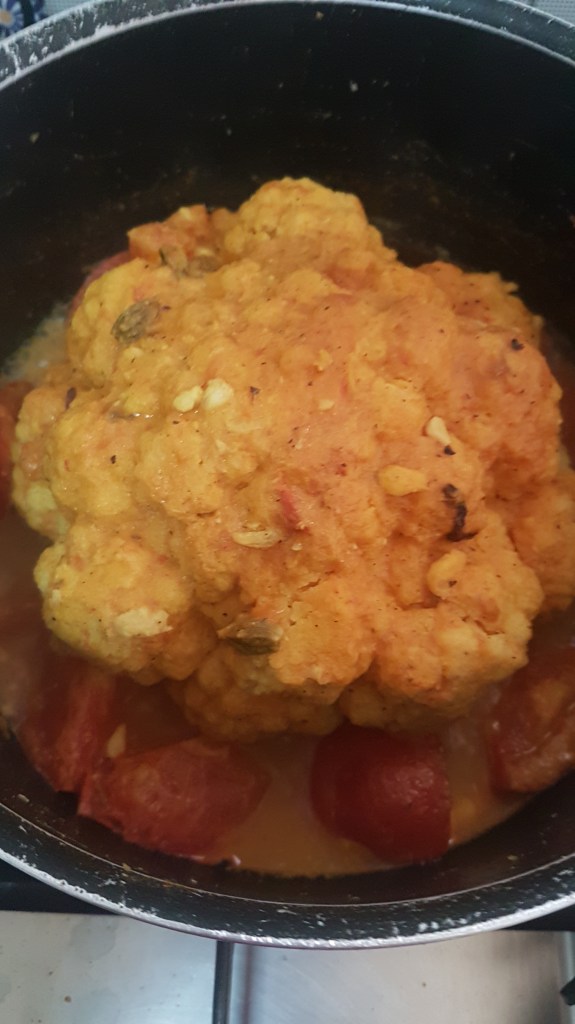
While the onions are frying, take a deep broad vessel and add 2 tbsp. ghee, when hot, add the cardamoms, cinnamon and bay leaves. Add the ground paste and fry for a few minutes. Add the tomatoes and cook for five minutes. Then add the whole cauliflower, stem side up.
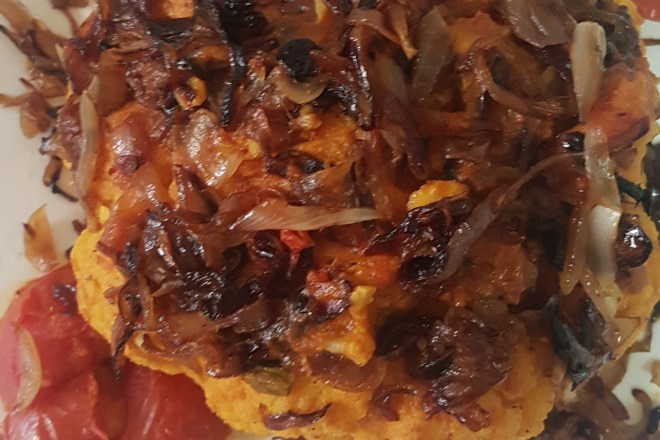
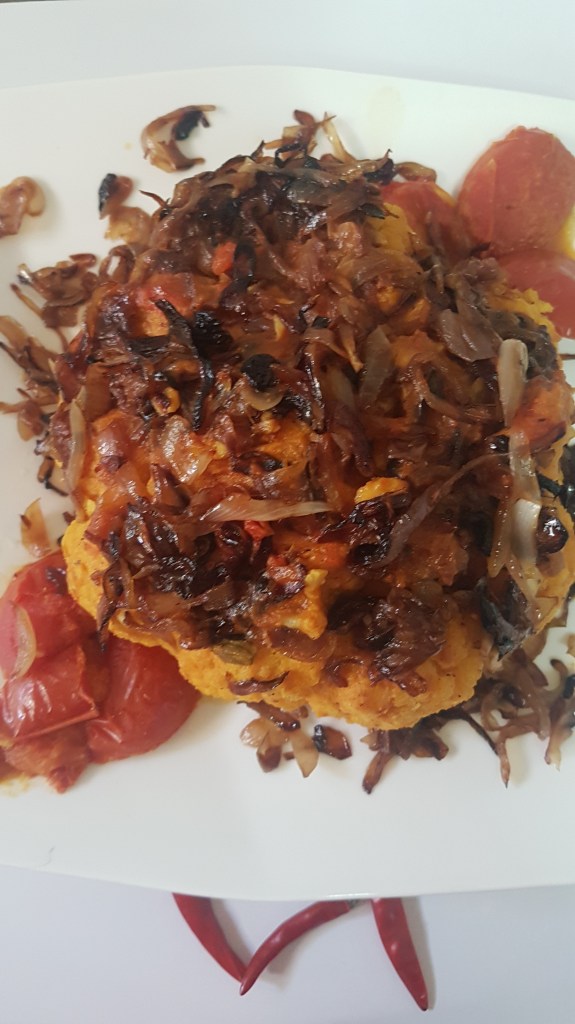
Cook on low heat till half done. Turn over and cook till tender and light brown. Do add any water. Garnish with the browned onions and serve hot with parathas or chapaties or any Indian bread of your choice.
Extraordinary dishes prepared with ordinary vegetables!!
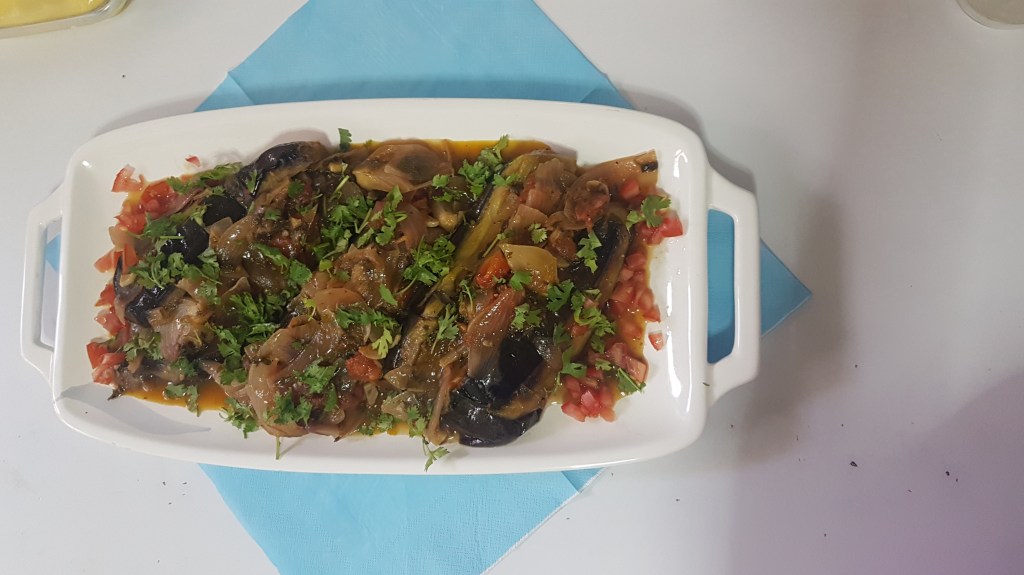
Imam Bayildi translated The Fainting Imam, the name given to this Eggplant (Brinjal/Aubergine) preparation originates from one of the stories on the origins of this dish. It is said that the Imam passed out when he tasted this simple but flavorful dish, although not certain if it was due to the amount of olive oil or from the delicious taste!
Imam Bayildi (The Fainting Imam)
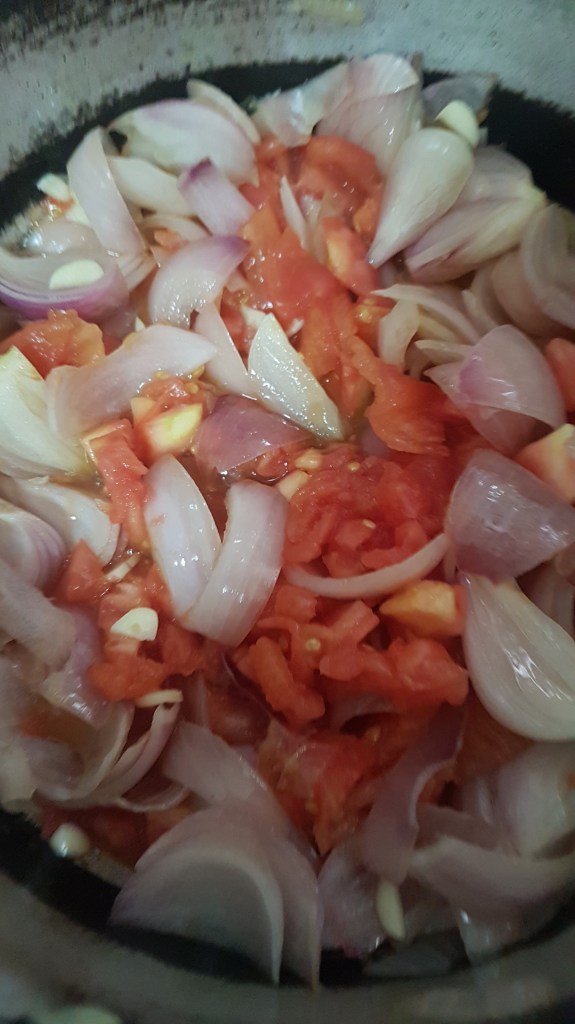
Blanch, peel and chop tomatoes. Chop parsley/coriander leaves. Remove stems and peel strips of skin lengthwise from the brinjals to get a striped effect. Cut lengthwise stopping short of the edge. Place the brinjals in salted water to avoid turning brown. Cut the onions into wedges. Chop the garlic.
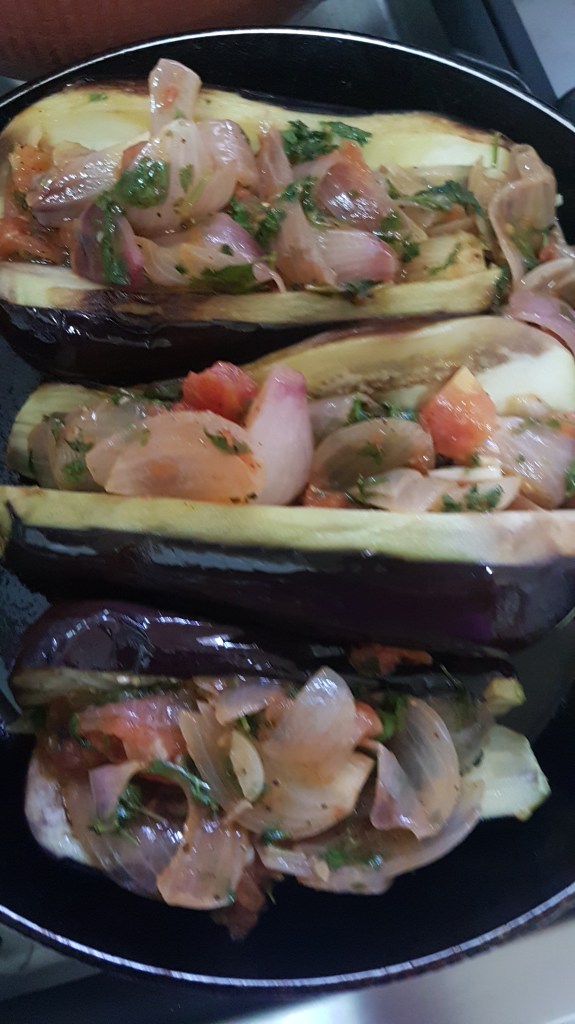
Heat half the olive oil and fry the onion till nearly transparent. Add the garlic and fry for a minute. Add the tomatoes and cook over medium-low heat for 5 minutes. Add salt and pepper and sprinkle parsley/coriander leaves all over.
In a frying pan, heat remaining oil over high heat. Drain the eggplants well and fry until lightly brown on all sides but still firm. Cool the eggplants slightly and stuff the onion mixture as much as possible into the eggplants. Place the eggplants over the remaining mixture. Sprinkle the lemon juice, sugar and ½ cup water, cover and place on medium-low heat for 45 minutes.
Eggs form an essential part of our diets providing us with quality nutrients like protein, iron, vitamins, minerals and carotenoids and is a powerhouse of disease-fighting nutrients like lutein and zeaxanthin.
Eggs should also be cooked in the right manner to benefit from the nutrients. For perfectly boiled eggs check out my post on Think you know how to boil an egg.
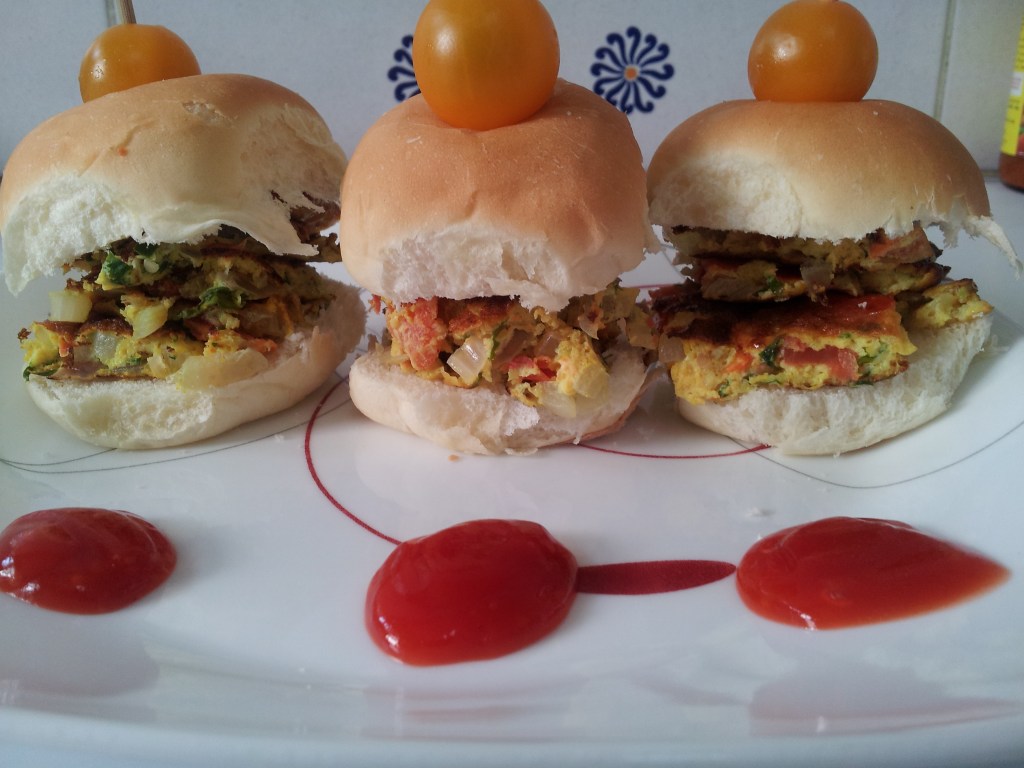
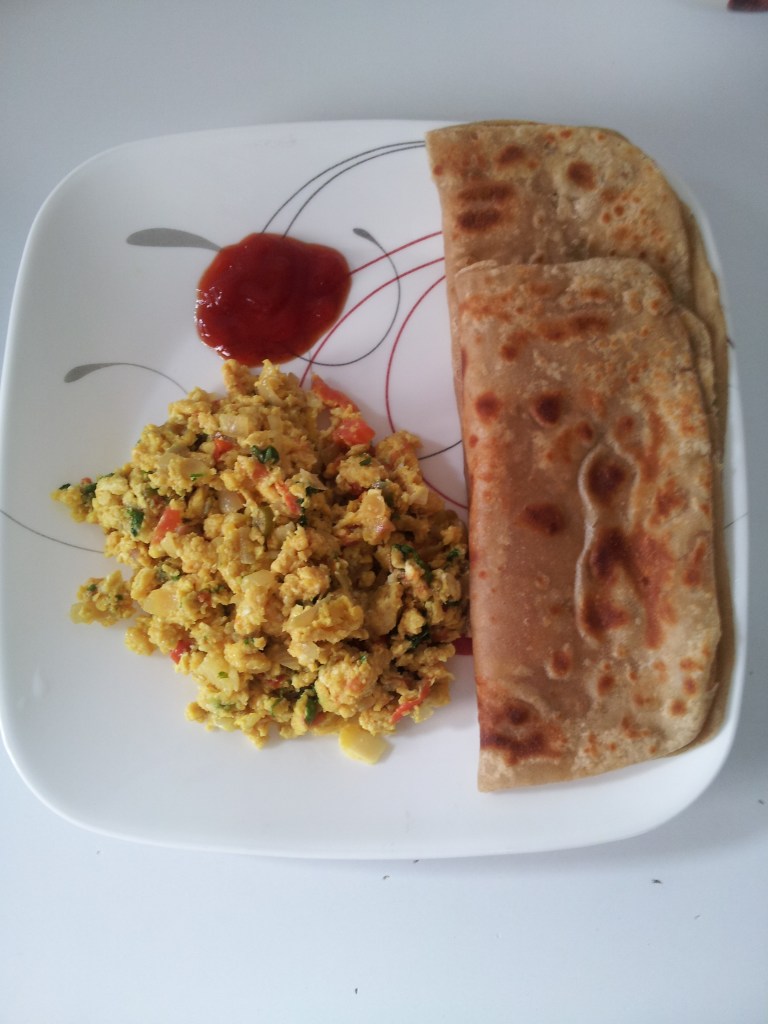
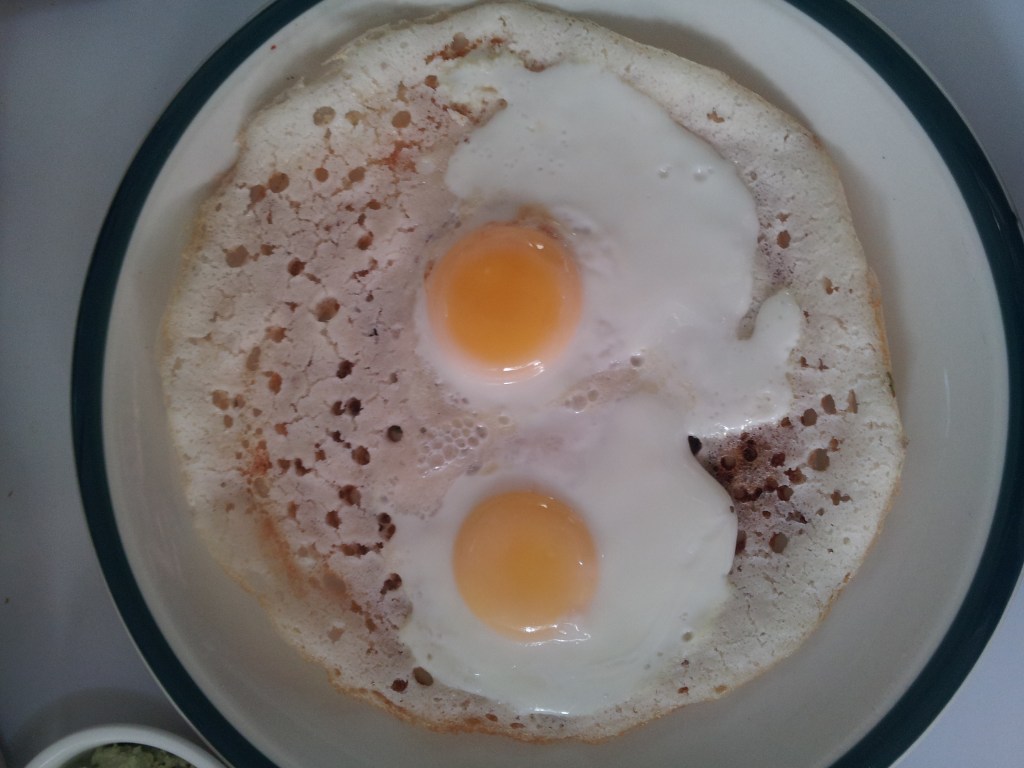
For those who love eating eggs, here are several options to enjoy this nutrient dense food for breakfast or even as lunch or dinner.
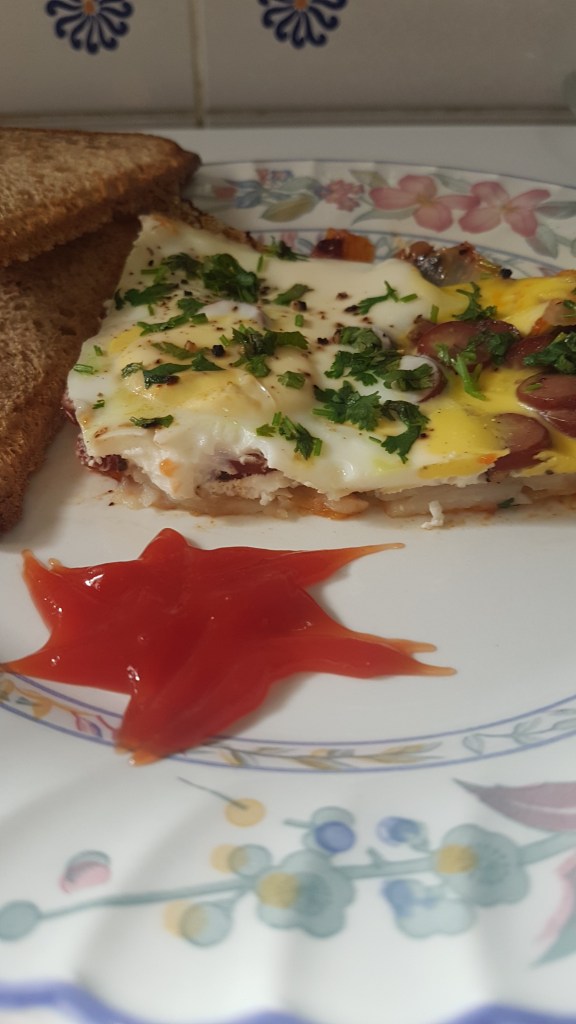
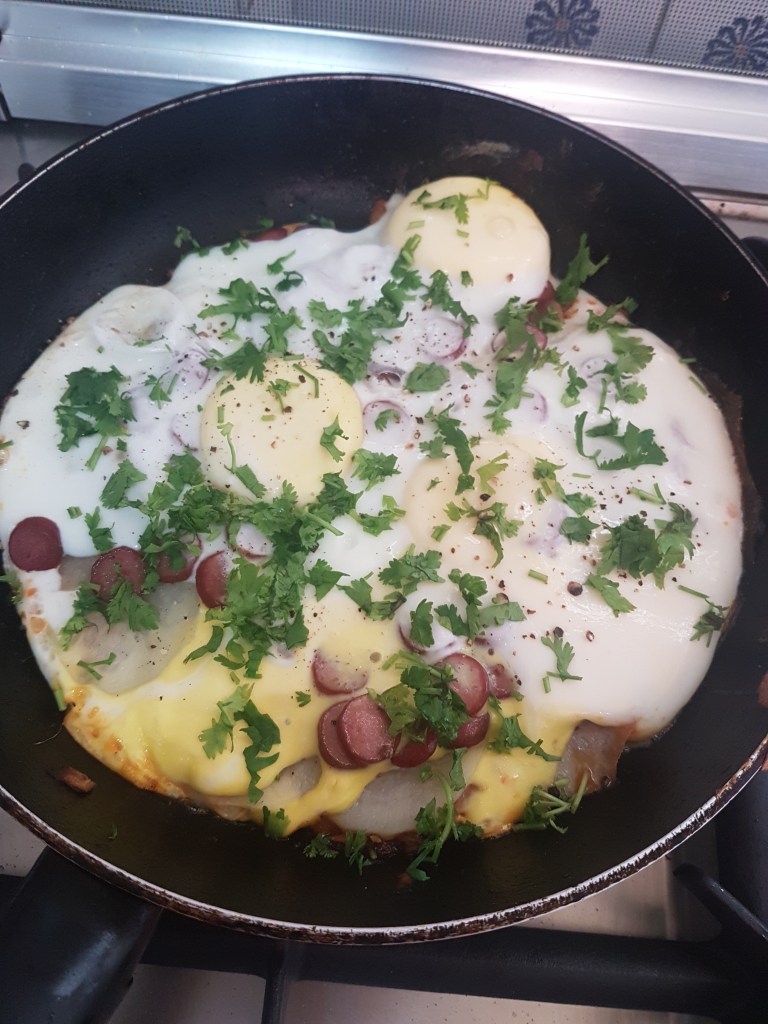
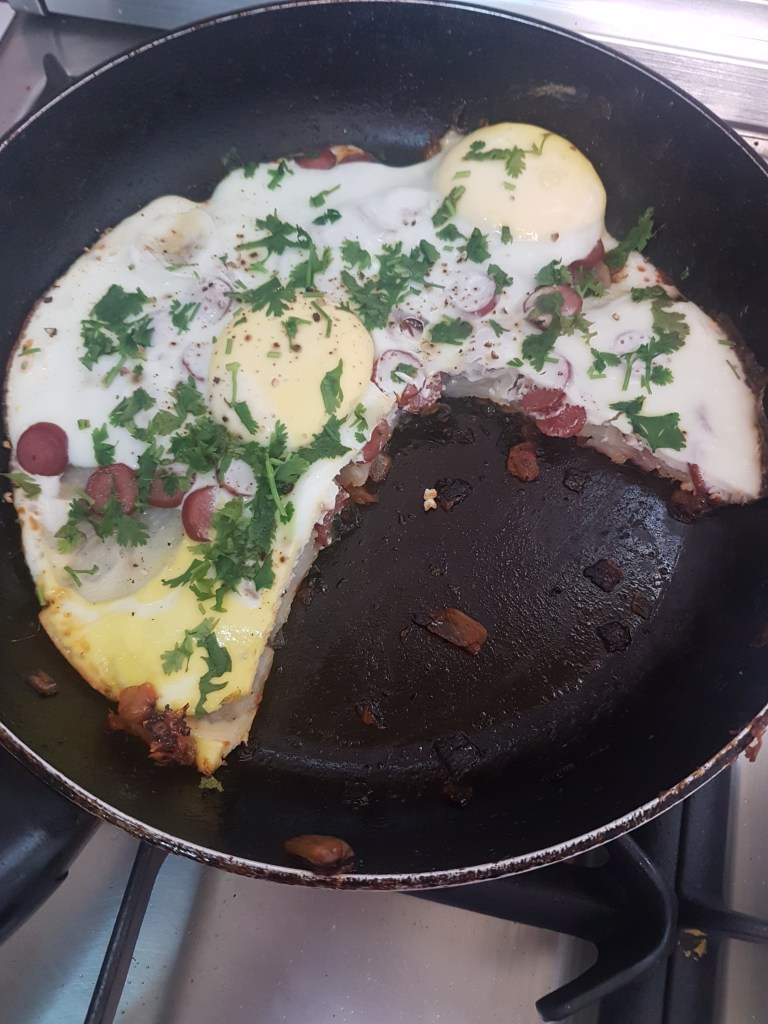
A spin-off on the famous Parsi “Papeta par Eedu”, with the additon of sausages, this is a really simple and quick breakfast bake, albeit in a frying pan! For more Egg-based options check out ‘Eggciting breakfasts’!
Slice the sausages thinly and fry 2 minutes till the edges turn crisp.
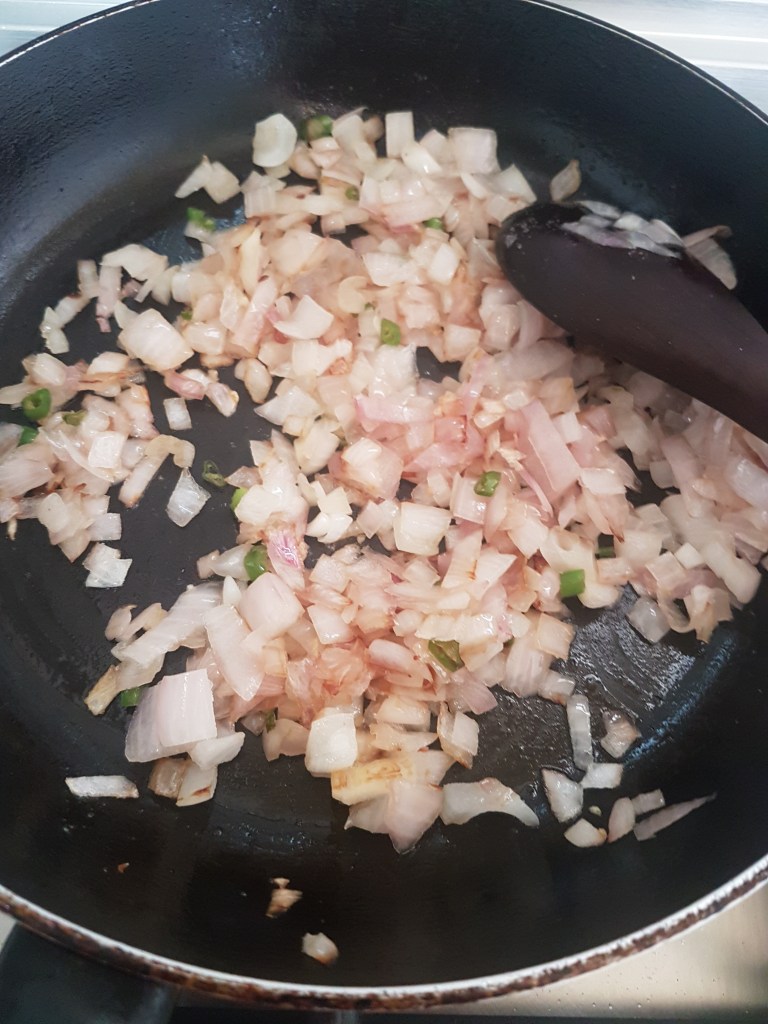
Fry the chopped onions & green chilli adding 1/2 tsp. salt. Add the tomatoes and fry for a minute and top with the sliced potatoes. Sprinkle over with salt and pepper. Cover and cook ten minutes.
Spread the fried sausages over the potatoes and break the eggs one by one over the sausages. Cover and cook till done. Garnish with chopped coriander leaves.
3 Beef or Chicken Sausages (Frankfurters), thinly sliced
Salt and pepper to taste
1 tbsp. coriander leaves, chopped
1 tbs. ghee
Method
On a frying pan or skillet, heat ghee and fry the sliced sausages for two minutes or till crisp at the edges. Remove and set aside.
To the same pan add chopped onion and green chillie and saute till onion is light brown, add a spoon of ghee if required. Add turmeric and mix.
Add tomatoes and sauté for a minute, add ½ tsp salt and mix.
Spread the potato slices evenly over the onion tomato mixture. Sprinkle with salt and pepper. Cover the pan and let cook 10 minutes on low flame, till potatoes are almost cooked.
Spread the sausage slices over the potatoes and then break the eggs one at a time over the sausages. Cover and cook ten minutes or until the top is opaque and the eggs are cooked.
If you like the eggs runny, remove as soon as the whites are set.
Sprinkle with coriander leaves and serve immediately.
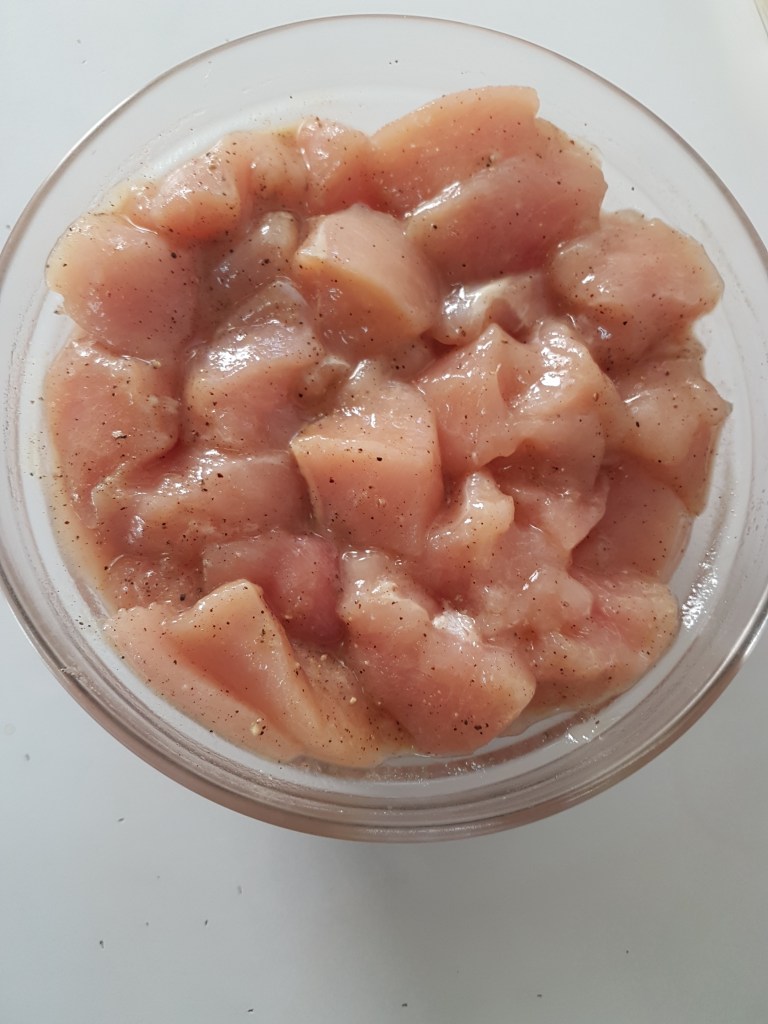
Cut chicken breasts into 2” pieces. Add ginger garlic paste, salt and pepper and mix well with the chicken pieces. Set aside for 15 minutes.
Break egg in a bowl. Grate cheese and mash. Chop chilles and coriander. Mix cheese, green chillies, coriander and the remaining ingedients with the egg, whisk and rub the chicken pieces and leave to marinate for 3 hours,
Preheat oven. Skewer the chicken and roast 10 mintues. Baste with butter and roast again till lightly brown all over.
Add ginger garlic paste, salt and pepper and mix well with the chicken pieces. Set aside for 15 minutes.
Marination: Mix the egg, grated cheese, chopped chilles and coriander with the remaining ingedients, rub the chicken pieces and leave to marinate for 3 hours.
Preheat oven. Skewer the chicken and roast 10 mintues. Baste with butter and roast again till lightly brown all over.
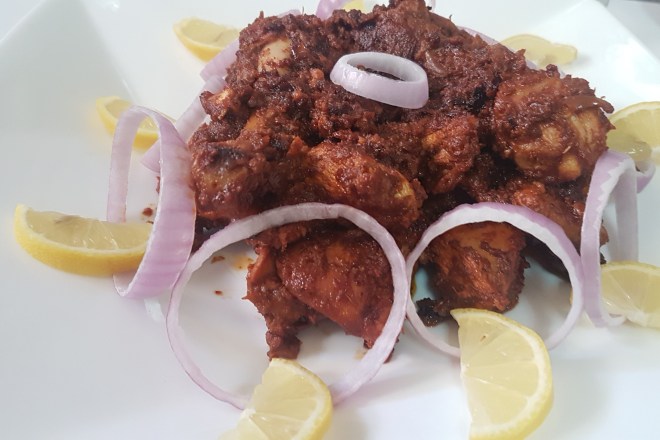
Chicken Ghee Roast is a popular Tuluva Mangalorean Chicken recipe whose origins go back to a small town, Kundapur, close to Mangalore. Chicken Ghee Roast is fiery red, tangy and spicy with a flavor of ghee roasted spices. Chicken ghee roast is pan roasted with spices and generous use of ghee. Source : Wikipedia
I am presenting the Chicken, Mutton (Lamb) and Prawn Ghee roast recipes. Although the spices are similar but there is some variation in the ingredients and preparation for each of the recipes. Click on the title for the recipe –
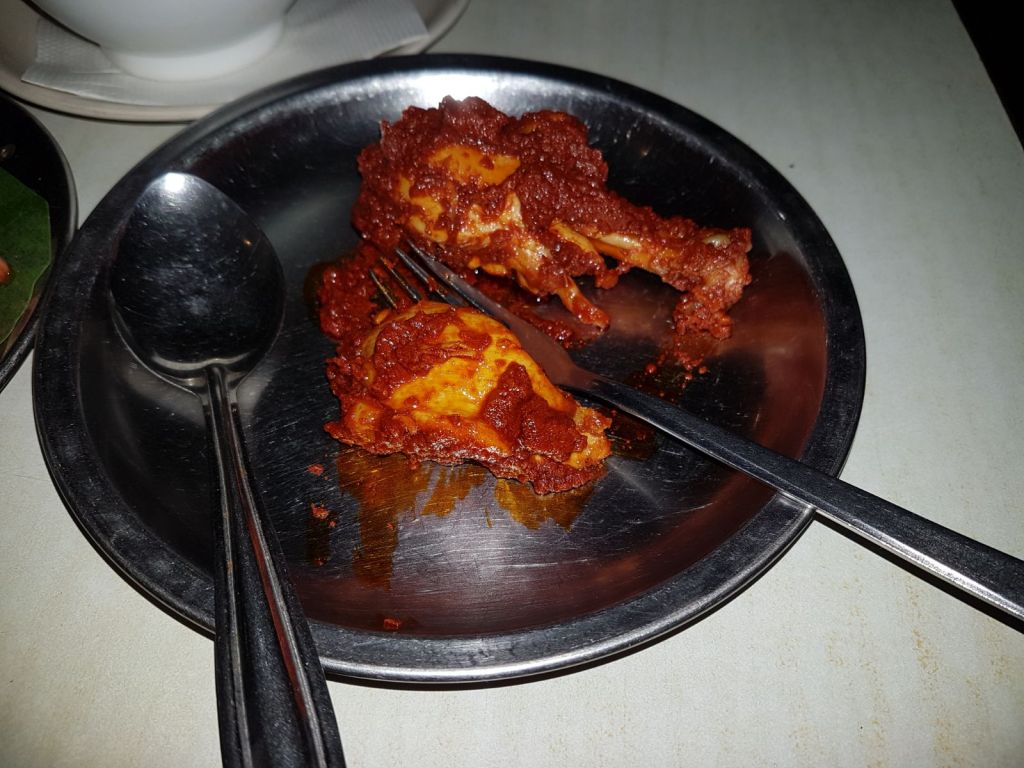
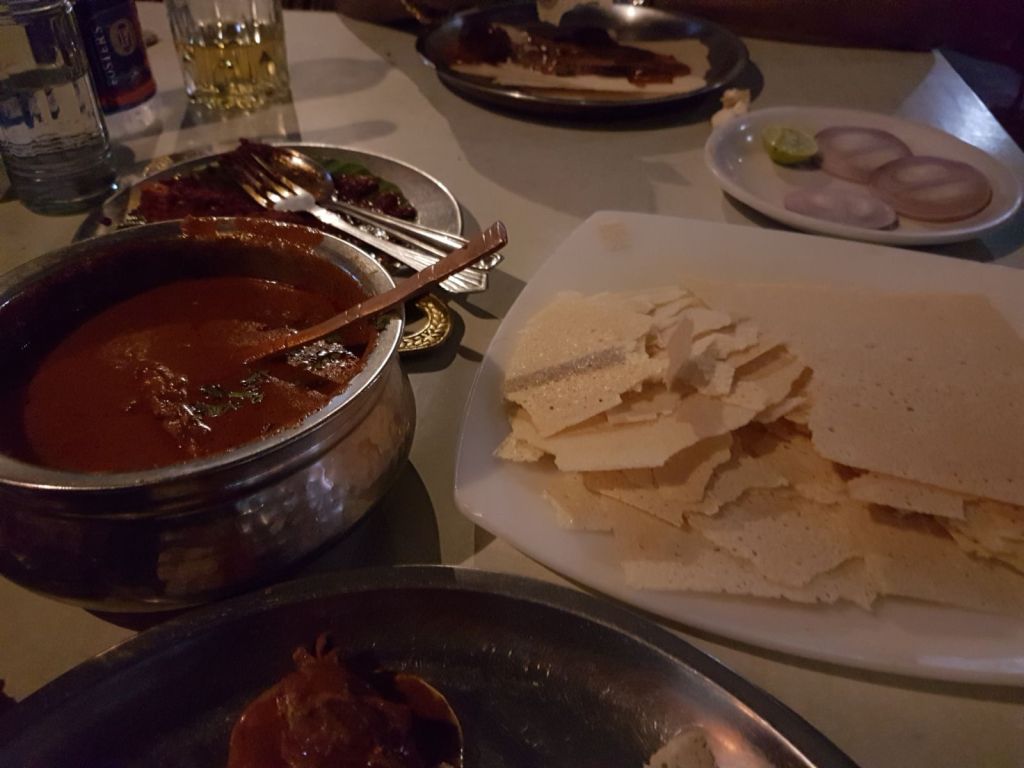
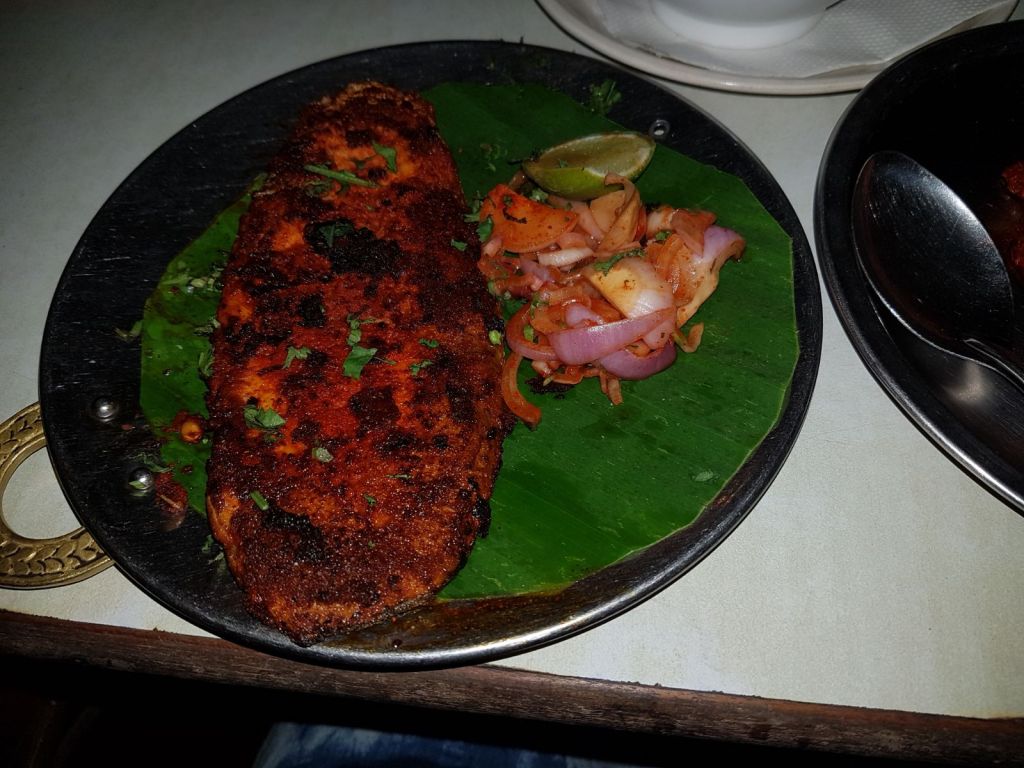
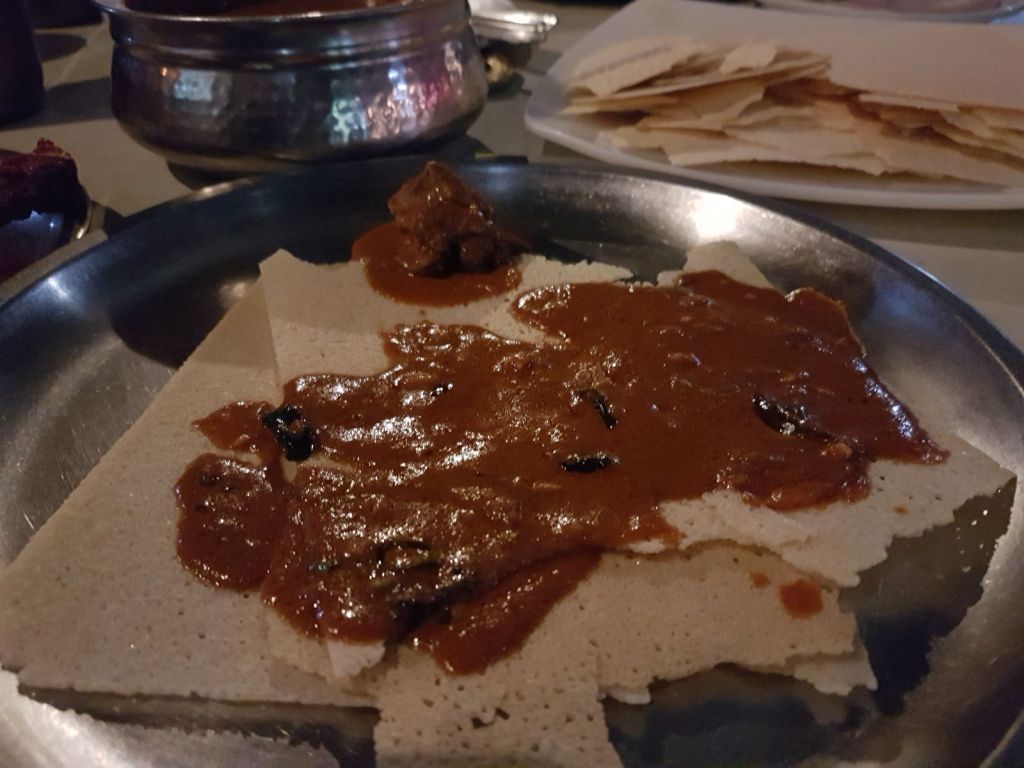
A typical speciality of the Bunt community made popular at Shetty restaurants, the first time I had ‘Ghee Roast’ was in Mangalore on our last visit about two years ago, at Guthu Restaurant. We had Kori Roti, King Fish fry and Chicken Ghee Roast. The fiery Chicken Ghee Roast which immediately hit our head on the first morsel and had fire coming out of our ears had our eyes, nose watering and our mouth burning. Although it was exciting, we just could not handle the spice level, with the result we could not enjoy the meal.
Guthu Chicken Ghee Roast
King Fish Fry
Kori Roti
The advantage of creating traditional dishes at home, is you can adjust the recipe to suit your taste to get maximum satisfaction from the meal. Our spice level is always medium spicy, hence the Prawn, Chicken and Mutton Ghee Roast does not have the usual number of chillies. Secondly, Baydagi and Kashmiri chillies are both used, but I have used only Kashmiri as I did not have Baydagi chillies. You may increase the chillies according to your taste.
P.S.: Any leftover ghee roast (if at all any remains of these delicious dishes) can be reinvented the next day. Just add some water when re-heating to make a curry and you have a Kundapur Curry to go with freshly steamed rice!
Consuming foods that are cooling to the body help with heat exhaustion, indigestion, sleeplessness and other ailments associated with hot weather.
Hear are a few desserts made from foods that have a cooling effect on the body, while also providing the essentional nutrients and nourishment.
Pistachio Arrowroot Pudding
Pistachio Arowroot Pudding
Arrowroot powder: Gluten free, has a cooling effect on the body and helps in digestion.
Ingredients
½ cup Arrowroot powder
½ cup sugar
½ cup coconut milk or regular milk
1 ½ cups water
¼ cup Pistachios, shelled
A pinch cardamom powder
2 to 3 drops green food colour
Put the arrowroot powder in a large bowl and mix it with 2 cups of water and leave it aside for 2 to 3 hours. The powder will settle to the bottom. After 2 to 3 hours discard the water carefully without disturbing the arrowroot paste. Meanwhile, soak the pistachios in water for half an hour. Peel the skins and slice thinly. Grease a plate with ghee and set aside.
Add the 1 ½ cup water to the arrowroot paste and dilute it. Take a saucepan and add the arrowroot mixture to the saucepan alongwith the sugar and coconut milk, mix and keep on medium low flame and cook till the mixture thickens, about 5 to 8 minutes, stirring continuously. Add the green food coloring and mix well. Once thick and glossy, add the cardamom powder and sliced pistachios. (I have added vanilla essence instead of cardamom) Cook, stirring till the mixture turns translucent and begins leaving the sides of the pan. Total cooking time should take 10 to 15 minutes. Overcooking will cause the mixture to thin.
Take off flame and pour into the greased plate and tap the plate so the mixture spreads evenly. Cool completely and refrigerate for atleast 6 hours. Cut into cubes or triangles and serve.
Variations in flavoring: Keep the pudding white and add a i) few saffron strands with chopped cashews or ii) toasted coconut flakes with sliced almonds.
P.S.: Arrowroot powder may be substituted with corn flour.
2. Mango Sago Pudding
Sago Mango Pudding
With mangoes in abundance this season, enjoy the goodness of this nutritious fruit with the cooling effects of sago pearls
Mango: High in Vitamin C, folate & beta-carotene in addition to variety of nutrients.
Sago: Gluten free, cooling and antioxidant, reduces inflammation and improves immunity.
Ingredients
2 Mangoes
½ cup sago
1 cup coconut milk
1 cup water
¼ cup crystal sugar
¼ tsp salt optional
Bring 2 cups water to boil in a saucepan, add the sago and cook for ten minutes. Switch off the flame and leave covered for ten mintes. Drain and add the sago to a bowl of cold water to rinse. Drain.
Add the sago pearls alongwith the coconut milk, 1 cup water and crystal sugar and salt to a pan and cook on medium flame till sugar dissolves and mixture thickens a little. Remove from flame and leave to cool. Chill till ready to serve.
Chop or slice the mangoes and reserve, before serving top with mango slices or pieces. If you wish, puree some mango pieces and add the puree to the sago pudding and mix, top with chopped or sliced mangoes. Garnish with candied fruit if desired.
Sago Mango Pudding
3. Moong Kheer (Godshem)
Moong Kheer (Godshen)
I remember my mother making this often as an evening tea-time snack.
Moong bean: Rich source of protein and nutrients, cooling effect on the body
Ingredients
½ cup whole moong beans
1 cup coconut milk
1 cup water
¼ cup jaggery or to taste
¼ tsp salt (optional)
¼ cup cashewnuts, broken into bits (optional)
Flavoring : Saffron or pandan leaf or a large pinch cardamom powder.
Wash the moong and bring to a boil in 2 cups water alongwith the salt and the saffron or pandan leaf (if using). Reduce flame and cook till the moong is tender and fully cooked. The water should be almost absorbed.
Add the coconut milk, 1 cup water, jaggery and cook till the jiggery dissolves and the mixture thickens. Remove the leaf and discard, add the cashewnuts and simmer for 5 minutes.
Garnish with cardamom powder, if using. Serve warm or cold as a dessert. Can also be served hot as a tea-time snack.
The following two recipes have been posted earlier and can be accessed by clicking on the recipe title.
Rose syrup: has a cooling effect and promotes restful sleep as it reduces stress and anxiety and calms the mind, anti-oxidant and anti-inflammatory.
Sabja (Basil seeds): Also called Tukmaria, they resemble chia seeds. Immunity boosting, rich in anti-oxidants, fibre and omega-3 fatty acids, reduces body heat and relieves constipation.
Souvlaki is a popular Greekfast food consisting of small pieces of meat and sometimes vegetables grilled on a skewer. It is usually eaten straight off the skewer while still hot. It can be served with pita bread, fried potatoes, lemon, and sauces, but the souvlaki itself is eaten on its own, with the side dishes eaten subsequently. The meat usually used in Greece and Cyprus is pork, although chicken, beef, and lamb may also be used. Source: Wikipedia
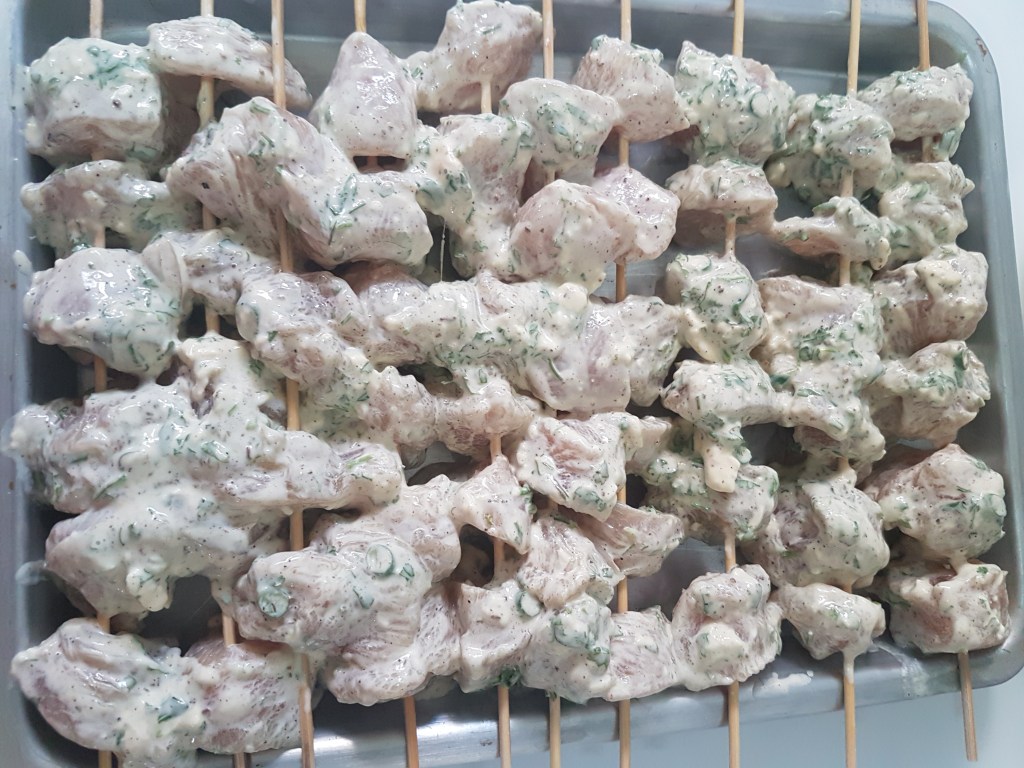
Cut the chicken into cubes, blend the marinade ingredients and pour over the chicken pieces and leave to marinate for 4 hours or overnight.
Meanwhile soak the wooden skewers in water. Use as many as required and the balance can be dried again and stored.
Skewer the chicken, alternating with the onion.
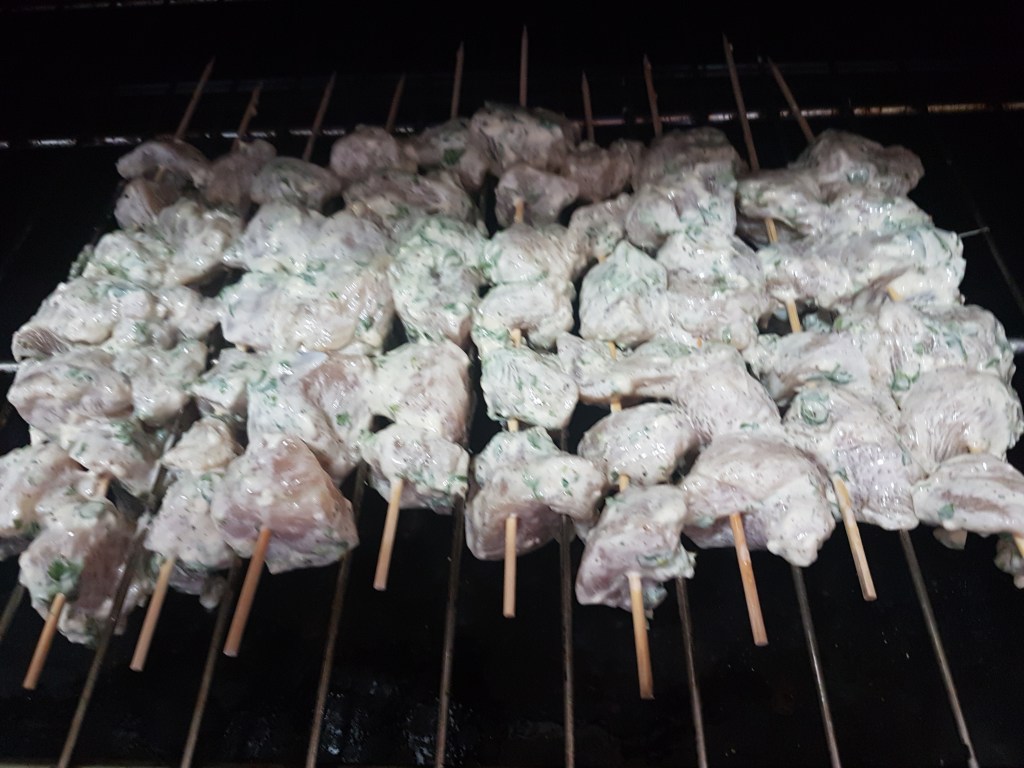
Place on a preheated grill and roast till brown on both sides. Can also be grilled on a pan grill or frying pan. Use smaller sized wooden skewers to fit into the pan and roast on a well greased pan till brown all over.
Recent Comments